Demobilization, mobility and the daily cost of war: three threads from a Ukraine under strain
On 10 June 2026, Ukraine's General Staff addressed demobilization, lawyers warned of pensioners' exit rules, and a fatal collision in Kyiv underlined the human pressures of a country at war.
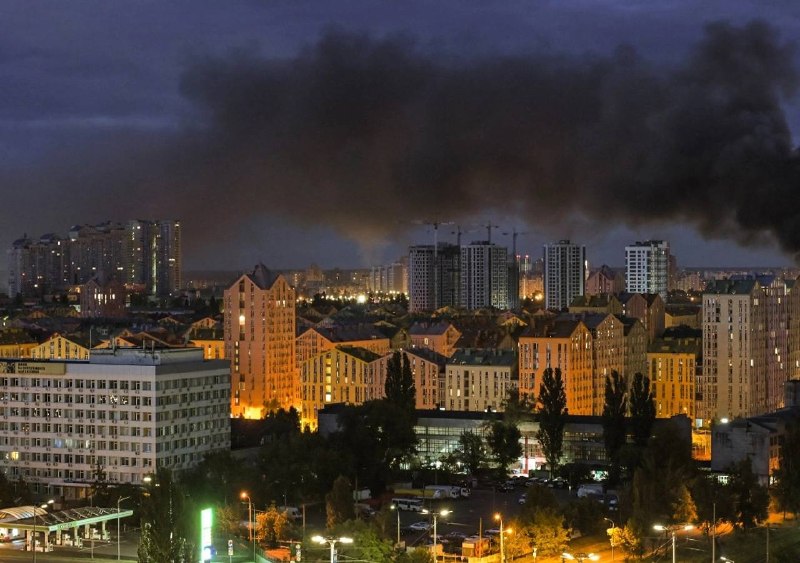
On the evening of 10 June 2026, three small news items landed within minutes of each other on the wire from TSN, the Ukrainian public broadcaster. Read separately, they are unremarkable. Read together, they sketch the texture of a country that has been fighting a full-scale invasion for more than four years, and that is now negotiating — slowly, unevenly, and in public — what it means to be a society at war.
The first item concerned demobilization. Ukraine's General Staff issued a statement on the release of military personnel, addressing one of the most politically charged questions inside the country: when, and on what terms, do soldiers come home? The second concerned mobility. Lawyers pointed out that not all pensioners can leave Ukraine, an apparently technical point that touches directly on the right of exit during wartime. The third was a fatal road collision in Kyiv, in which a car struck and killed a pedestrian after a powerful impact. The three together form a portrait of a state balancing military manpower, civilian rights and ordinary urban risk at a moment when none of those pressures has eased.
The demobilization question, restated
Demobilization has been the unresolved file of Ukrainian wartime politics for the better part of two years. The General Staff's statement on 10 June, summarised by TSN, did not announce a wholesale release of personnel; it set out the framework under which military personnel can be released from service. The framing matters. Ukraine's armed forces, expanded sharply after February 2022, are now confronting the same arithmetic every conscript army eventually meets: rotations must lengthen, terms must become predictable, and the distinction between combat and non-combat service must be drawn with some precision. None of this is unique to Ukraine. What is unusual is the speed at which the question has moved from veterans' forums into prime-time news, and the willingness of the General Staff to put a public marker on the file at all.
The dominant framing in Western coverage treats demobilization as a problem of military effectiveness: a country that cannot rotate its troops will, in time, fight less well. That is true, but it is only half the story. The other half is social. Ukrainian society is being asked to sustain an extended mobilisation on a generation of citizens who can see, plainly, that the war has no near terminus. A statement from the General Staff is not a settlement; it is a signal that the settlement is being worked on.
Who can leave, and who cannot
The pensioner-mobility item, also carried by TSN on 10 June, is in some ways the more revealing of the three. Ukrainian lawyers are reported to have pointed out that the rules on crossing the border are not uniform for older citizens. That sounds like administrative trivia. It is not. Exit rules during wartime are a proxy for how a state conceives of its social contract: who is owed protection, who is expected to stay, and what categories of person fall on which side of the line.
Ukraine is not unique in restricting the exit of military-age men, and the restrictions have been the subject of sustained domestic and international scrutiny. What the lawyers' intervention underlines is that the rules are layered. Pension status, dependency status, disability status, custodial responsibility — each interacts with the broader wartime ban. The dominant wire framing presents this as a question of fairness. A more structural read is that it is a question of capacity. A state that cannot replace its soldiers, its engineers, its medical staff and its pensioners simultaneously has to draw lines somewhere, and the lines it draws are an act of political choice. The lawyers' intervention is, in effect, a request to make those choices transparent.
A fatal collision, and the texture of risk
The third item, a road death in Kyiv following a powerful collision, is the kind of story that runs on local news in any capital on any evening. It ran on TSN on 10 June. It is worth pausing on because wartime reporting tends to compress non-military harm into background noise, and the public has a right to the reverse: to be told that ordinary urban risk has not gone away, and that the institutions of civilian safety — traffic enforcement, road design, emergency response — are operating in conditions where attention is constantly being pulled elsewhere. A single fatality is a small data point. A consistent pattern of them, reported alongside the larger strategic story, is the texture of daily life in a country under sustained attack.
What the three together suggest
Read in sequence, the three TSN items do not amount to a thesis about Ukraine's trajectory. They do, however, draw a frame. The state is publicly working on how to release soldiers. The state is publicly defending a layered set of rules about who can leave. The state is publicly registering the ordinary harms that occur in its capital. None of that is the war's decisive front. All of it is the war's necessary background, and a country that handles the background competently is more likely to handle the front.
The counter-narrative, worth naming, is the war-weariness frame that has gained ground in some Western commentary: that Kyiv's political bandwidth is exhausted, that the population is exhausted, and that support should taper as a result. The TSN material does not support that read. Exhaustion, in the form reported on 10 June, looks less like drift and more like administrative engineering — the unglamorous work of designing rotations, exit rules and traffic safety under conditions no one was trained for. That is a different problem from fatigue, and it asks for a different policy response.
This Monexus article is built on three TSN wire items from 10 June 2026; no broader claims about battlefield conditions, casualty figures or political negotiations have been added beyond the source material.
Wire provenance
This editorial synthesis draws on the following public wire/social posts:
- https://t.me/TSN_ua/
- https://t.me/TSN_ua/
- https://t.me/TSN_ua/
Follow the event.
These dated source records provide context. They do not retrospectively verify this archive article.
A dated voting record is evidence of one decision. Use the original UN record before turning it into an alignment label.
Visual explainer · historical vote of 2022-03-02 →