U.S. CENTCOM strikes hit Bandar Abbas as Iran warns of 'harsh and decisive response'
U.S. Central Command confirmed strikes on multiple targets in Iran on the evening of 10 June 2026, with renewed activity reported in Bandar Abbas and Iranian state media warning of retaliation.
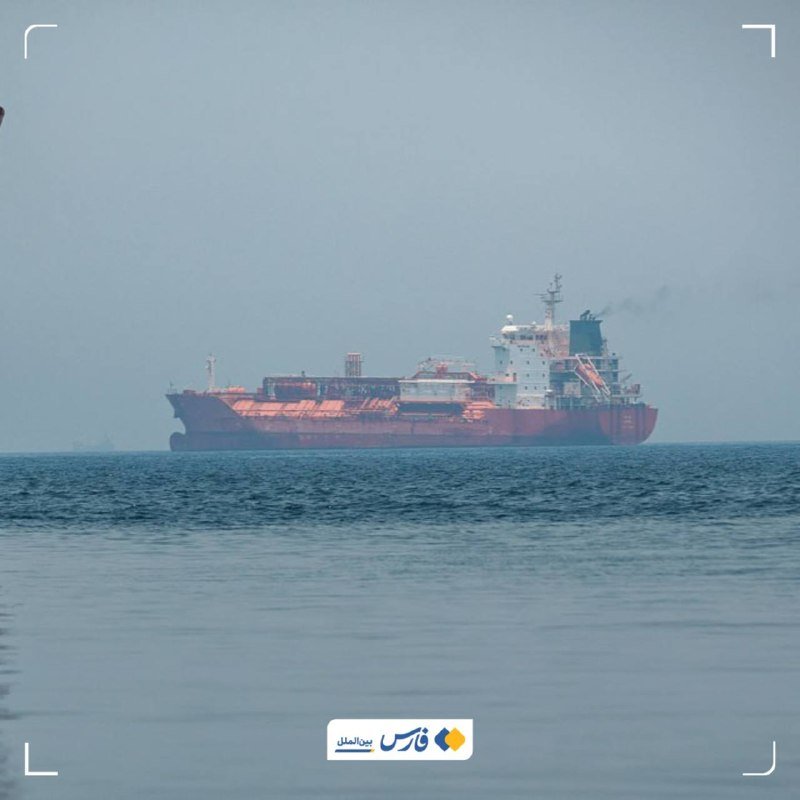
U.S. Central Command confirmed on the evening of 10 June 2026 that its forces had begun launching strikes against "multiple targets" inside Iran, the first official American acknowledgement of a kinetic operation against the Islamic Republic in the current escalation cycle. By 22:32 UTC, two Telegram channels with correspondents on the ground — WarMonitors, citing Al-Manar's correspondent in Iran, and Intelslava — were reporting fresh explosions in the eastern part of Bandar Abbas, a major port city on Iran's southern coast that sits roughly 40 kilometres across the water from the Strait of Hormuz. A third channel, rnintel, described "renewed U.S. airstrikes on eastern Bandar Abbas" and "heavy air defense activity" in the city, with an initial notice at 22:21 UTC followed by a follow-up at 22:23 UTC as the barrage continued.
The strike announcement landed in a media environment in which the U.S. side controls the framing of the operation and the Iranian side controls the framing of the response. That asymmetry is the story. CENTCOM's statement — relayed via PressTV at 21:48 UTC — is short, declarative and stripped of target identification. Iranian state media's counter-framing, also carried in the same PressTV post, promises that "any new aggression will be met with a harsh and decisive response." Between those two sentences lies a widening war in the Gulf, and a global audience receiving it through a single Western wire on one side and a network of Iranian, Russian and Lebanese outlets on the other.
What CENTCOM said — and what it did not
CENTCOM's confirmation is the operative American fact of the evening. The phrasing — "multiple targets" — is a category, not a list. The command did not name the facilities struck, did not specify weapons used, did not provide a target list, and did not quantify ordnance delivered. That silence is itself an editorial choice: it gives the operation room to be either narrower (a missile-component site, a drone assembly line, an air-defence radar) or broader (command-and-control, naval infrastructure, fuel depots) without committing the Pentagon to a public target deck.
The Iranian state media framing, by contrast, names the geography precisely. WarMonitors, relaying Al-Manar's correspondent, located the blasts in "the eastern part of Bandar Abbas city, southern Iran." Rnintel independently placed the renewed activity in "eastern Bandar Abbas" and tied it to U.S. airstrikes, then added the operational detail of "heavy air defense activity" — Iranian surface-to-air batteries engaging inbound aircraft or munitions. The convergence of three separate channels on the same coordinates is the strongest available corroboration that the strikes were not confined to a single remote desert site but hit inside a populated coastal city.
The Iranian counter-frame is therefore not generic outrage. It is a specific claim: a sovereign port city has been struck, and its air defences are firing back. That claim carries a different weight than a strike on an unpopulated test range, and it is the claim Western readers will receive second-hand, usually from wire services that will rely heavily on the CENTCOM readout.
Why Bandar Abbas matters
Bandar Abbas is not a symbolic target. It is the operational heart of Iran's southern military and economic posture. The city hosts the main base of the Islamic Republic of Iran Navy (IRIN), the bulk of the Iranian fast-attack craft fleet, and the infrastructure that, in any closing of the Strait of Hormuz, would be tasked with the first moves. It is also the terminal of Iran's domestic pipeline and shipping network, the place where sanctions-busting oil product is loaded onto tankers bound for Asia.
A strike on the eastern districts of the city, as described by the Telegram feeds, raises immediate questions that the CENTCOM statement does not address: which specific installation within the city's footprint was hit, what the blast radius was for surrounding civilian areas, and whether the strikes were aimed at dual-use infrastructure — port facilities, fuel storage, naval logistics — rather than purely military targets. The Iranian framing of "aggression" is built precisely to keep those questions open. The American framing, by withholding the target list, gives Tehran room to claim the worst and gives the Pentagon room to deny it.
The geography also implicates the global economy in a way the strike announcement does not acknowledge. Roughly a fifth of the world's seaborne oil transits the strait that Bandar Abbas overlooks. Even a short, contained strike cycle inside the port city moves the insurance and freight markets the moment shipping companies revise their threat assessments. By 22:32 UTC, those revisions were already beginning in trading desks reading the Telegram wire, well before any Western wire had a confirmed target list.
The information fight
The most consequential product of the evening is not the ordinance on Bandar Abbas. It is the gap between what CENTCOM and what Iranian-aligned channels are saying, and the speed at which that gap is travelling through the global information system. The CENTCOM line — published at 21:48 UTC — moved first into the international conversation via PressTV's Telegram post, which means the first English-language statement of the American operation, for many readers, was carried by an Iranian state outlet. That is not a triviality. It sets the rhetorical frame in which the strike is first understood: an Iranian channel telling its audience what an American command said about bombing Iran.
WarMonitors and Intelslava, both reading off Al-Manar's correspondent, then supplied the location data and the rolling updates. Rnintel added operational detail — heavy air defence activity, renewed strikes. None of the three channels is a neutral observer. WarMonitors and Intelslava sit in the Telegram ecosystem that aggregates from regional correspondents and milbloggers; Al-Manar is the Beirut-based media arm of Hezbollah; PressTV is the Islamic Republic's English-language outlet; rnintel is a Russian-aligned operations channel. The Western wire services — Reuters, AP, AFP, the BBC, the Guardian, Bloomberg — were not yet publishing confirmed accounts in the thread materials available at the time of this writing, and their target identification, if it comes, will likely rely heavily on the same regional channels in the first hours.
The structural pattern is familiar. When a U.S. military action lands in the Middle East, the first authoritative-feeling English accounts often come from outlets the U.S. government would not ordinarily treat as authoritative. The American side controls the operation; the regional and adversary side controls the first draft of the narration. Western readers then arrive at a story already framed, often without realising it, by the very channels the official line will later describe as propagandists.
Stakes and what remains contested
If the strikes continue on the trajectory implied by the 22:21–22:32 UTC window — a first wave, an intermission of a few minutes, then a renewed barrage — Bandar Abbas will, by the morning of 11 June, be dealing with the aftermath of a sustained air operation rather than a one-off retaliation for an earlier Iranian move. Iranian state media has already telegraphed a "harsh and decisive response." The mechanics of that response are not yet visible in the available material: it could be a direct missile or drone strike on a U.S. base in Iraq, Syria, Bahrain or Qatar, an attempt to close the strait, an asymmetric move against Gulf shipping, or a combination. The thread sources do not specify.
What is contested, as of publication: the target list (CENTCOM has not disclosed one; Iranian channels have not named one with photographic evidence); the casualty picture (no figures from either side); the operational scope (one wave, or the opening move of a multi-day campaign); and the political authorisation chain in Washington, where the U.S. public has not yet been addressed by name by the relevant principals in the available material. CENTCOM's confirmation via PressTV's Telegram is a battlefield press release, not a presidential statement.
The honest read at 22:32 UTC on 10 June 2026 is this: the United States has opened a kinetic phase against Iran, it has done so on the ground in a populated port city of strategic significance, and it has chosen to keep the target list, the weapon mix and the legal-political framing opaque. Iran has signalled that the retaliation is coming and has chosen to make the first hour of the international narration of the strikes an Iranian-language story. The two choices, taken together, will define the next 72 hours of the Gulf.
Desk note: Monexus ran this story off three Telegram channels (WarMonitors via Al-Manar, Intelslava, rnintel) and one Iranian state outlet (PressTV), supplemented by the known geography of Bandar Abbas. The target list, the casualty picture and the U.S. legal-political framing are not yet on the public record from Western wire sources; readers should treat those gaps as part of the story, not as housekeeping to be filled in later.
Wire provenance
This editorial synthesis draws on the following public wire/social posts:
- https://t.me/warmonitors/
- https://t.me/intelslava/
- https://t.me/rnintel/
- https://t.me/rnintel/
- https://t.me/presstv/
- https://en.wikipedia.org/wiki/Bandar_Abbas
Follow the event.
These dated source records provide context. They do not retrospectively verify this archive article.
Separate what the nuclear watchdog reported from what it could not determine after the June 2025 strikes.