American money still wants China. Beijing is happy to take it.
Nikkei reporting shows US firms deepening their China exposure as profitability rebounds, and Tencent just priced a $4.6bn dual-currency bond. The decoupling story is not what the headline writers sold.
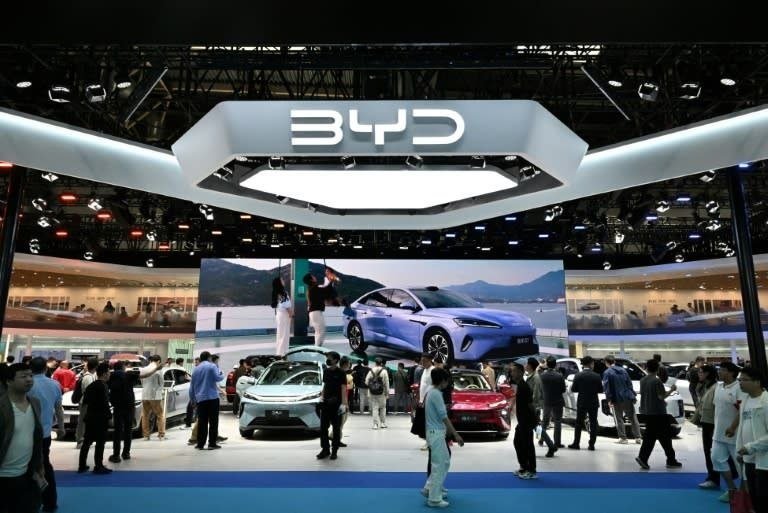
For all the talk of decoupling, American corporate balance sheets are voting the other way. Reporting published on 10 June 2026 by Nikkei Asia documents a striking pattern: US companies operating in China are doubling down rather than retreating, with profitability rebounding even as the broader Chinese economy continues to slow. On the same day, Chinese internet major Tencent priced a combined $4.6 billion in bond issuance split between US dollars and offshore yuan — a capital-markets move that would have been unimaginable at the depths of the 2022-2023 Sino-American tech rout, and that puts the lie to the lazy version of the decoupling story.
The thesis is straightforward and worth stating plainly. The US-China economic relationship is not de-coupling. It is re-wiring. Investment, lending and capital-market access continue to flow in both directions, but the terms, the intermediaries, and the political risk premium around them have all shifted. American firms are not leaving China because, for a great many of them, the unit economics still do not work anywhere else.
The case from the C-suite
According to Nikkei Asia's reporting on 10 June 2026, American companies in China are expanding rather than consolidating their footprint, citing improved returns even as headline GDP growth has cooled. The framing matters. Western commentary for the past three years has defaulted to a "China is uninvestable" narrative — supply-chain reshoring, semiconductor export controls, consumer boycotts, regulatory whiplash, the now-familiar list. Some of that pressure is real. The Nikkei reporting suggests it has not been enough to outweigh the underlying logic of being inside the world's second-largest consumer market with the manufacturing depth to match.
A skeptical read is available. The companies most exposed are those that built their Asian business around China as a low-cost export base. As wages rise and as Western procurement diversifies toward Vietnam, Mexico and India, the calculus should, in theory, tilt against China. The Nikkei reporting cuts against that read, and is worth taking seriously for that reason. Profitability is a hard metric. If it is rising on the ground, the macro decoupling narrative is overstating the on-the-ground result.
Tencent's $4.6bn signal
The Tencent deal, also reported by Nikkei Asia on 10 June 2026, is the cleanest market signal yet that the offshore Chinese tech complex has fully returned to international capital. A dual-currency structure — dollars and yuan — is a deliberate piece of financial engineering. The dollar tranche gives Tencent access to the deepest pool of global fixed-income capital and signals creditworthiness to US and European institutional investors. The yuan tranche is a quiet diplomatic move as well as a commercial one: it builds depth in the offshore yuan (CNH) market that Beijing has spent a decade trying to internationalise, and it does so through one of the country's flagship private-sector issuers rather than a state-owned policy bank.
Beijing's position here is not subtle. A functioning CNH market, populated by investment-grade Chinese corporates issuing into it, is the precondition for any serious move away from dollar invoicing in regional trade. Whether the volume yet matches the rhetoric is a separate question; the issuance, taken in aggregate, is going the right way from Beijing's point of view.
The structural frame
The interesting story is not that the US and China are disengaging. It is that the financial plumbing between them is being quietly renovated. American firms need China for revenue. Chinese firms still need dollar markets for funding and credibility. Both sides manage that dependence through hedges, joint ventures, and — when needed — a phone call to the other country's embassy.
Coverage in the West often describes this through the lens of "national security" and "tech competition." The frame is not wrong, but it captures only one slice of the relationship. A more honest reading treats the US-China economic relationship as a contested co-dependency, not a clean break. The capital flows, the bond issuance, the corporate earnings reports — they all keep saying the same thing in 2026: the two economies remain entangled in ways that neither government has the tools, or the appetite, to fully unwind.
Stakes
If the trajectory holds, the winners are clear. American multinationals retain the China earnings stream that funds their domestic dividend and buyback programmes. Chinese state and private issuers continue to tap dollar capital at a price that disciplines their borrowing. Beijing incrementally advances the internationalisation of the yuan without forcing it. The losers are the policymakers in Washington and Beijing who have built political capital on a clean-break story that the data does not support — and, more practically, the smaller suppliers and contract manufacturers on both sides whose margins get squeezed in the re-wiring.
What remains genuinely uncertain is the political circuit-breaker risk. A sanctions package, an export-control escalation, or a Taiwan-adjacent incident could re-price all of this overnight. The Nikkei reporting and the Tencent issuance describe a market view; markets are not always right about politics.
This publication noted the apparent gap between Washington's decoupling rhetoric and the continued flow of private capital, and reported it as a market reality rather than a normative claim.
Wire provenance
This editorial synthesis draws on the following public wire/social posts:
- https://t.me/NikkeiAsia
- https://t.me/nikkeiasia
- https://t.me/NikkeiAsia
- https://t.me/nikkeiasia