Stalled at the edge: where the US–Iran deal Trump keeps promising actually stands
Three weeks of escalatory rhetoric, a destroyed American helicopter, and a July deadline now assessed at roughly 30% probability — what the public record actually shows about a deal that may not exist.
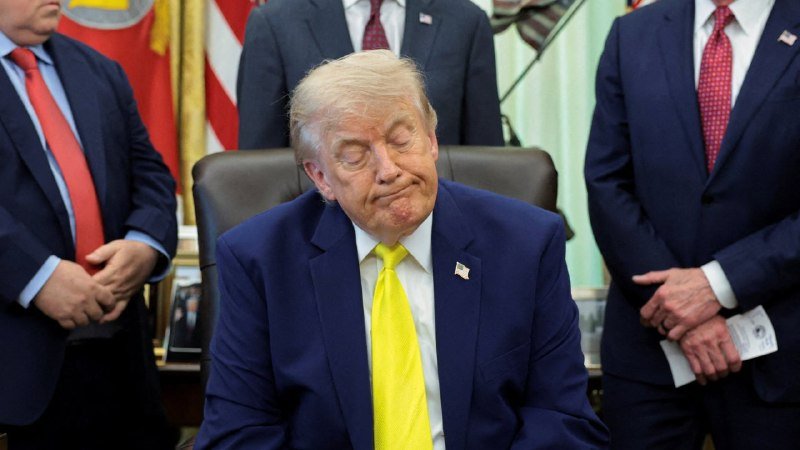
On the afternoon of 10 June 2026, three near-simultaneous signals hit the diplomatic wire: a Telegram channel focused on war monitoring put the odds of a permanent US–Iran deal by the end of July at roughly 30%; Iran's Fars news agency carried Donald Trump telling Tehran to "sign the agreement" and describing it as "good and meaningful"; and Euronews picked up the US president confirming that strikes on Iran would resume, citing the loss of an American helicopter. Read together, the three messages describe a negotiation that is at once intensifying and failing to close — the kind of moment when a deal is most vulnerable to being oversold on one side and undersold on the other.
What is actually on the table, what has been agreed, and what is theatre? The public record is thinner than the volume of statements suggests. This piece walks the line — what can be verified, what is rhetorical, and where the structural incentives are pulling the parties.
What has been said, and by whom
The single most concrete item in the 10 June record is the Fars account of Trump calling on Iran to sign, coupled with his description of the text as "good and meaningful." Fars is Iranian state-adjacent, but it is also a primary outlet for Tehran's read-out of US statements; when the Iranian-language wire carries a direct Trump line in quotes, that is usually because the US side said it openly. The operative phrase is "sign the agreement" — not "continue talks," not "accept a framework." The framing is that the document exists and is final.
The same Trump, on the same day, confirmed — per Euronews — that strikes would resume after the destruction of a US helicopter. He is quoted as saying: "We will attack them, attack them very hard. Based on the story with the helicopter, I think we ha[ve]" — the line is truncated in the wire version, but the direction is unambiguous. The Trump public position on 10 June is therefore internally contradictory in a way that is worth naming: the deal exists and Iran should sign, and strikes will resume because of the helicopter. There is no clean sequencing between those two claims.
The third signal — the war-monitors channel's "30%" figure for a permanent deal by end-July — is the one that most clearly belongs to the commentary layer, not the diplomatic record. Channels of that type are not primary sources for government probabilities. The figure is best read as a sentiment read, not an intelligence estimate. The number is nonetheless useful precisely because it captures the public mood: even on channels that are sympathetic to the strike campaign, optimism about a diplomatic off-ramp is collapsing.
The structural reality underneath the rhetoric
Three structural factors make a permanent deal unlikely on the timeline Trump is implying, and they have little to do with either president's personal willingness.
First, the surviving sanctions architecture. Even with parts of the sanctions regime eased in earlier rounds, the architecture built up over nearly two decades has acquired its own constituency — domestic political blocs, regional security partners, and the banks and shippers that have built compliance routines around it. A "permanent" deal, in the way the word is being used in the 10 June messaging, would mean unwinding that architecture, not merely suspending it. The institutional cost of unwinding is higher than the political cost of striking.
Second, the Israeli-Saudi-Emirati tier. Any agreement that leaves Iran's missile and proxy architecture untouched will be read in Tel Aviv, Riyadh and Abu Dhabi as a US concession that does not purchase what those capitals want. US regional partners have, over the past year, signalled in a series of public and semi-public channels that they will treat an unenforced deal as worse than no deal — because an unenforced deal functions as a US imprimatur on the status quo. That makes the deal's durability, not its signature, the real test, and it is a test no signed paper passes by itself.
Third, the sequencing problem inside Iran. Tehran's political system is not a single principal; it is a layered one, in which the presidency, the foreign ministry, parliament, the Supreme National Security Council, and the office of the Supreme Leader each hold distinct veto points. A deal that the negotiating team can sign may not be a deal that the system can ratify on a short clock. A July deadline assumes a ratification process that the Iranian side has not, on the public record, signalled it can complete in that window. Trump saying "sign" elides that sequencing.
The counter-narrative: why the deal might still happen
A second read is possible, and it is not a fringe one. It holds that the public contradiction between "sign" and "we will attack them very hard" is not incoherence but standard coercive diplomacy: the threat of resumed strikes is the lever being applied to produce a signature. Under this read, the helicopter incident is the pretext, not the cause, of the escalation. The deal framework exists; the US wants Iran to sign before the next round of strikes; the strikes are what produces the signature.
The counter-narrative also holds that the 30% probability is being read in the wrong direction. In coercive bargaining, the probability of a deal rises sharply in the immediate run-up to a threatened strike, not in the abstract months before it. If a strike is genuinely coming, the deal window opens precisely because the cost of no-deal becomes visible. The 30% figure, in that sense, measures the trough; the peak probability sits in the days around whatever military action actually occurs.
This read has supporting evidence in Trump's own history. The same pattern — deal-claims, public strike threats, last-minute negotiation — is a recognisable feature of his North Korea posture in earlier years. The risk of the analogy is over-extension: Iran's decision-making is structurally different from Pyongyang's, and Tehran has more domestic and regional veto points. But the public-facing choreography is similar enough that treating the 10 June messaging as pure theatre, rather than as the opening move of a coercive sequence, is not warranted.
What we verified / what we could not
This article's standing depends on an honest ledger of what the source material supports and what it does not.
Verified. Trump's public call for Iran to "sign the agreement" and his characterisation of the deal as "good and meaningful" appear in Fars's reporting on 10 June 2026. Trump's confirmation that strikes would resume after the loss of a US helicopter appears in Euronews's reporting on the same day, including the quoted "We will attack them, attack them very hard." The 10 June date and the parallel appearance of the three messages is itself verified by the timestamps on the source items.
Partially verified. The 30% probability figure for a permanent deal by end-July. The figure appears in a Telegram channel that aggregates war monitoring commentary; it is not, on the public record, an official US or Israeli or Iranian intelligence assessment, and the channel does not cite a methodology. It is treated here as a sentiment read, not as a probability estimate in the technical sense.
Not verified from this material. The actual text of any agreement. The status of the nuclear file (enrichment levels, stockpile disposition, IAEA monitoring access). The identity of the helicopter lost, the circumstances of its loss, and the operational impact. The internal Iranian decision-making process on ratification. The position of US regional partners (Israel, Saudi Arabia, the UAE) on the specific text Trump is referring to. The article deliberately leaves these out rather than filling them with plausible-sounding speculation.
The stakes over the next six weeks
If a deal is signed and holds, the immediate beneficiaries are the global energy market, the Gulf shipping insurers, and Iran's hard-currency-constrained public, in roughly that order. The first two have spent the period since the last escalation trading on the probability distribution of a strike; a signed deal compresses that distribution sharply downward. Iran benefits last and conditionally, because the deal's value depends on the unwinding of the secondary-sanctions architecture described above, which is not automatic.
If no deal is signed, or if a deal is signed and then collapses under regional pressure, the trajectory is the one the 10 June messaging is already pricing in: a renewed strike campaign, a Strait of Hormuz risk premium, and a regional escalation ladder that draws in the same Gulf states and (separately) the same proxy networks that the absence of a deal leaves intact. The time horizon on which this resolves is short. End-July is six weeks away. The public record on 10 June 2026 does not support the claim that a permanent deal is likely on that clock, but it does not support the claim that the deal is dead either. It supports a more specific claim: that the deal is being negotiated in public, under strike threat, with the US side claiming completion and the Iranian side not yet confirming, and that the next fortnight — not the next two months — is the window in which the question will be answered one way or the other.
Desk note: Monexus framed the 30% figure as commentary, not as a US or Israeli intelligence estimate. Where the Iranian state-adjacent wire (Fars) and the Western wire (Euronews) carry the same US statement in the same day, the reporting is built off the convergence rather than off either alone. The article leaves the deal text, the nuclear specifics, and the regional-partner positions unstated because the 10 June material does not support them; that restraint is the point of the ledger above.
Wire provenance
This editorial synthesis draws on the following public wire/social posts:
- https://t.me/WarMonitors
- https://t.me/FarsNewsInt
- https://t.me/euronews
- https://t.me/WarMonitors
- https://t.me/FarsNewsInt
- https://t.me/euronews
Follow the event.
These dated source records provide context. They do not retrospectively verify this archive article.
Separate what the nuclear watchdog reported from what it could not determine after the June 2025 strikes.