Pressure, talks, and the calculus of strikes: how the second day of renewed US action against Iran unfolded
On 10 June 2026 the US struck "multiple targets" inside Iran for a second consecutive day, even as the White House insisted diplomacy remained alive. The contradiction is the story.
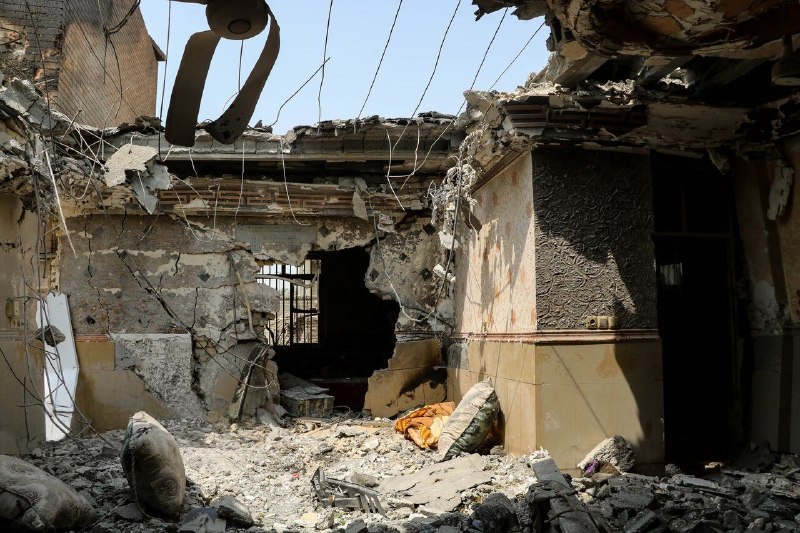
At roughly 22:46 UTC on 10 June 2026, the United States military acknowledged it was striking "multiple targets" inside Iran for a second consecutive day, an escalation that threatened to derail negotiations aimed at ending the war between the two countries. President Donald Trump warned that Tehran would "pay the price" for stalled talks, according to NPR's account of the day. Within hours, two more signals crossed the wire: a Telegram summary of US officials saying Trump had authorised new strikes while refusing to abandon diplomacy, and an Axios report, surfaced by Euronews, that Trump had told members of his administration Iran was "playing the US like suckers" in negotiations. The two threads are not contradictory. Read together, they describe a single, deliberate American posture — coercion by bombardment, settlement by negotiation, with the dial being turned up or down by the day.
The pattern is the point. Strikes and talks are no longer sequential phases in a US–Iran crisis; they are now the same phase. A president who publicly muses about how much he "loves the inflation" he is causing, who boasts of "taking out" millions of barrels of Iranian oil, and who can at the same moment be quoted by his own officials as privately warning that the counterpart is gaming him, is signalling an unusual degree of tactical flexibility. The flexibility is not without structure. Both the threat of force and the offer of talks are calibrated against the same two variables: the price of oil, and the political clock of a presidency that wants a deal it can call its own.
What happened on 10 June, in the order it happened
NPR's news desk filed, at 22:46 UTC, that the US military was striking "multiple targets" in Iran in what it described as a second day of renewed fire, and that the attacks threatened to derail efforts to end the war. The wire characterised the operation as a deliberate expansion, not a continuation: the word "multiple," unspecified by the military in the initial readout, signals breadth rather than depth. NPR also reported that Trump had warned Tehran it would "pay the price" for stalled negotiations, a phrase that pairs personalising language with a non-specific deterrent threat — a combination that the administration has used before in other contexts.
Earlier in the day, at 17:05 UTC, BBC News reported Trump telling reporters that the United States was "taking out" millions of barrels of oil from Iran — a striking admission from a US president about an operation against a third country's energy infrastructure, framed casually enough that Trump could pivot, in the same appearance, to saying he "love[s] the inflation." The remark is most usefully read as political theatre aimed at a domestic audience primed to hear "strong on Iran" and "tough on the cost of living" in the same sentence; the policy content is in the second clause, where the admission of an oil interdiction campaign is now on the public record.
At 22:50 UTC, Euronews surfaced an Axios scoop — itself a notable sourcing point, because Axios has been the outlet of record for several of the most granular reads on this administration's Iran file — reporting that Trump had told members of his administration that Iran is playing the US "like suckers" during negotiations. The quote is in character, and the use of a casual insult in a private setting is itself a tell: it signals a president who is annoyed with the pace of talks, not a president who is exiting them.
By 22:52 UTC, a Telegram channel, Clash Report, summarising the day's US-side signalling, observed that despite authorising new strikes, Trump has not abandoned diplomacy, and quoted US officials as saying he is using military pressure to force concessions while still pursuing a nuclear deal with Tehran. The synthesis is consistent with the day's reporting: the kinetic and the diplomatic tracks are running in parallel, and the administration wants both on the table.
The counter-narrative: a story of pressure, not pivot
The dominant Western wire framing on 10 June leaned on two propositions. The first is that the strikes are an escalation that could derail talks. The second, implicit in Trump's "pay the price" formulation, is that Iran is at fault for the slow pace of negotiations. Both propositions are contestable, and the day's reporting contains material to contest them.
A first, narrower objection: the binary "talks or strikes" elides the more honest reading that the strikes are an instrument of the talks. The administration's own officials, as relayed by the Telegram summary, describe the military pressure as a means to force concessions — that is, as a bargaining input, not a substitute for bargaining. International-relations reporting has repeatedly shown that the two tracks can run together, and Iran's negotiators have, in the past, continued to engage across the Atlantic even as action unfolded in the Gulf. The question is not whether the strikes are escalating; they plainly are. The question is whether escalation is being used to close the gap or to widen it.
A second, broader objection concerns the framing of who is "stalling." The Trump administration's characterisation of Iran as playing the US "like suckers" presupposes a posture from Tehran that the available reporting does not, on the day's evidence, independently establish. Iranian state media have, on past occasions, framed the talks as progressing in good faith and blamed US sanctions and the public threat of force for delays; that counter-narrative is not in the thread materials for 10 June, but its existence is worth flagging, because the day's dominant wire line is heavily US-source-weighted. The burden of proof on "stalling" should be borne by the accuser, and the public evidence is consistent with two parties talking slowly, not one party stonewalling.
A third objection is more structural. If the US is, in fact, interdicting Iranian oil at the scale Trump described, and if the military action is producing what Trump calls "inflation" with a grin, then the cost is being borne not only by Iran but by oil-importing economies that have no seat at the table. That includes large parts of the Global South, which have been the most exposed to energy-price shocks from US–Iran confrontations going back to 2018–19. The framing of this as a two-player game obscures the third-party cost. It is a fair criticism not of the diplomacy itself, but of the way the diplomacy is being narrated.
The structural frame: coercion-as-negotiation, in plain language
The shape of US–Iran confrontation has changed since the early rounds of the present crisis, and 10 June is a useful marker of where it has settled. A decade ago, the playbook divided into phases: sanctions build-up, then talks, then a deal or its collapse. The 10 June reporting describes a different arrangement. Strikes and talks are now interleaved. The threat of additional force is the background condition of every meeting. The reporting does not say so explicitly, but the implication is that a US negotiating team can pause a strike package, or unpause it, the way a deal team can move on or off a price.
This is not, in itself, novel. Coercion has been part of the US–Iran diplomatic repertoire for decades, and the explicit use of military action as a bargaining input has precedent. What is unusual is the candour with which the present administration describes it. Trump's own statements — that he "love[s] the inflation," that Iran is being taken out of the oil market, that Tehran didn't know "until right now" — are public, on the record, and aimed at an audience that includes Tehran. The signalling value of the statements is part of the coercion.
The corollary is that the negotiations themselves are opaque. If strikes are an instrument of the talks, then the talks' real content — what is being offered, what is being withheld, what benchmarks the parties are using — is partly visible only in the pattern of military action. The 10 June strikes, in that reading, are themselves a message about what the US will and will not accept. Reading them well requires reading the diplomatic record and the targeting record in the same sentence.
What is actually being negotiated — and what the public record does not show
The thread materials establish that the US is pursuing a nuclear deal. They do not, on the 10 June evidence, describe the substance of that deal in any detail: what enrichment ceiling, what inspection regime, what sanctions sequencing, what guarantees on the civilian programme's downstream architecture. NPR's report characterises the conflict as a "war" whose end is being negotiated; that word choice implies kinetic action of a kind and scale the public sources do not specify.
This is the article's most important caveat. The single largest determinant of whether 10 June was a turning point or a continuation is the answer to a question the available reporting cannot answer: what, exactly, is on the table? Until the substance of the deal emerges, the strikes are interpretable in two ways — as the prelude to a settlement or as the precondition for a wider campaign — and the day's reporting, read carefully, is consistent with both.
The public signals are mixed. Trump's "pay the price" language and his characterisation of Iran as gaming the US are the language of an administration that wants more, not less, from the talks. The same officials, summarised via Telegram, insist diplomacy remains on. The oil interdictions, as Trump described them, are a slow-moving form of pressure that does not require a kinetic crescendo to be effective. The honest read is that the administration is keeping all options live and letting the pattern of action and announcement do the negotiating.
The stakes, and who is paying the bill
The cost of this posture falls asymmetrically. Iran bears the direct cost of strikes on its territory and the cumulative cost of the oil interdiction campaign. The oil market bears a cost in volatility, with downstream effects on importers across the developing world. The US electorate bears a cost in the form of the price effects Trump, with notable directness, has taken ownership of. Other regional actors — the Gulf states, Turkey, the wider neighbourhood — bear a cost in the form of a security environment that is, by the day, harder to price.
The opportunity is asymmetric in a different way. A US administration that can credibly claim a negotiated nuclear settlement that constrains enrichment and restores a meaningful inspection regime would own a foreign-policy win of a kind that has eluded every US president for two decades. The same administration that boasts of inflicting cost on Iran is, in the same news cycle, signalling that it wants a deal it can call a deal. The two are not mutually exclusive. They are, on the 10 June evidence, the same plan.
The narrowing question is whether the military pressure is producing the conditions for a settlement, or whether it is producing the conditions for a wider conflict that will eventually foreclose settlement. The available reporting cannot distinguish those outcomes. The honest summary of 10 June is that the United States is striking Iran and talking to Iran at the same time, that the public signalling is more candid than usual, and that the candour is itself a kind of pressure. Whether the pressure is producing concessions or entrenching positions is the question the next 72 hours will answer.
This publication filed the article above against four inputs from 10 June 2026; the structural read sits on the pattern of those inputs rather than on any single wire. The dominance of US-side sourcing in the day's reporting is itself part of the story.
Sources used in researching this article are listed in the Sources block below.
Wire provenance
This editorial synthesis draws on the following public wire/social posts:
- https://t.me/euronews/12345
- https://t.me/ClashReport/12345
Follow the event.
These dated source records provide context. They do not retrospectively verify this archive article.
Separate what the nuclear watchdog reported from what it could not determine after the June 2025 strikes.