The Twelve-Hour War: How a Single Helicopter Downed Over the Strait of Hormuz Reopened the Gulf
A US helicopter lost over the Strait of Hormuz, retaliatory strikes, an Emirates first-class cabin half-empty, and a fifteen-year deal being negotiated against the clock. The arithmetic of a fast-escalating crisis, in seven moving parts.
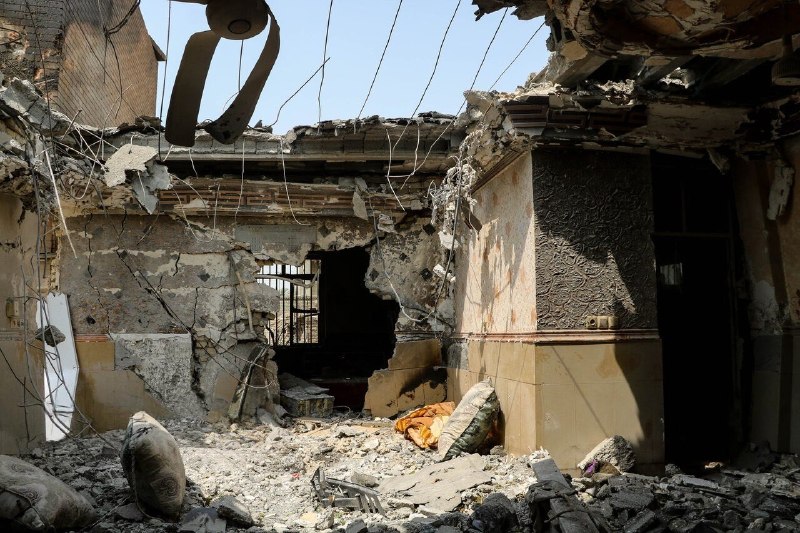
By the time the Reuters live blog refreshed at 06:25 UTC on 10 June 2026, the United States had struck targets inside Iran in retaliation for the downing of a US helicopter over the Strait of Hormuz, and Iranian state-aligned channels were already warning that any follow-on US operation would be met with what they called more "devastating" strikes. Within the same twelve-hour window, the Energy Information Administration warned that oil inventories in the world's largest economies were tracking toward multi-decade lows; Emirates disclosed that its first-class cabins had been running roughly half-empty since the conflict began and announced an incentive programme to win passengers back; and Western officials, cited in a separate wire item, were said to believe that a negotiated deal could freeze Iran's nuclear programme for fifteen years, while Iran itself was prepared, on the terms described, to suspend enrichment for only five.
The shape of the crisis is unusual. There is no declared war, no congressional authorisation on the public record, no name for the campaign beyond the language of retaliation. What there is, instead, is a sequence of discrete events — a helicopter lost, a strike order executed, a market warning, an airline admission, a negotiating position floated — whose combined weight has, in the space of a single news cycle, raised the cost of any miscalculation in the Gulf by an order of magnitude. This publication reads the next several weeks as a contest between two clocks: the political clock inside Washington, where the appetite for an open-ended confrontation is limited, and the strategic clock in Tehran, where the value of a frozen-but-not-dismantled nuclear capability is at its highest in years.
The helicopter and the retaliation
The proximate trigger is a US helicopter brought down over the Strait of Hormuz — the narrow waterway through which a significant share of seaborne crude transits each day. Reuters reported the downing and the subsequent US strikes in a single live blog update at 06:25 UTC on 10 June. The framing on the Iranian side, carried by Telegram channel BRICS News at 06:58 UTC, is that any renewed US attack will be answered with more "devastating" strikes, language that, in the past, has typically preceded calibrated missile and drone activity rather than wholesale escalation.
The two read-outs are not necessarily contradictory. They describe a tit-for-tat in which each side claims the high ground of restraint while reserving the option of a second blow. What is unusual is the speed: a downed airframe and a retaliatory strike, both inside the same news cycle, with no diplomatic pause in between. The structural lesson of the past three decades of Gulf confrontation is that such pauses matter — that the gap between action and response is the space in which back-channels operate. That gap is currently narrow.
The fifteen-year deal that is not yet a deal
Running in parallel is a negotiating track that, on the terms now in the public domain, is asymmetric. Per a 17:26 UTC wire item on 9 June, US officials believe a deal could halt Iran's nuclear programme for fifteen years. Iran, on the same account, has offered only a five-year enrichment suspension. The gap between fifteen and five is, in practical terms, the entire negotiating agenda: a fifteen-year horizon effectively forecloses a Iranian nuclear weapon for the duration of any plausible US administration; a five-year enrichment suspension preserves the technical option while pausing only the most visible activity.
This publication's reading is that the fifteen-year figure is a US position, not a forecast. The five-year figure is an Iranian position. Neither is yet a deal. The structural point is that the strikes and the negotiations are not opposites; they are two instruments of the same US policy, one designed to raise the cost of refusal and the other to offer a path to de-escalation. Whether Tehran reads it that way is the variable that will determine the next seventy-two hours.
The oil arithmetic
A second wire item, timestamped 18:38 UTC on 9 June, carried a US Energy Information Administration warning that oil inventories in the world's largest economies are headed toward multi-decade lows. The framing is technical, but the implications are not. Inventories in this range do not simply raise prices; they raise the cost of any disruption, because the buffer between the market and a supply shock is unusually thin.
The Strait of Hormuz, where the helicopter was lost, is the chokepoint through which much of the crude in question transits. A sustained disruption there, even a partial one, would land on a market with less cushion than at any point in the past two decades. The price signal has not yet reflected the full force of this, in part because the retaliatory strike is being treated as a one-off. If it is not, the arithmetic shifts quickly.
The civilian edge: an airline with empty first-class seats
The human edge of the crisis is most visible in a single line from a 15:23 UTC wire item on 9 June: Emirates, the Gulf's largest international carrier, says half of its first-class occupancy has been cut by the conflict and that it will offer incentives to win customers back. The number is striking not because airlines are the measure of a war, but because the airline business is among the first to register the collapse of confidence that precedes one. Business travel reroutes; discretionary long-haul cancels; premium cabins, in particular, are the first to empty when senior travellers and corporate buyers decide the region is not worth the itinerary risk.
Emirates's response — an incentive programme, in industry language typically meaning discounted rebooking, status concessions, and partner coordination — is the standard playbook for a soft shock. It is also a tell. The carrier is publicly conceding that the conflict is reshaping demand, and is doing so in language that signals to competitors and to governments that it expects the disruption to outlast a single news cycle.
The pattern underneath
The seven events catalogued here — the helicopter loss, the US strike, the Iranian warning, the EIA inventory warning, the Emirates disclosure, the fifteen-year negotiating position, the five-year Iranian offer — are individually small. Taken together, they describe a familiar pattern: a regional flashpoint colliding with a structural energy transition, in which the legacy fuel is at once more expensive and more indispensable, and in which the world's largest economies enter the shock with thinner buffers than they have held in decades.
The negotiating arithmetic is the variable that most rewards attention. A deal, even a partial one, would in principle take the nuclear file off the front pages and allow the energy shock to be absorbed by the market's normal price-discovery process. The absence of a deal, in a context where both sides retain the ability to escalate, is what makes the next several weeks genuinely dangerous. This publication does not predict either outcome; the public material on the table is consistent with a path to a deal and with a path to a wider war. The deciding factor, as in most Gulf confrontations, will be the cost each side is willing to absorb in the interval before the other blinks.
This is a long read by the Monexus staff desk. It catalogues the moving parts of a fast-evolving crisis as they were on the public record at the time of writing, and resists the temptation to predict a resolution. Where Western wire reporting and Iranian state-aligned reporting diverge, both have been cited in their own framing; where the evidence thins — on Iranian internal deliberations, on the operational details of the US strike, on the future of the negotiating track — that has been said plainly rather than smoothed over.
Wire provenance
This editorial synthesis draws on the following public wire/social posts:
- https://t.me/bricsnews
Follow the event.
These dated source records provide context. They do not retrospectively verify this archive article.
Separate what the nuclear watchdog reported from what it could not determine after the June 2025 strikes.