Stagflation Whispers and Strait Talk: Why a US-Iran Strike Threat Is Now a Macro Story
With headline CPI re-accelerating to 4.2% and the President publicly weighing strikes on Iranian power plants and bridges, the energy-shock channel into US prices is back on the table.
At 13:31 UTC on 10 June 2026, the bond market was no longer trading inflation. It was trading the possibility that the United States would bomb an Iranian power plant, and the possibility that the Federal Reserve had just lost its most precious excuse not to cut. Less than an hour earlier, at 12:32 UTC, the Bureau of Labor Statistics had confirmed what desks had feared: US headline CPI printed 4.2% year-on-year, in line with the 4.2% consensus and a sharp re-acceleration from 3.8% the prior month. The print was telegraphed at 12:17 UTC, when @unusual_whales flagged the release window on the Unusual Whales fiscal terminal. Within ninety minutes, the same account was carrying a quote that effectively priced a war-risk premium back into the curve: "BREAKING: Trump: I am close to ordering new strikes against Iranian power plants and bridges."
For more than a year, the US rate-cut narrative rested on a clean disinflation glide path. That story is now cracked. A 4.2% print is not a one-off shock; it is a regime reading that implies services inflation is sticky enough to survive two-sided trade frictions, while goods inflation has likely bottomed. Layer a credible threat of strikes on a regional petro-state and the question stops being whether the Fed has room to ease, and becomes whether it has the credibility to hold. That is the macro story buried in two wires.
The CPI print is the headline, but the energy channel is the headline after that
The 4.2% year-on-year number, reported by Unusual Whales on 10 June 2026, was not a miss. It landed exactly on consensus, and the 3.8% prior reading confirms the move is a re-acceleration, not base-effect noise. Core services categories, which had been the Fed's working assumption for the soft-landing thesis, have not given ground fast enough to offset goods and energy. A central bank that has spent twelve months calling transitory the most visible component of the basket has now been handed data in which the prior month looks like the cyclical low.
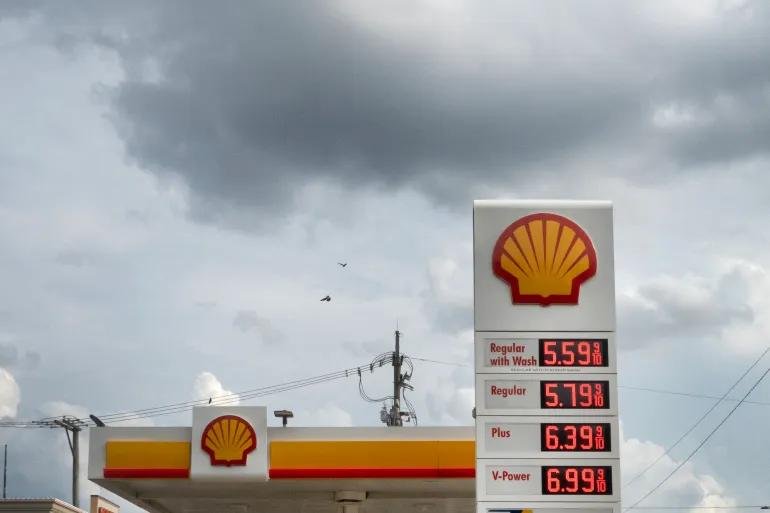
Energy is the variable that binds the two stories together. A strike on Iranian power and bridge infrastructure would not, in the first hours, target oilfields directly, but the Strait of Hormuz is the marginal barrel for global seaborne crude, and the signalling effect on Tehran, on Gulf insurance markets, and on OPEC+ is immediate. A risk premium of even five to ten dollars a barrel on Brent translates, inside thirty to sixty days, into measurable US gasoline CPI contributions. The June 2026 print is the last clean one the Fed will get before the autumn, and it is printing hot.
The strike threat is not a red line; it is a negotiating posture with macro consequences
The "close to ordering" language matters more than the threat itself. US presidents do not telegraph strikes against another sovereign's grid on a slow news day by accident. The phrasing is calibrated for an audience: Tehran, the Gulf monarchies, oil traders, and, not least, a domestic political base for whom the existing maximum-pressure posture has so far delivered neither a new nuclear constraint nor a clean diplomatic win. A strike threat is the highest-cost way to say the policy of sanctions-only leverage has been judged insufficient.
Read the same words through a market lens and they are doing different work. They are restoring an explicit risk premium to a crude complex that, through the first half of 2026, had been trading as if the structural Middle East risk had been resolved. They are reminding the Fed that any cut path it wants to write into the September dots will collide with whatever energy shock a real strike would deliver. And they are reminding OPEC+ that its spare-capacity cushion, which has been the only meaningful lever keeping Brent in the high-sixties, is once again the most important policy asset in the world.
The structural frame: an incumbent order pricing its own credibility
What is on display is a familiar pattern: the world's reserve issuer publicly threatens a strike against a regional power whose commodity underwrites global energy pricing, on the same day its own inflation gauge refuses to behave. The two facts do not cancel; they compound. The more credibility the White House invests in the threat, the less room the central bank has to ease into a re-accelerating print. The more room the Fed spends reassuring markets that the next move is still data-dependent, the more sensitive oil becomes to the next headline out of Washington or Tehran.
The room for manoeuvre is narrower than the political rhetoric suggests. Iran is not deterred by sanctions it has absorbed for a decade, and it is not impressed by a strike threat on a Tuesday that disappears by Thursday. The Gulf states, which have spent four years quietly diversifying away from a US security umbrella, are watching the signal carefully. And the global south importers, from New Delhi to Brasília, have spent the last cycle building crude-purchase architecture that is partially insulated from dollar-clearing. None of that is good for an incumbent order that needs the next macro story to be a soft landing, not a stagflationary siege.
Stakes and what to watch
The next seventy-two hours matter more than the next seventy-two pages of Fed minutes. If the strike language is walked back and the Strait of Hormuz remains nominal, the 4.2% print still leaves the door open for a single, pre-emptive insurance cut into the autumn — but only if labour data cooperates. If even a limited strike is ordered, expect a fast reset in oil, in two-year yields, and in dollar safe-haven demand, with the carry-trade complex selling off into a stronger greenback. If the threat lingers without action, the slow-bid risk premium is the worst outcome: persistent, corrosive, and impossible for the Fed to neutralise with words.
The honest reading of the two wires from 10 June 2026 is that Washington is now negotiating with two audiences at once — Tehran, and its own rate-setting committee — and the public is being asked to underwrite the cost of the posturing. That is a posture, not a policy. Postures, in macro, are paid for in basis points, and the price is starting to print.
This piece ran on the opinion desk under the staff-writer voice. Where the wire services reported the 4.2% CPI year-on-figure and the presidential strike comments as separate stories on 10 June 2026, this publication reads them as a single macro signal: the inflation regime and the Iran file are no longer separable trade.
Wire provenance
This editorial synthesis draws on the following public wire/social posts:
- https://x.com/unusual_whales/status/
- https://x.com/unusual_whales/status/
Follow the event.
These dated source records provide context. They do not retrospectively verify this archive article.
Separate what the nuclear watchdog reported from what it could not determine after the June 2025 strikes.