US strikes on southern Iran focus on air defences, radars and drone C2 — and the retaliation clock starts
A US official tells Axios that targets hit in southern Iran are air-defence systems, radars and drone command-and-control sites — and that an Iranian response against American bases is expected.
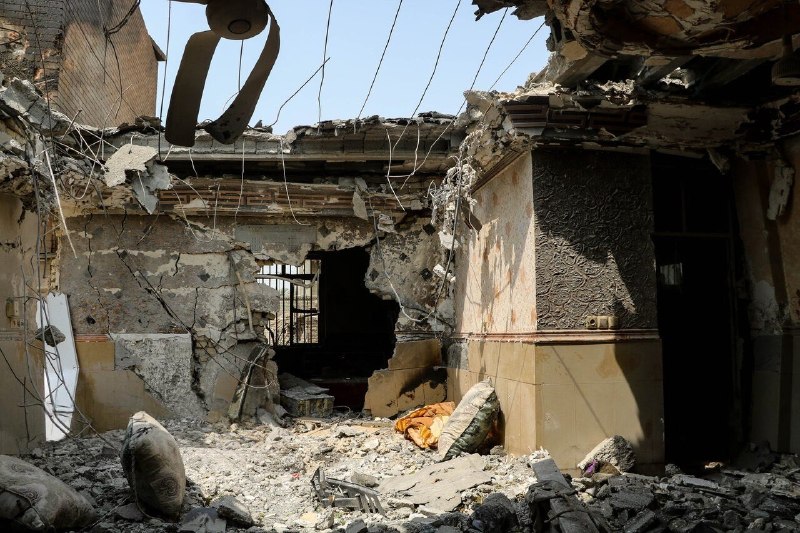
The first wave of US strikes on Iran on the evening of 10 June 2026 was concentrated in the south of the country and aimed specifically at air-defence systems, radar installations and the command-and-control nodes that direct Iran's drone fleet, according to a senior US official speaking to Axios. Reporting carried across Telegram channels monitoring the wire, including wfwitness and DDGeopolitics, places the timing of the briefings in the 21:53–21:54 UTC window. The geographic restriction is significant: this is not a campaign against Iran's nuclear or missile infrastructure, at least on the opening night. It is a counter-air operation, designed to clear a corridor through which follow-on strikes can pass.
The narrowness of the target set matters more than its size. A US official, quoted via Axios and relayed by multiple channels including Clash Report and JahanTasnim, said the operation will run for hours and that "hundreds of targets" are expected to be engaged. Even allowing for the rhetorical inflation that tends to accompany opening-night briefings, the shape of the campaign is consistent with a sequenced approach: degrade Iran's integrated air-defence system first, expand the target list once the path is open. Southern Iran — the littoral facing the Strait of Hormuz and the Gulf — is also the most strategically dense part of the country's air-defence network, the part that protects both the nuclear-relevant facilities at Natanz and Isfahan to the north and the missile cities further inland.
The Iranian frame, in its own words
Iranian state-aligned reporting tells a noticeably different story. JahanTasnim, carrying a translation of Iranian officials' lines, emphasises that the attacks are "concentrated in the south" — language that concedes the geographic point but reframes it as evidence that the strikes are calibrated, not punitive, and therefore leave room for de-escalation. The Tasnim framing is a familiar one in Iranian crisis communications: acknowledge the strike, narrow its significance, prepare the domestic audience for retaliation rather than capitulation. The structural reality is that an Iranian counter-strike against US bases in the Gulf has been openly pre-announced by American officials themselves, which is itself a kind of signal. As the channel relayed at 21:50 UTC, US officials told Axios: "We predict that Iran will target American bases like the previous day." When a superpower publicly forecasts its own forces will be hit, the war plan is being run as much in the news cycle as on the tarmac.
Why the target set points to escalation, not de-escalation
Air-defence systems and radar are not the kind of targets a state hits when it is sending a message. They are the kind of targets a state hits when it intends to hit other targets tomorrow that the air-defence systems would otherwise prevent. The drone command-and-control element is particularly telling. Iran's asymmetric doctrine over the past two decades has leaned heavily on long-range Shahed-type drones, both as a delivery system for the Russian–Ukrainian theatre and as a retaliatory reserve aimed at Gulf energy infrastructure. Disabling the C2 layer that coordinates those drones is therefore a precondition for any sustained US air operation over the country — and a precondition, too, for the threat to Gulf shipping that an Iranian retaliatory strike would represent.
This is the read that mainstream Western and Israeli analysts have converged on, and the read that Iranian-aligned channels are working hard to dilute. Both reads are worth holding in the same hand. The Western frame says the strikes are surgical and limited; the Iranian frame says they are contained and therefore beatable. The structural truth is closer to a third position: a counter-air operation of this scope is a long, escalatory commitment disguised as a one-night event. A US official's claim that strikes will continue "for hours" is best read as a signal to Tehran that the airspace is being claimed, not borrowed.
What remains uncertain
The source material for this article is unusually narrow — six Telegram posts, four of which are direct relays of the same Axios scoop, one of which adds the Iranian-state framing, and one of which adds the retaliation-forecast line. None of the channels cite on-the-ground Iranian reporting with named sources; the casualty picture, if there is one, has not yet emerged. The "hundreds of targets" figure is a US official's projection, not a battle-damage count. And the most important variable — whether Iran actually strikes back at US bases, and at what scale — is presently a US expectation, not an Iranian declaration. Readers should treat the strike count, the duration, and the retaliation forecast as a single coordinated briefing, because that is what they are.
The next 12 to 24 hours will test that briefing against events. If the air-defence network is degraded as advertised, the second wave will move north and the target set will widen visibly. If Iran retaliates, the question is no longer what the US will hit, but what the US will hit next. The southern target list is the cover for the northern one.
Desk note: Monexus is treating the Axios briefing as the load-bearing source for this article, with Iranian state-aligned coverage from Tasnim presented in parallel rather than as a competing factual record. Both the Western and Iranian framings are surfaced, with a judgment that the structural shape of the operation — counter-air first, follow-on second — points to a longer campaign than the opening-night optics suggest.
Wire provenance
This editorial synthesis draws on the following public wire/social posts:
- https://t.me/wfwitness
- https://t.me/DDGeopolitics
- https://t.me/JahanTasnim
- https://t.me/ClashReport
- https://t.me/realnetworkofintel
- https://t.me/JahanTasnim
Follow the event.
These dated source records provide context. They do not retrospectively verify this archive article.
Separate what the nuclear watchdog reported from what it could not determine after the June 2025 strikes.