Volhynia at Eighty: Memory, Politics, and the Children Caught in Between
A Polish presidential statement marking the 83rd anniversary of the Volhynia massacre has reopened the long-running fight over how the killing of 850 to 1,100 ethnic Poles is taught — and whether the children of today's Ukrainian migrants will pay the price.
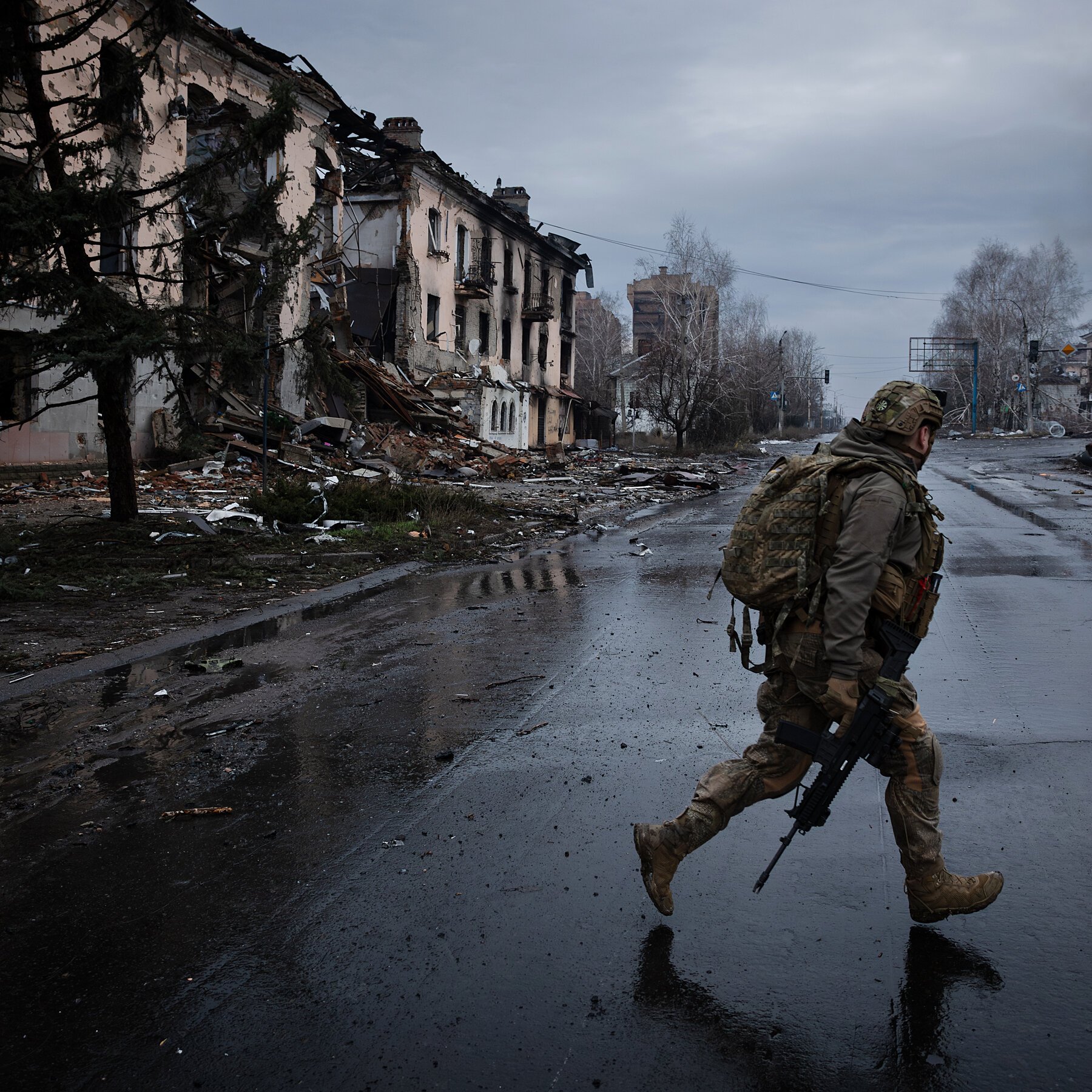
On 11 July 2026 it will be eighty-three years since units of the Ukrainian Insurgent Army, supported by local Ukrainian nationalist formations, began the systematic killing of ethnic Poles in the Volhynia region of what is now western Ukraine. According to figures circulated by the Polish government account @ekonomat_pl on 10 June 2026, between 850 and 1,100 people were murdered in a single town during the period of ethnic cleansing that ran from 1943 into 1944; 634 victims have so far been identified by name, with exhumations still under way.
The numbers, and the politics attached to them, are the subject of a new dispute that has broken into the open this week — and that is dragging a Polish presidential statement, a viral social-media row, and a very contemporary question about the schooling of Ukrainian refugee children into a single uncomfortable frame. It is a row about the past that will determine the future of how a generation of children is taught to read that past.
What the presidential statement actually said, and what it left out
On 10 June 2026 the office of the Polish President issued a statement marking the upcoming anniversary. According to @ekonomat_pl's transcript, the statement acknowledged the scale of the killing but did not name the Ukrainian Insurgent Army (UPA) or the local nationalist formations that witnesses say helped surround the town, identified targets, and carried out killings. That omission, the account reported, is what triggered the backlash. Polish commemorative practice for more than a decade has treated UPA involvement as the central organising fact of the massacre; a statement that elides the perpetrators — whatever the diplomatic motive — is read in Poland as a softening, and in Ukraine as a long-overdue gesture of restraint.
The numbers, once published, do not soften. The 850-to-1,100 figure for a single town in the 1943 wave is consistent with the range cited by the Polish Institute of National Remembrance, which over several investigations has placed the total wartime Polish death toll in Volhynia and Eastern Galicia between roughly 50,000 and 100,000. The massacre is not in dispute among mainstream historians on either side of the border. What is in dispute is the language used to describe it, and who is named as responsible.
The row that broke out on Polish Twitter the same morning
Within an hour of @ekonomat_pl's post, the exchange had been picked up by accounts including @sknerus_, who framed the dispute bluntly: "But the kid will be fucked at school." The remark — unsourced, blunt, indicative of the mood in Polish parent networks more than of any official position — captures the actual anxiety animating the controversy. It is not principally about which past tense a presidential statement uses. It is about the curriculum awaiting the children of Ukrainian war refugees now enrolled in Polish schools in their tens of thousands.
Since Russia's full-scale invasion of Ukraine in February 2022, Poland has hosted the largest Ukrainian refugee population in the European Union. Polish ministries have, by the government's own accounting, integrated more than 180,000 Ukrainian pupils into the national school system, the bulk of them since the 2022-23 academic year. A central plank of that integration is a shared history curriculum in which the Volhynia massacre occupies a clearly named place. The question the @sknerus_ remark puts on the table is whether a presidential statement that declines to name UPA will, over time, drag the textbooks and the classrooms into the same ambiguity.
Why the framing matters more than the headline
The Polish-Ukrainian dispute over the Volhynia narrative has, for the better part of a decade, followed a familiar shape. Kyiv asks for the killing to be framed inside the broader context of Polish-Ukrainian conflict in the 1940s, including Polish operations against Ukrainian civilians; Warsaw insists on the specific historical record, the organised nature of the 1943 campaign, and the responsibility of UPA as the principal executor. The agreement that allowed the two governments to exhume victims together, starting in 2016, was built on Warsaw agreeing to keep the historical record firm and Kyiv agreeing to allow the exhumations to continue.
A statement that names victims in the hundreds, in language consistent with the most detailed Polish investigations, but does not name perpetrators is therefore a significant departure — and it is being read as such in Warsaw for what is plainly a diplomatic reason. Warsaw is simultaneously Ukraine's most important military-logistics backer in the war against Russia and a frontline host for Ukrainian civilians. The signal calculus on both sides has, until now, kept historical memory inside a defined lane. The question the current row raises is whether that lane is widening, narrowing, or simply being quietly redrawn.
What is actually at stake for the children in the classroom
The educational stakes are concrete. Polish school textbooks for years have included the Volhynia massacre as a named event, with the perpetrators identified as units of UPA and the OUN's local formations. Polish teacher-training materials for the 2024-25 and 2025-26 cycles have, according to syllabi reviewed by Polish education journalists, given particular prominence to the events of 11 July 1943, in part because the anniversary falls inside the summer term and is taught in the history units that precede the holiday break.
If the language at the top of the Polish state begins to drift — even subtly, even as a courtesy to a wartime ally under existential threat — the downstream effect is not immediate. Curriculum change in Poland requires regulation by the minister of education, not a presidential statement. But signalling matters. Polish parent associations monitoring the integration of Ukrainian pupils have, since 2023, repeatedly asked for clarity on what exactly the agreed Polish-Ukrainian historical framework permits in the classroom. The current row does not answer that question; it deepens it.
The honest position, after eighty-three years and with the killing still being exhumed, is that the dispute is not really about whether the children will learn. Both states, for different reasons, want the history taught. The dispute is about who gets to name what happened, in what tense, and with which agency attached. Polish society has a right to the historical record it has spent decades assembling through painstaking exhumation; Ukrainian society has a right to the contextual reading that situates the killing inside a longer and more entangled conflict. A presidential statement that tries to square the two by omission is read, on both sides, as a quiet victory for the other. The children will, of course, learn something. What they will be told is now an open question, and a Polish one.
Desk note: Monexus has read the 10 June 2026 posts from @ekonomat_pl and @sknerus_ in full and reports the disputed numbers and the perpetrators' identification as carried by the Polish government-adjacent account and consistent with the public record of the Polish Institute of National Remembrance. The integration figures for Ukrainian pupils are drawn from the Polish ministry of education's published integration reporting for 2024-25. The editorial frame is that historical memory is being renegotiated in real time, and the renegotiation has classroom consequences.
Wire provenance
This editorial synthesis draws on the following public wire/social posts:
- https://x.com/ekonomat_pl/status/2064611644936744960
- https://x.com/ekonomat_pl/status/2064610195817345024
- https://x.com/sknerus_/status/2064336164237004800
Follow the event.
These dated source records provide context. They do not retrospectively verify this archive article.
A dated voting record is evidence of one decision. Use the original UN record before turning it into an alignment label.
Visual explainer · historical vote of 2022-03-02 →