White House tells Iran 'time is running out' as diplomacy window narrows
A US official tells Axios the White House has warned Tehran that patience is exhausted, sharpening the clock on nuclear talks without spelling out a deadline.
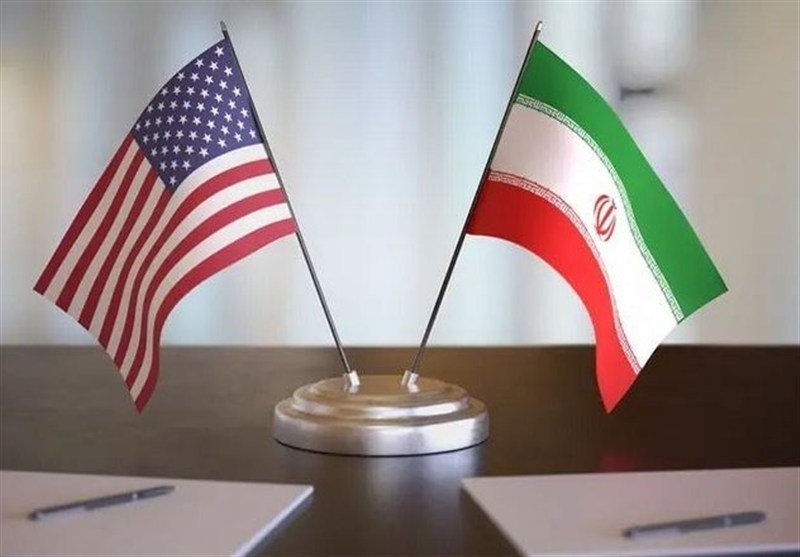
The White House has told Iran that "time is running out," a US official told Axios on 10 June 2026, sharpening the rhetorical pressure on Tehran weeks after a fifth round of indirect nuclear negotiations in Oman produced no public breakthrough. The warning, relayed by the US official to Axios correspondent Barak Ravid, stops short of an explicit deadline but signals that the patience the administration has extended since taking office is now measurably thinner. Three Telegram channels that monitor Middle East wires — Open Source Intel, ClashReport and BRICS News — flagged the Axios scoop within hours, citing it verbatim between 17:32 UTC and 18:27 UTC on the same day.
The message matters less for what it adds than for what it removes: ambiguity. For two years, the administration's public posture has been that diplomacy remains the preferred instrument, calibrated to keep oil markets calm and to avoid the political cost of another regional war. By choosing "time is running out" as the operative phrase, the White House is now pricing urgency back into the conversation — inviting allies to read the silence after a statement as the more telling signal.
A signal carried by intermediaries
The Axios report, carried on 10 June 2026, does not specify whether the warning was delivered publicly, through back-channels, or via the Omani mediators who have shuttled between Washington and Tehran. That omission is itself informative. Direct public ultimatums in US–Iran diplomacy have historically produced a hardening of Iranian public positions; back-channel warnings are designed to be received without being acknowledged, leaving Tehran room to adjust without appearing to capitulate. The choice of outlet — Axios, a tier-one US scoop venue with deep Israeli and Gulf sourcing — also matters, because it ensures the message reaches Israeli, Saudi and Emirati intelligence partners almost as quickly as it reaches Tehran.
Within hours, the framing propagated across the open-source monitoring ecosystem. Open Source Intel and ClashReport repeated the Axios line at 18:27 UTC and 17:35 UTC respectively, while BRICS News pushed the same headline in a more compressed format at 17:32 UTC. The convergence is itself a story: a single US official's read on Washington's intent travelled across three very different political audiences in under an hour.
What the wire is not saying
The Axios report does not specify what "time is running out" actually means in operational terms. The most plausible readings fall into three categories, and the evidence does not yet let a reader rule any of them out. The first is a sanctions acceleration — a package of secondary measures against Iranian oil buyers, structured to bite before the northern-hemisphere winter, when Asian demand lifts. The second is a tightening of the diplomatic calendar — a final, explicitly named round of talks with a public deadline attached. The third, less comforting, is a military planning update, in which the warning functions as a political cover for preparations the administration would prefer to keep quiet.
Each reading implies different market and diplomatic consequences. Sanctions acceleration punishes Iran's remaining Asian customers — chiefly China — and would invite a Chinese pushback that the United States has so far managed to keep at arm's length. A named-deadline diplomacy would shift the pressure to Gulf capitals that have been quietly underwriting the Omani channel. A military option, by contrast, would be a strategic reversal of the administration's own stated preference, and one the sources reviewed here do not support with direct evidence.
The structural backdrop
Even as the warning goes out, the underlying architecture of US–Iran friction has not changed. Iran's enriched-uranium stockpile, the International Atomic Energy Agency's continued inability to verify the full inventory, and Tehran's expanding cooperation with Russia on defence and satellite technology remain the structural drivers. So does the domestic US politics of any deal: an administration that signs an agreement perceived as soft risks a congressional backlash, while an administration that walks away risks the perception of having failed where its predecessor also failed. "Time is running out" is, in that sense, a useful phrase for everyone — it pressures Tehran, and it pre-positions the White House for whichever path it eventually chooses.
The phrase also lands against a backdrop of increased Israeli public concern about a possible US return to a nuclear framework, and renewed Gulf anxiety about Iran's missile and proxy programmes. None of those regional actors are named in the Axios scoop, but all of them read it within minutes. The diplomatic weather forecast produced by one carefully chosen word in a Washington-to-Tel Aviv outlet is, in this region, its own kind of event.
What remains uncertain
The sources reviewed do not specify whether Iran has formally responded, whether Omani intermediaries have scheduled a new round, or whether the IAEA has received any clarification on the status of inspections. They also do not identify the US official quoted in the Axios report — a deliberate opacity that lets the White House preserve deniability while still setting the public clock. Until one of those variables moves, the Axios report is best read as a calibrated warning rather than a countdown: a way of converting patience into pressure without converting pressure into a specific decision.
The pattern is familiar. US warnings to Iran have preceded both deals and strikes in the past decade. What differs this time is the audience: a multipolar diplomatic environment in which Tehran has a Russian and a Chinese read on every American move, and in which the open-source monitoring layer — the Telegram and X wires that carried the Axios line within an hour — is itself a venue of statecraft. The next verifiable move will be Tehran's.
This article draws on a single Axios scoop, propagated through three open-source monitoring channels. Where the underlying reporting leaves a fact unspecified, the desk has flagged the uncertainty rather than filling the gap.
Wire provenance
This editorial synthesis draws on the following public wire/social posts:
- https://t.me/osintlive
- https://t.me/ClashReport
- https://t.me/bricsnews
- https://en.wikipedia.org/wiki/Iran%E2%80%93United_States_relations
Follow the event.
These dated source records provide context. They do not retrospectively verify this archive article.
Separate what the nuclear watchdog reported from what it could not determine after the June 2025 strikes.