The 2026 World Cup is supposed to be a global party. The bill says otherwise.
North America hosts, Asia pays — the 2026 World Cup is shaping up as the most expensive edition in the tournament's history, with fans and broadcasters in the Global South absorbing the cost of football's biggest commercial era.
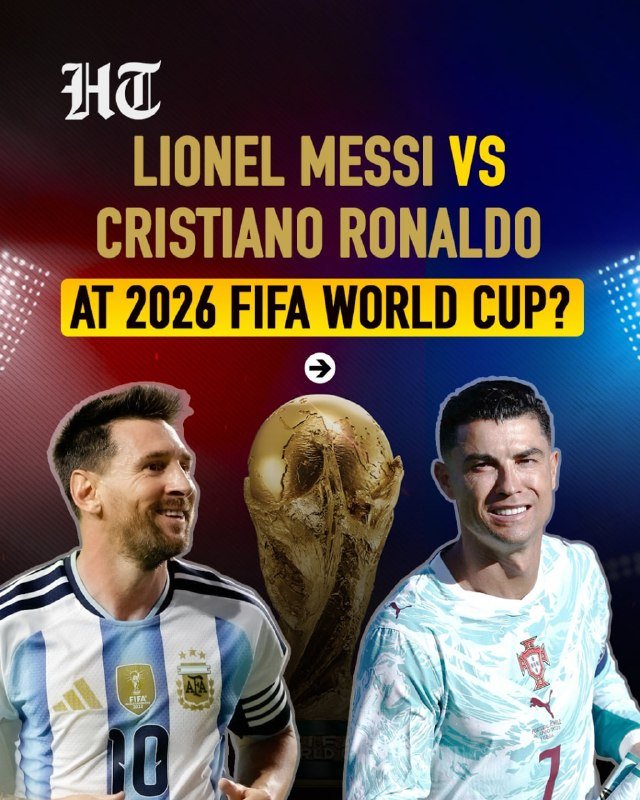
Football's showcase returns to North America on 11 June 2026, expanded to 48 teams and 104 matches across the United States, Canada and Mexico. By any measure the tournament is a logistical and commercial marvel. It is also on track to be the most expensive World Cup in the competition's history — a fact FIFA president Gianni Infantino has stopped bothering to deny and a fact the fans who actually fill the stadiums are now confronting directly.
Two stories, running on parallel tracks, expose the same underlying shift. In host cities, supporters who treat the World Cup as a once-in-a-generation pilgrimage are being quoted four-figure sums for group-stage seats. Across the Pacific, broadcasters who once treated the tournament as a public-spirited obligation are deciding whether the rights fee for the next cycle is a bill they can still swallow. Both stories are about who pays for the modern game, and who gets priced out of it.
The people's game, the elite's invoice
France 24 reported on 10 June 2026 that ticket-price controversy has become the dominant fan-facing story in the run-up to kickoff, with resale markets in host cities pricing ordinary supporters out of the cheapest category long before the opening whistle. Hospitality packages, dynamic-pricing tiers, and the long tail of fees attached to every digital transaction have all conspired to make a tournament that markets itself as a global celebration feel closer to a luxury cruise. The result is a visible tension: FIFA has spent more than a decade expanding the field — 48 teams means dozens of smaller footballing nations finally get a stage — but the audience that fills the lower bowls in Dallas, Toronto and Mexico City is, by design, wealthier than at any previous edition.
The counter-narrative from organisers is familiar: expanded supply (more matches, more stadiums) should, in theory, push prices down. In practice, the bottleneck is the controlled primary market and FIFA's allocation logic, not the underlying scarcity of seats. The framing that holds up best is the one that treats the World Cup as a premium global product whose price ceiling is set wherever broadcasters and sponsors can still pay, with the consumer side catching whatever is left.
The Asian bill
The bigger commercial story, and the one with longer geopolitical teeth, is playing out in front of televisions rather than turnstiles. According to Nikkei Asia reporting on 10 June 2026, Asian broadcasters are openly weighing whether the next rights cycle is worth the price FIFA will demand. East Asia may be the world's largest football audience by raw numbers, but with most matches scheduled for kickoff times that fall in the middle of the working night across Seoul, Tokyo, Beijing and beyond, the live-ratings case has thinned. Networks are now negotiating from a weaker position: renew at a discount, package the rights differently, or in some cases walk away and let the games air on a free, ad-supported tier that monetises after the whistle has blown.
The structural read is straightforward. FIFA's commercial model has been built, for two decades, on the assumption that the sport's biggest growth audience will also be its most lucrative paying audience. The 2026 tournament is the first edition in which that assumption is being stress-tested in real time. The same audience that powered record rights deals in 2018 and 2022 is now being asked to fund a product that, for half the planet, literally airs after bedtime. Discounts in one region force higher asks in another. Higher asks in Europe and the Gulf — where rights inflation has its own ceiling — feed back into the host-city cost base.
A tournament priced for its sponsors, not its supporters
What the dual stories expose is a federation that has, over a decade, moved steadily up the value chain. The host cities bear the infrastructure cost. The host federation takes the political risk. The broadcasters absorb the ratings risk. The fans absorb whatever is left. Each of those constituencies is, for the first time in the same cycle, publicly pushing back at once. The framing of the 2026 World Cup as a unifying global event survives largely because the alternative — acknowledging that football's marquee product has outgrown the financial reach of the people it claims to represent — is a story the sport's commercial architects would prefer not to tell.
Stakes, and what remains contested
If the Asian broadcast standoff becomes a rout — major rights holders declining to renew, smaller markets picking up scraps at a discount — the next rights cycle resets lower and the burden shifts back toward ticket, hospitality and sponsorship revenue inside host countries. That is, in effect, a privatisation of World Cup economics: those present pay more, those watching from a distance pay less or get a degraded product. The reverse — broadcasters absorb the fee and pass the cost to advertisers, with stable fan-facing prices — is the read FIFA's commercial team will prefer, and the one Infantino will sell publicly.
The contested ground is real but narrow. It is not whether the 2026 World Cup will be the most expensive ever; both the fan-side and broadcast-side reporting make that difficult to dispute. It is whether the post-tournament reset pulls prices back toward something resembling accessibility, or whether this edition becomes the new baseline. On current evidence, the answer will be set not in Zurich or in any of the three host federations, but in the negotiating rooms of Seoul, Tokyo and Mumbai, where the next rights cheque is being quietly written.
Desk note: The wire has largely framed the cost story as a consumer complaint about tickets. The bigger story — that the global broadcast compact is fracturing along time-zone and growth-market lines — is the one that will define the post-2026 cycle.
Wire provenance
This editorial synthesis draws on the following public wire/social posts:
- https://t.me/NikkeiAsia
- https://t.me/nikkeiasia