Forty-eight teams, one tournament: the 2026 World Cup arrives as a logistics problem disguised as a football competition
A 48-team field, the most law changes in a single tournament, and an unprecedented betting handle — the 2026 World Cup will be tested on infrastructure long before it is judged on football.
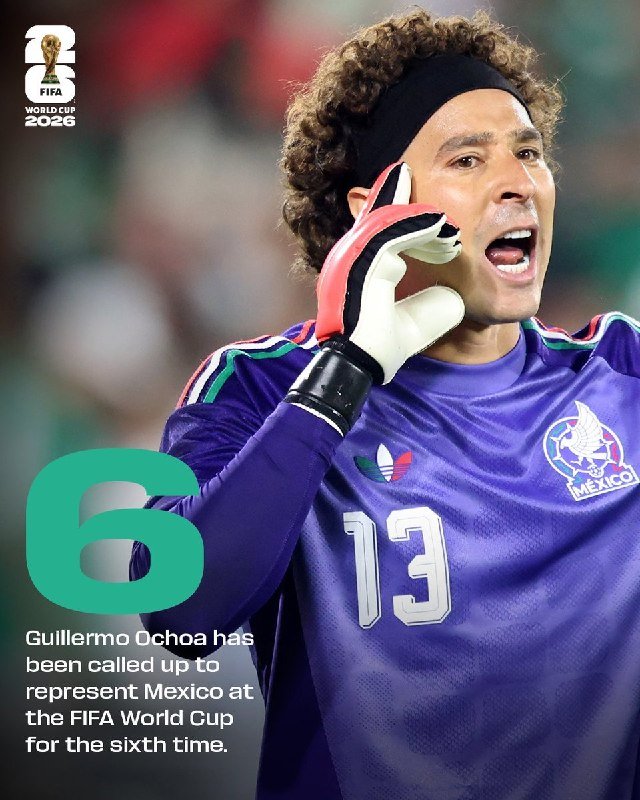
The 2026 FIFA World Cup kicks off this week across the United States, Mexico and Canada — the first edition of the men's tournament staged in three countries simultaneously, and the first to feature 48 teams. By 10 June 2026, the volume of pre-tournament coverage had already shifted away from the conventional concerns of form and fitness toward a more pragmatic question: can the logistics hold?
That is the right question, and not only because the schedule is unprecedented. A 48-team field expands the group stage from 64 to 104 matches, stretches the calendar to a full month, and pushes every operational subsystem — refereeing, broadcast, security, and betting infrastructure — into territory with no modern precedent. The competition has become a stress test of architecture before a ball is kicked in earnest.
A tournament rebuilt mid-flight
The 2026 edition is, in a real sense, a new competition wearing the name of an old one. The expansion from 32 to 48 teams is the most visible change, but it is not the most consequential. According to a BBC Sport explainer published on 10 June, the tournament will introduce a series of in-game law changes — including revised guidance on timewasting, the use of substitutes, and the application of VAR — that have been agreed at the international level and rolled into the competition at short notice. Referees and federations have had limited opportunity to drill the new protocols in a tournament environment.
The structural change matters because the volume of decisions is rising faster than the number of qualified officials. Every additional match is, statistically, an additional cluster of stoppage-time and offside interventions, and the modern refereeing apparatus is already the part of the game that fans and federations complain about most consistently. The decision to layer new law changes onto an expanded schedule is, at minimum, an editorial choice about what kind of competition FIFA wants the World Cup to be — a festival of attacking football, or a frictionless commercial product.
The fan-facing packaging reflects that ambivalence. CBS Sports, in a 10 June guide, offered a reason to support each of the 48 participating nations — a piece of writing that effectively concedes the field is now too large for casual viewers to follow without a guide. The same outlet published a printable wall chart on 10 June for fans who want to track the tournament bracket by hand. The artefacts of expanded scale — guides, charts, primers, quizzes — have already begun to multiply, and the first match has not yet been played. BBC Sport's 10 June quiz on opening games of past tournaments leans into the same logic: nostalgia as a coping mechanism for an overstuffed present.
The betting layer
The commercial centre of gravity, however, is no longer the stadium or the broadcast. BBC News reported on 10 June that the 2026 World Cup is expected to be the largest betting event in history, with the expansion from 64 to 104 matches cited as the primary driver of handle. More matches mean more markets, more in-play volume, and more opportunities for algorithmic and retail punters to find an edge — or to think they have found one.
That is where the operational strain becomes most acute. Regulated sportsbooks in major jurisdictions are already accustomed to World Cup-level throughput; the question is whether the integrity and consumer-protection layers are equipped for a tournament that is roughly 60% larger by fixture count. The most realistic failure mode is not a single catastrophic event but a slow accumulation of low-grade incidents — disputed in-play settlements, latency complaints, geolocation disputes at the US–Mexico border — that erode trust in the product across a month.
The counter-narrative is that betting operators have spent four years preparing for exactly this. Major platforms have rebuilt pricing engines for the new format, and US states that have legalised sports betting since the last World Cup now have a regulator and operator base that did not exist in 2022. From that vantage point, the expansion is a known problem with known solutions, and the doomscrolling is overdone.
Both reads are partly true. The honest assessment is that 2026 will produce a wealth of post-tournament data on how modern gambling infrastructure behaves at World Cup scale, and that the conclusions will not be kind to whichever operators and regulators were least prepared. The public ledger, when it arrives, will be unforgiving.
What the format change actually rewards
A 48-team World Cup is structurally different from a 32-team one, and not only because there are more groups. The path to the knockout rounds is longer, the rest days between rounds are shorter, and the talent gap between the seeded and unseeded teams is wider in absolute terms — even if a handful of debutants are credibly competitive. The format rewards depth: squads that can absorb injury, fixture congestion, and travel between North American host cities without collapsing.
That structural fact is inconvenient for the European clubs who have provided most of the players and most of the institutional memory. Their players arrive after a nine-month club season in which fixture density has already been criticised as a player-welfare crisis. The federation-versus-club tension, usually a background hum, will be a foreground issue by the second week of the tournament if injuries begin to accumulate.
There is also a question the wire coverage has so far declined to ask. The expansion was sold, in part, as a development gesture — more slots for smaller footballing nations, more matches in more cities, more revenue for more member associations. The early evidence is that the gesture has been received as planned, with debutant and returning nations filling out the field. Whether the development returns arrive at the federation level, or are captured by FIFA's commercial partners and the host federations, will be one of the slower stories of the next twelve months.
Stakes, and what to watch
The 2026 World Cup will be judged on three layers. The first is the obvious one: goals, results, the football itself. The second is operational — whether three host nations, a 48-team field, and a new law-of-the-game package can be delivered without the kind of breakdown that defines a tournament in the public memory. The third, and most durable, is commercial: whether the betting, broadcast, and sponsorship apparatus around the competition extracts the value the expansion was designed to unlock.
The unresolved question is the second one. The wire coverage through 10 June suggests that the football establishment is preparing for a tournament of unusual surface friction, with VAR and timewasting rulings the most likely sources of refereeing controversy, and with logistics across the three-host-country footprint the most likely source of fan frustration. If the competition reaches the knockout rounds without a structural embarrassment, it will be because the operational work was done in private, and the public story will be the football. If it does not, the post-mortems will run for years.
Desk note
Monexus framed this around the operational and commercial shift — a 48-team, three-country tournament reframed by its scale rather than its football — while the wire led on nostalgia (opening-game quizzes) and fan-tooling (wall charts, rooting guides). The gambling dimension, surfaced in the BBC News piece, is the under-covered story the wire has not yet placed in structural context.