Xi's Pyongyang visit and the quiet realignment of Northeast Asia
A Chinese presidential visit to Pyongyang, framed in KCNA as a 'far-reaching blueprint,' lands as satellite data and prediction markets price in renewed missile activity.
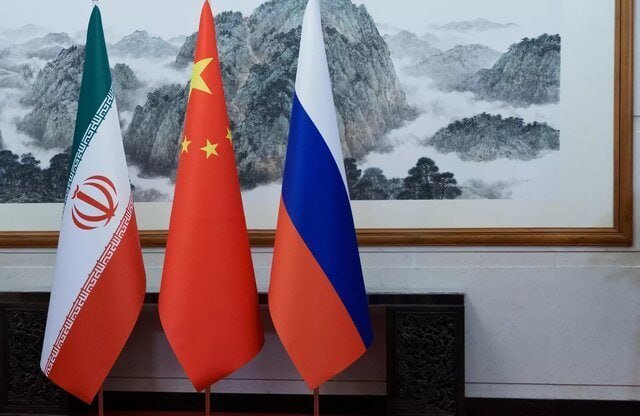
On the morning of 10 June 2026, Pyongyang's state news agency KCNA described Chinese President Xi Jinping's just-concluded visit to North Korea as having produced a "far-reaching blueprint" for bilateral ties, with Xi telling Kim Jong-un that the two sides had reached an "important consensus." The language, carried by Reuters in English and by Hong Kong Free Press the same day, was the boilerplate of summit communiqués — but the choice of phrasing mattered. A "blueprint" is not a communiqué. It is a planning document, the kind of word that signals a structured, multi-year alignment rather than a one-off photo opportunity.
Read against the broader pattern of the year — Beijing's mediation pushes elsewhere on its periphery, the slow erosion of US-led sanctions enforcement, and Pyongyang's steady progress on solid-fuel systems — and the visit looks less like diplomatic choreography than like the laying down of rails for a more durable Sino-DPRK relationship. The question is not whether the two sides agreed on something, but what kind of architecture that "something" is meant to support.
The official read
According to the Reuters wire of 10 June 2026, KCNA reported that Xi told Kim the two leaders had reached "important consensus" on a series of unspecified issues, with Xi framing the visit as part of a longer arc of party-to-party and state-to-state coordination. Hong Kong Free Press, summarising the same KCNA readout, highlighted the "far-reaching blueprint" formulation and noted that the visit followed a sequence of lower-level exchanges between the two foreign ministries earlier in the year. The official framing, on both sides, emphasised continuity: traditional friendship, socialist cooperation, and a shared interest in regional stability.
There is little reason to doubt that continuity was a real outcome. Xi has met Kim multiple times since 2018, and the diplomatic rhythm between Beijing and Pyongyang has been remarkably stable even as the relationship between Pyongyang and Washington has oscillated between détente and impasse. What the official read does not say — and cannot say — is what specific deliverables were discussed in private.
The market read
The more interesting signal sits in the prediction market. As of 09 June 2026, Polymarket traders priced a 36 percent probability that North Korea would conduct at least one missile test before the end of the month. That is not a high-confidence bet, but it is materially above the baseline that prevailed through much of late spring, and it rose into the visit window rather than away from it. In other words: traders were not pricing the summit as de-escalatory. If anything, they were pricing it as a permissive environment — a moment when Beijing's political cover makes a test more, not less, likely.
This is consistent with a pattern analysts have flagged before. Chinese diplomatic engagement with North Korea has historically coincided with, rather than preceded, periods of weapons-testing. The read-through is not that Beijing is orchestrating tests, but that summit optics reduce the political cost of one.
The structural read
Strip the rhetoric and the visit is the visible surface of a deeper rebalancing. The United States is consumed by two simultaneous commitments — Eastern Europe and the Middle East — and its bandwidth for active Northeast Asia management has narrowed. Japan is recapitalising its own defence posture, but is not the security guarantor of last resort on the Korean Peninsula. South Korea's progressive government in Seoul has, if anything, deepened inter-Korean de-escalation channels rather than widened them.
That leaves a vacuum. Beijing has not rushed to fill it, but it has moved into the space that the United States' attention deficit has created. A "blueprint" with Pyongyang is exactly the kind of slow-infrastructure project that suits Chinese statecraft: low-cost, low-drama, and structurally consequential over a five-to-ten-year horizon. It does not require Beijing to openly contest US positions; it merely requires Beijing to be the partner that is actually present in the room.
Stakes and uncertainties
The most plausible read is that China is consolidating its position as the indispensable external interlocutor for North Korea — not in opposition to the United States, but in the absence of a serious US counter-bid. That outcome is stable, low-cost for Beijing, and broadly compatible with Chinese interests on its northeastern frontier.
What remains genuinely uncertain is whether the visit produced any specific commitments on denuclearisation language, on sanctions enforcement at the UN, or on the pace of North Korea's solid-fuel and ICBM programmes. KCNA's English summary is deliberately vague on each. The 36 percent Polymarket number is itself an admission that the trajectory is not yet visible from outside. And the deeper risk — that a more deeply aligned Sino-DPRK relationship reshapes the strategic geometry for any future US-North Korea negotiation — is one that the current reporting does not yet let us measure.
This publication's framing treats the Pyongyang visit as a structural event rather than a tactical one. Where wire coverage emphasised the consensual, ceremonial language of the summit, the prediction-market pricing suggested the more consequential read: that the relationship is being quietly upgraded, with consequences for Northeast Asian security architecture that will play out over years, not weeks.
Wire provenance
This editorial synthesis draws on the following public wire/social posts:
- http://reut.rs/43WOLPd