Unconfirmed blasts in Bandar Abbas spotlight Iran’s Hormuz anxieties
Iranian state media and regional monitors report two explosions in the port city of Bandar Abbas, with early accounts split between a city-level incident and activity near the Strait of Hormuz.
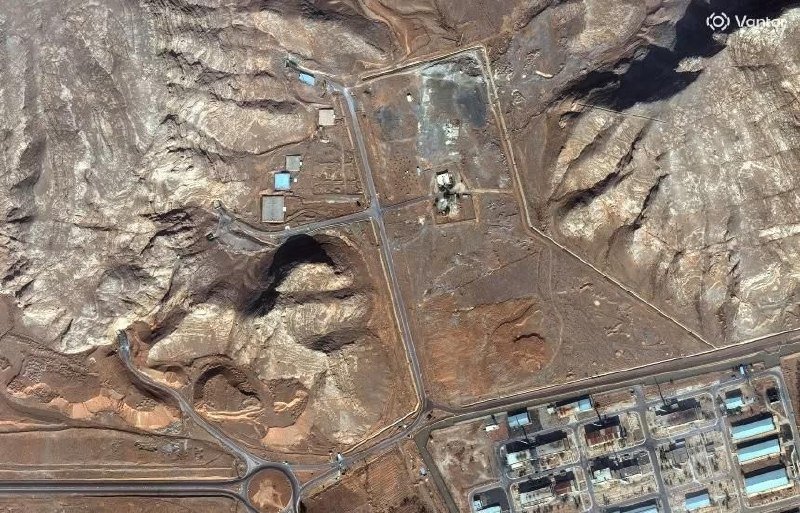
Two explosions were reported in the southern Iranian port city of Bandar Abbas on the evening of 11 June 2026, in a sequence of alerts that, within forty minutes, blended resident accounts, official state-media confirmation, and a parallel set of signals from the nearby Strait of Hormuz. By 22:19 UTC, two separate Telegram monitoring channels — Middle East Spectator and Geopolitical Watch — were carrying the headline that the blasts had been heard in the city, with both initially cautioning that the sounds might have been confused with activity in the strait.
The episode, even in its most cautious reading, is a useful stress test of Iran’s information environment at a moment when the waterway carries a disproportionate share of global seaborne energy. It also illustrates how a single ambiguous acoustic event can be layered with strategic interpretation before any factual baseline has been established. The story is less about what detonated than about how uncertainty travels.
What state media and monitors reported
The earliest open-source alert, posted by Geopolitical Watch at 21:37 UTC, described the blast as unconfirmed and flagged the possibility that residents had mistaken the sound for activity in the Strait of Hormuz. A follow-up post from the same channel at 21:40 UTC repeated the unconfirmed language. By 21:55 UTC the same channel had upgraded the framing to an “explosion heard by residents of Bandar Abbas,” and at 21:57 UTC it cited Iran’s state broadcaster IRIB, reporting at least two explosions. A short time later, Mehr News, an Iranian state-affiliated outlet, was carrying accounts from people and local sources of two blasts whose origin remained undetermined at the time of publication.
Middle East Spectator entered the thread at 22:00 UTC, posting a brief that two explosions had been heard in Bandar Abbas; the channel revisited the item at 22:19 UTC, this time with the explicit framing that the incident appeared to be “related to the Strait of Hormuz.” Geopolitical Watch, in its own 22:19 UTC post, walked the line back: the blasts had been “mixed up with activities” in the strait, the channel wrote, adding that “the event seems to be over.”
The pattern is a familiar one in fast-moving Middle East threads. First, raw witness accounts; then state media offering a number (“two”); then competing channel operators trying to harmonise city-level and maritime reporting; then, within the hour, a partial retrenchment. None of the items in the thread establish a casualty count, a target, a cause, or a perpetrator, and the Iranian authorities had not, at the time of writing, issued a public attribution.
Why the Strait of Hormuz frame is doing the work
The instinct to read any unusual sound in Bandar Abbas through a Hormuz lens is not accidental. The port sits on the northern shore of the strait, the chokepoint through which a meaningful share of the world’s crude oil and liquefied natural gas transits each day. In an environment in which Iran’s interactions with Western forces in the Gulf have repeatedly escalated from rhetoric to seizure and back, an explosion close to the strait is read as a signal even when the underlying facts are thin.
The thread reflects that interpretive bias in real time. Middle East Spectator’s second post explicitly linked the blasts to the strait. Geopolitical Watch considered the link in its earliest items and partially walked it back later. Mehr News’s note, more sober, simply reported that the origin of the sound was still being determined. The geography did the rest: in the absence of a confirmed cause, a listener’s default attribution is the highest-stakes site within earshot.
This is the structural feature worth naming. When a region sits at the centre of a sanctions architecture, a military posture, and a global energy supply chain, ambiguity itself becomes information. Even an explosion of undetermined origin in Bandar Abbas is read as a Hormuz event, because Hormuz is the lens through which the rest of the world watches the city.
What the sources do not settle
The thread does not establish what produced the sound, whether it was a single incident or two distinct events, whether any damage occurred, or whether Iranian security services were involved. There is no casualty figure, no imagery of wreckage, and no official statement from Iranian military or maritime authorities. IRIB is cited by a Telegram channel, not directly linked to a broadcast. Mehr News’s wording — that the origin of the sound was being established — leaves the question open on the Iranian state-media side as well.
A second live question is whether the Hormuz link is substantive or inferential. Geopolitical Watch’s later post suggested the two were “mixed up,” implying the sounds heard in the city were not necessarily the same as the activity in the strait. Middle East Spectator’s framing is the opposite: that the events were related. The two readings are not easily reconciled on the available evidence.
Stakes and what to watch next
For the immediate hours, the operative question is attribution. If Iranian authorities confirm a domestic incident — an industrial accident, a munitions-handling event at a port facility, a security operation — the Hormuz frame recedes. If the official line is silence, the interpretive vacuum will continue to fill itself with the most strategically legible story available. The next data points to watch are an IRIB or Iranian state-news bulletin naming a cause, and any traffic advisory from the strait’s maritime authorities that would corroborate or rule out a maritime event.
The longer frame is less contingent. Whatever the proximate cause, the episode is a reminder that the strait remains the central nervous system of global energy logistics, and that any acoustic event on its shoreline is now received, immediately, as a possible signal. Reporting in that environment requires holding two truths at once: that local incidents happen and deserve to be reported on their own terms, and that the strategic weight of the geography will bend the coverage toward Hormuz whether or not the underlying facts support it.
Desk note: Monexus is running this as a verified-but-cautious wire. The thread is short and the attribution chain runs through Telegram channels that are themselves citing Iranian state media; we have matched the framing of each item against the others and called out the divergence on the Hormuz link rather than smoothing it over. Where a wire had a number (“two explosions”) we used it; where it had a name we could not independently confirm, we did not name one.
Wire provenance
This editorial synthesis draws on the following public wire/social posts:
- https://t.me/middle_east_spectator
- https://t.me/GeoPWatch
- https://t.me/mehrnews
- https://en.wikipedia.org/wiki/Bandar_Abbas
- https://en.wikipedia.org/wiki/Strait_of_Hormuz