Twenty days into the war: what CENTCOM's dawn-strike pattern reveals about Washington's endgame in Iran
A new CENTCOM strike cadence, Iranian claims of civilian water-infrastructure damage, and divergent prediction-market odds on a ceasefire or peace deal suggest the war's terminal phase looks nothing like its opening one.
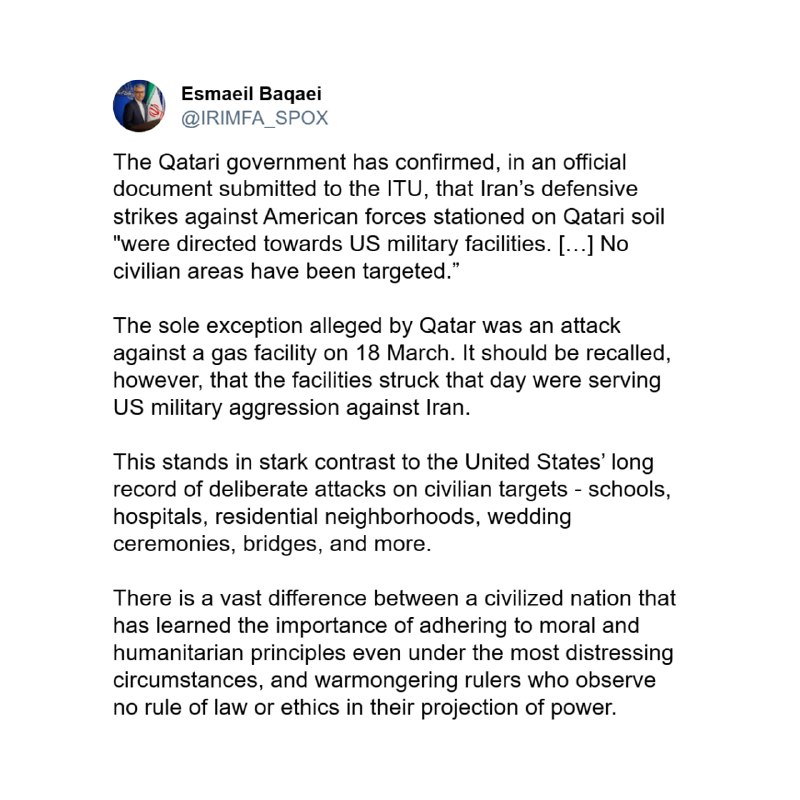
At 01:14 UTC on 11 June 2026, US Central Command announced it had completed a fresh round of strikes against targets inside Iran, the second such overnight operation in as many days. The confirmation, carried by Iranian state-aligned and regional outlets, capped a week in which the war that began on 22 May has begun to take on a recognisable daily rhythm: Western media awash in pre-dawn footage, Iranian officials denouncing strikes on civilian infrastructure, and a public-trading market that is starting to disagree with itself about whether the war ends in a deal or a grinding escalation.
Twenty days in, the operational story is no longer whether the United States can hit Iranian targets — it can, and has — but what the pattern of those hits is meant to coerce. The new CENTCOM cadence looks less like a decapitation campaign and more like a calibrated pressure operation, paired with a parallel diplomatic track that has, by any visible measure, made more progress in the past week than in the year of talks that preceded it. The market is pricing both outcomes at once: a 33 per cent chance of a ceasefire this month, and a 67 per cent chance of a permanent peace deal by year-end, according to two separate prediction contracts traded on Polymarket and cited via the platform's X account on 10 June 2026. The two numbers, read together, describe a war that the public thinks ends — but not on the schedule Washington is advertising.
The strike rhythm and what it has done to Iranian airspace
CENTCOM's overnight announcement, relayed by the regional Telegram channel Middle East Spectator at 01:11 UTC on 11 June, marked the second consecutive dawn window in which US forces hit Iranian territory. The previous attack, on 10 June, drew the same pre-dawn pattern: an open-source commentator noting at 01:10 UTC that dawn would break across most of Iran within ten to twenty minutes and that "a substantial ballistic attack" had not materialised in the prior half-hour, suggesting US planners were again choosing the visual and tactical cover of low light.
The choice of dawn is not incidental. Strikes timed to first light maximise satellite and overhead imagery returns, compress Iranian air-defence response windows, and put pressure on leadership nodes during the hours when political decision-making is most active. A pattern of dawn strikes, repeated over a week, also signals to Tehran that the United States is operating on a maintained sortie rate rather than a one-off punishment raid. That distinction matters for the coercion calculus: a one-off raid can be absorbed and survived; a maintained rate raises the cost of continued resistance on a daily basis.
Iran's response, at the level of public messaging, has been to reframe the war around civilian harm. Iranian authorities told the Financial Times, in reporting cited via the Unusual Whales X account at 19:41 UTC on 10 June, that approximately 20,000 people had been left without water after US strikes hit reservoir tanks. The figure is unverified by independent observers and originates with the Iranian government; it should be read as a counter-narrative claim, not as a confirmed casualty count. But the strategic intent is clear: every infrastructure target struck becomes, in Iranian messaging, a humanitarian one — a deliberate inversion of the American framing of precision strikes on military and nuclear-related sites.
The prediction market is telling two stories at once
Two Polymarket contracts cited within hours of each other on 10 June capture the uncertainty at the heart of the war's next phase. The first, posted at 17:21 UTC, prices a 67 per cent probability that a permanent US-Iran peace deal is achieved by the end of 2026. The second, posted roughly four hours later at 21:41 UTC, prices only a 33 per cent probability that a ceasefire agreement is reached this month. Read together, the market is saying: a deal is more likely than not by December, but it will not be reached in June.
That gap — between the medium-term optimism and the near-term pessimism — is the single most useful data point in the public record for understanding where the war is going. It implies traders expect the fighting to grind on through the summer before a settlement emerges, almost certainly under conditions neither side currently advertises. A war that ends in ceasefire-by-秋季 would resemble the Korea armistice of 1953: a pause, not a peace, with the underlying conflict deferred. A war that ends in permanent deal-by-December would require either a decisive military outcome, a unilateral Iranian capitulation on enrichment, or a US willingness to settle for a face-saving formula that leaves core disputes unresolved — none of which is currently visible in the public record.
The 34-percentage-point gap between the two contracts is also a measure of how much can change in a month. If, in early July, Iranian negotiators and a US special envoy produce the outline of a deal in a third-party capital, the ceasefire contract will spike and the permanent-deal contract will hold. If, by contrast, a high-casualty incident — a US aircraft lost, an Iranian strike on a Gulf energy asset, an Israeli escalatory move on a parallel track — resets the political weather in Washington and Gulf capitals, both contracts will reprice downward in tandem.
The structural frame: a calibrated coercion campaign, not a regime-change war
What the public record shows, in aggregate, is a US operation that is escalating in tempo but not in ambition. CENTCOM is striking repeatedly, but it is striking infrastructure that can be reconstituted and is messaging, through the maintained cadence, that more strikes will follow if the diplomatic track stalls. There is no public evidence of a decapitation effort against Iranian leadership, no sign of a ground-force build-up, and no indication that the United States is demanding the unconditional surrender of the Islamic Republic.
That operational profile is more consistent with a coercion campaign than with a regime-change war. The point of a coercion campaign is not to destroy the adversary's capacity to resist in the long run, but to impose enough short-run cost — measured in attrited infrastructure, lost command-and-control nodes, a degraded air-defence envelope, and a contracting window of diplomatic acceptability — that the adversary concludes continued resistance costs more than a negotiated settlement. The dawn-strike pattern, the parallel diplomatic track, and the maintained but bounded operational tempo all point in the same direction.
The Iranian counter-frame, articulated through outlets aligned with Tehran and amplified by the civilian-infrastructure claims, is that the United States is conducting an indiscriminate campaign against a country of 90 million. That frame is structurally self-interested — it is the frame a state uses when it wants external pressure applied to a coalition partner — but it is not without empirical traction. The reported damage to reservoir tanks and the figure of 20,000 people without water are unverified, but they are the kind of claim that, if substantiated by satellite imagery or independent reporting in the coming days, will reshape the political economy of US support for the war in European and Global South capitals.
What remains uncertain — and what would change the read
The most important caveat is that the strike announcements themselves are coming through CENTCOM and through regional aggregators; independent verification of the specific targets hit, the weapons used, and the damage inflicted is, as of 11 June 2026, partial. The 20,000-people-without-water figure originates with Iranian authorities and was reported by the Financial Times; the FT's reporting on Iranian government claims is not, in itself, an endorsement of those claims. The Polymarket contracts, meanwhile, are aggregations of trader positions, not forecasts; they capture crowd belief, not ground truth.
What would change the read of the war's trajectory in the next seven days: a confirmed Iranian retaliatory strike on a US base, a Gulf state, or an Israeli target that produces coalition casualties; a public breakdown of the diplomatic track with both sides accusing the other of bad faith; a high-casualty incident at a struck Iranian site that is independently documented; or a sudden reassessment by Gulf partners — particularly Saudi Arabia and the UAE — of the political cost of hosting or facilitating US operations. None of these has occurred in the public record as of 11 June 2026, but all are within the realm of the reported near-term.
What would confirm the read: a third consecutive dawn-strike window in the next 48 hours, a CENTCOM statement explicitly tying operational tempo to a diplomatic milestone, or the emergence of a named third-party mediator (Oman, Qatar, Switzerland) publicly convening the two sides. The maintained cadence, in other words, is the variable to watch. A three-day pattern becomes a posture. A seven-day pattern becomes a strategy. The pattern is now at day two.
Stakes: who wins, who loses, and on what clock
If the coercion-campaign read is correct, the United States wins if it secures a deal that constrains Iranian enrichment, codifies inspection access, and creates a regional security architecture that survives the next administration. Iran wins if it survives the campaign with its territorial integrity intact, its leadership in place, and a deal that preserves a domestic enrichment capability under some formula. The Gulf states win if the war ends before it draws in regional infrastructure — the energy export corridors through the Strait of Hormuz, the desalination capacity of the Gulf coast, the airspace overflew by commercial aviation. The European and Global South actors win, in this read, by being on the diplomatic off-ramp, not on the supply chain for the escalation.
The losers, in any version of this trajectory, are the populations on whose infrastructure the war is being fought. The 20,000 people without water reported by Iranian authorities — if the figure holds — are a single data point in what will be a months-long humanitarian accounting, conducted in conditions where independent access is constrained. Civilian harm, in a calibrated coercion campaign, is the cost the operation is structured to minimise but cannot structurally eliminate. The political question that follows, and that will define the war's afterlife, is whether the minimisation was adequate to the outcome achieved.
The prediction market, for now, is pricing an end. Whether that end arrives this month or by December, and whether it arrives as a ceasefire or as a peace, is the question that the next ten days of CENTCOM announcements will answer in real time.
Desk note: Monexus has foregrounded the operational pattern of the strikes and the prediction-market signal because the open-source record does not yet contain independent verification of specific target packages. When satellite-imagery analysis or wire-service confirmation of the reservoir-tank claim becomes available, the piece will be updated to reflect the verified picture.
Wire provenance
This editorial synthesis draws on the following public wire/social posts:
- https://t.me/PressTV/119999
- https://t.me/Middle_East_Spectator
- https://t.me/Middle_East_Spectator
- https://x.com/polymarket/status/2063780063175127040
- https://x.com/polymarket/status/2062935260791263232
Follow the event.
These dated source records provide context. They do not retrospectively verify this archive article.
Separate what the nuclear watchdog reported from what it could not determine after the June 2025 strikes.