Strikes Announced, Comms Still Live: Reading the Gap Between CENTCOM's Word and the Airwaves
CENTCOM says the strikes are over. Open radio channels suggest they are not. The gap between the two tells you everything about who controls the escalation clock.
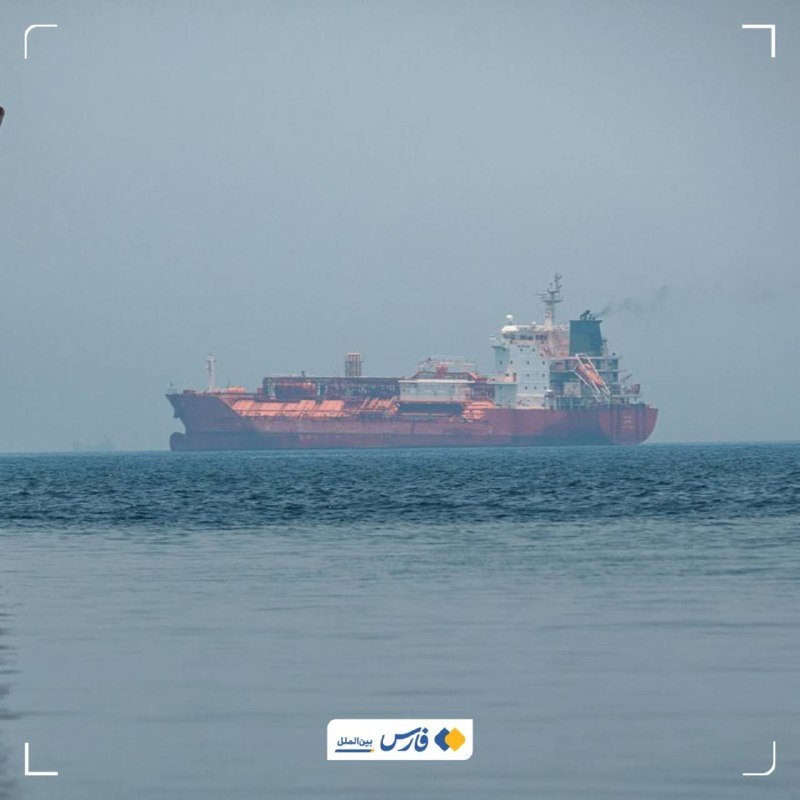
At 01:11 UTC on 11 June 2026, United States Central Command declared its strikes on Iran complete. Roughly 103 minutes later, at 02:54 UTC, an open-airwaves monitor flagged by the Telegram channel AMK Mapping reported that US Air Force radio traffic had not stopped. The two facts are not, on their face, contradictory. Announcements and operations are run on different clocks, and CENTCOM routinely declares "mission complete" while tactical aviation cycles through tanker orbits, battle-damage assessments, and recovery. But the gap between a public declaration and the live electromagnetic picture is the story. It is where the actual escalation decisions are being made, away from the cameras, and almost always ahead of them.
The pattern is familiar. A US administration announces a fait accompli. Reporting is forced to chase the announcement, not the airframe. Tehran scrambles to characterise the strike in language that calibrates its own response, and global markets price the gap between the two announcements. By the time the next press briefing lands, the planes have either been re-tasked or have landed, and the question of what just happened is settled in the briefing room rather than in the air.
The announcement is not the operation
CENTCOM's statement, as relayed by Middle East Spectator at 01:11 UTC on 11 June, is the kind of closure language militaries use when they want the news cycle to move on: strikes complete, objectives achieved, assessment ongoing. The framing is designed to do work in three places at once — reassuring domestic audiences that the action is over, signalling to Tehran that further escalation is not the goal, and buying time for an off-ramp. None of those objectives requires the operation itself to be finished. They require the announcement to be finished. The airwaves do not care about the announcement.
That is the value of the live-channel monitoring that AMK Mapping, a non-state OSINT account, is doing in real time. It is the same discipline that produced the deconfliction feeds over Ukraine and the Black Sea: track the signal, not the spokesperson. When an account with that posture says US Air Force comms are still active nearly two hours after a "completed" strike, the responsible reading is not that CENTCOM lied. It is that "completed" is a communications product, not a tactical description.
What the markets are pricing
Prediction markets are doing what they always do in the gap between announcement and reality. Polymarket was running a 33% probability on a US–Iran ceasefire agreement being reached in June 2026, and a 67% probability on a permanent peace deal by year-end, as of 10 June. Those two numbers are not consistent with each other in a strict Bayesian sense — if the political will for a permanent deal existed, the ceasefire-this-month number would be higher. What the curve is actually saying is that traders believe a tactical pause is more likely than a political settlement. The strikes are a feature, not a bug, of a process designed to keep the temperature just below boiling while the diplomats work. Or, more cynically, the strikes are what makes the diplomats' work sellable at home.
The Iranian readout, as carried by Financial Times reporting on 10 June, is that US strikes hit reservoir tanks and left roughly 20,000 people without water. That figure, if accurate, does real domestic political work in Tehran. It gives the regime a humanitarian framing to push back against the "surgical" narrative, and it sets up the next round of retaliatory language — which is itself part of the cycle. The water-cutoff number is also exactly the kind of claim that will be disputed, downgraded, or quietly dropped over the next 72 hours, because the people who need it to be true and the people who need it to be false are not the same people and they read different wires.
The counter-read, and why it holds
The dominant Western framing is that the United States is managing a controlled de-escalation: hit something, declare it done, leave a window for talks. The counter-read, which is the read from Tehran and from a lot of the regional commentary flowing through channels like Middle East Spectator, is that this is not de-escalation at all but a rolling coercion campaign dressed up in ceasefire language — strikes punctuated by pauses, pauses punctuated by leaks, leaks punctuated by more strikes. Under that read, the airwaves being still live at 02:54 UTC is the operation continuing under a different label.
Both readings can be true at the same time, and that is the honest answer. The institutional pressure on the US side is for the strikes to be over, because the political coalition that authorised them wants them to be over. The operational pressure on the airside is for the comms to keep flowing, because re-tasking aircraft in a contested environment takes hours, not minutes, and because the strike package is rarely a single wave. What is unresolved is whether the next strike wave is part of a plan or part of a contingency. CENTCOM's announcement suggests the former. The open radio suggests the latter has not been stood down.
Stakes, and what to watch
The stakes for the next 72 hours are not whether Iran retaliates — that is overdetermined and the water-tank story is already a sufficient pretext — but whether the retaliation is calibrated to close the diplomatic window or to keep it open. A symbolic strike, even a noisy one, points toward the 33% ceasefire-by-month-end scenario. A strike on energy infrastructure or a US partner state points toward the other 67%. The thing to watch is not what Tehran says; it is what flies out of which Iranian airfield, and at what density. The radio will tell you before the press conference does.
The honest uncertainty is in the unverified material. The 20,000-without-water figure is Iranian-attributed, carried by FT, and not independently corroborated in the items this publication is working from. The "comms still live" observation is one OSINT account's read of an open signal at one timestamp. The Polymarket prices are a trader's view, not a forecast. The 02:54 UTC observation could be tanker traffic, a routine refuelling orbit, or the first wave of a second package. Anyone telling you they know which is selling certainty they do not have.
Monexus framed this as a gap between the announcement and the airwaves — a reading the wire services have not yet caught up to, because they are still transcribing the briefing.
Wire provenance
This editorial synthesis draws on the following public wire/social posts:
- https://t.me/Middle_East_Spectator
- https://t.me/AMK_Mapping
Follow the event.
These dated source records provide context. They do not retrospectively verify this archive article.
Separate what the nuclear watchdog reported from what it could not determine after the June 2025 strikes.