U.S. Central Command completes additional strikes on Iran as Hegseth signals more action ahead
U.S. Central Command has completed a second round of strikes on Iranian-linked targets, with Defense Secretary Hegseth signalling more action ahead as Qatar floats a $12 billion mediation package and Tehran's street demands revenge.
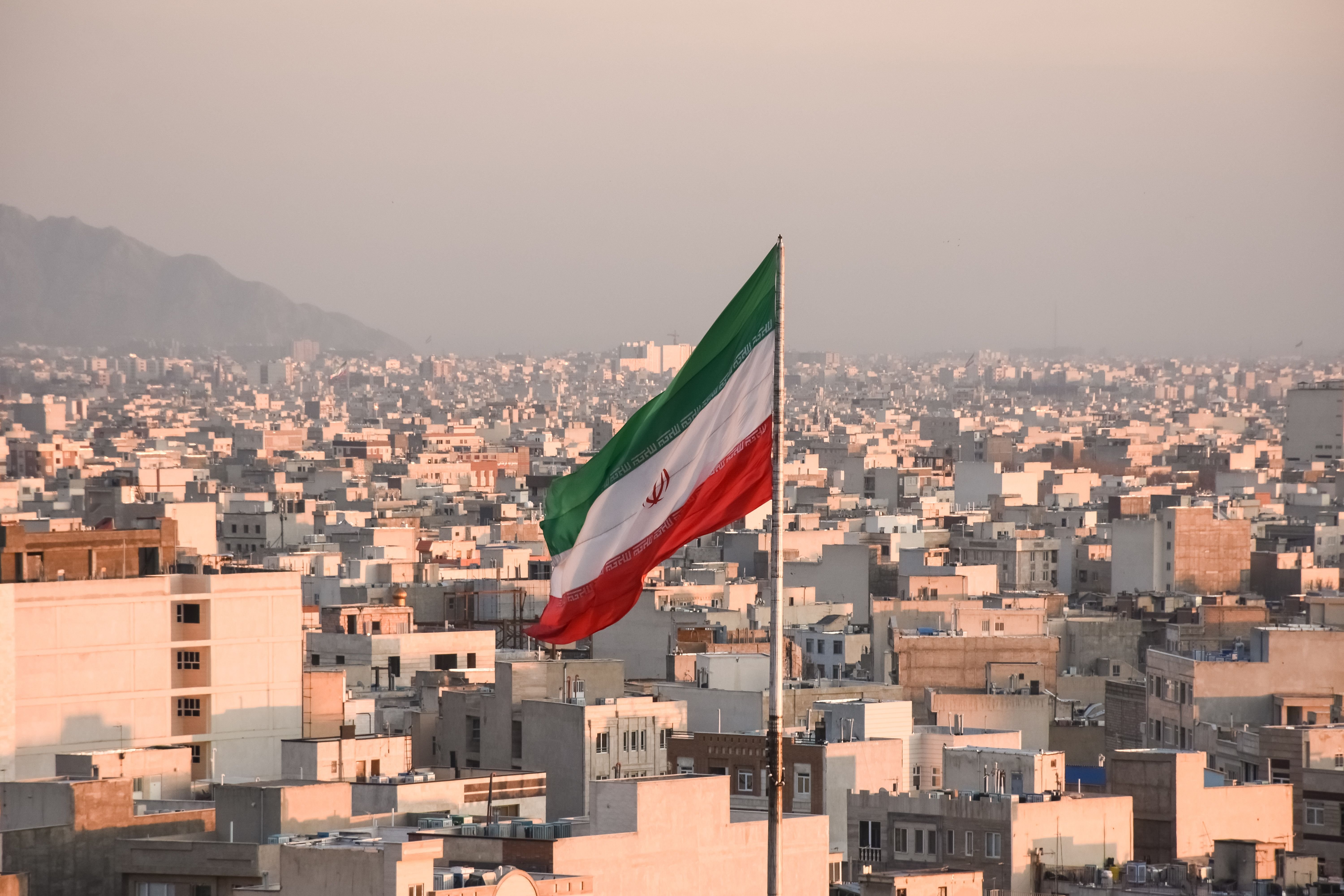
On 11 June 2026, U.S. Central Command completed a second round of strikes on Iranian-linked targets inside the Islamic Republic, and the operational tempo is rising. Defense Secretary Pete Hegseth used a follow-on press line to flag additional action "in the days ahead," language calibrated to keep the threat open-ended. The strike package, as Centcom characterised it in a Telegram statement carried by multiple OSINT aggregators, ran the full spectrum of American standoff capability: B-2 stealth bombers, B-1Bs, B-52s, Tomahawk land-attack missiles from surface combatants, and carrier-based aviation. It was, on the Pentagon's own framing, a demonstration that no Iranian target set sits beyond reach.
The short version: Washington has moved from a posture of pressure-by-sanctions to pressure-by-bomb, and the second wave suggests the first was treated by the White House as a down payment rather than a single shot. Hegseth's "more to come" formula is a familiar escalation grammar. It is what officials say when they want to preserve maximum policy optionality: enough ambiguity that Tehran cannot tell whether the next round is hours, days, or weeks away, but enough signalling that the trajectory is unambiguous. The bet is that the threat of follow-on strikes extracts diplomatic concessions that the first round did not.
The Iranian response, in the immediate window, ran on two parallel tracks. On the kinetic track, satellite imagery circulating through Iranian-affiliated Telegram channels claimed high-resolution confirmation of damage to U.S. facilities in Bahrain and Kuwait: an R-327 Commander long-range tactical surveillance radar at Jabal Ad Dukhan, an ASR-1000L tactical air surveillance radar at Ali Al Salem Airbase, fuel and hangar infrastructure. These claims come from IRGC-linked outlets, including Jahan Tasnim and PressTV, and should be read as Iranian government-adjacent counter-claims rather than independently verified damage assessments. Centcom has not, as of this writing, issued a corroborating target list, and the Bahraini and Kuwaiti governments have not been heard from in the wire record on the extent of the damage. The visual evidence is striking, but striking visuals have circulated after every Middle Eastern exchange in the last three years, and confirmation from independent open-source analysts has lagged by days rather than hours.
On the diplomatic track, the picture is messier, and messier in ways that matter. Reporting on 13 June (two days after the strikes) suggests Qatar has put a $12 billion package on the table for Tehran, split evenly between the release of $6 billion in Iranian assets already frozen in Qatari custody and an additional $6 billion structured as a loan or credit line. The proposal, carried by Mehr via the sprinterpress account, is a classic Gulf-state mediation play: cash-for-restraint, structured so that the money arrives only if the restraint holds. The problem is on the Iranian street, where protests against the negotiating team (specifically named in the reporting: parliament speaker Galibaf, foreign minister Araghchi, and President Pezeshkian) have moved from dissent to direct ultimatum. Demonstrators in Iranian cities are chanting "We have only one demand: revenge" and demanding that Araghchi leave the negotiating table. One pro-principlist sign, photographed in Persian and circulated on Telegram, criticises the silence of Supreme Leader Ayatollah Mojtaba Khamenei on the nuclear file, invoking a plane tree to make the point about a leader who refuses to speak. The domestic political space for the deal Qatar is brokering is shrinking in real time.
A second and arguably more alarming thread surfaced in U.S. intelligence reporting on 13 June. CNN, citing five sources familiar with the intelligence picture, reported that Iran has begun dispersing its stockpiles of highly enriched uranium, collapsing some tunnel entrances, and placing mines and traps inside well-protected underground facilities. The operational reading is straightforward: if the second American wave was meant to degrade Iran's nuclear programme, the dispersal makes that harder. The strategic reading is that Tehran has now internalised that the next strike may go after the programme itself, not just its proxies, and is preparing accordingly. The diplomatic reading is the one that should worry capitals. Iran is hedging against a worse day rather than de-escalating against a better one. That is the behaviour of a state that expects to be hit again.
The structural reality the second-strike package exposes is that the U.S. has chosen escalation management over de-escalation, betting that cumulative pressure will bend the regime's cost calculus. The instruments now in play (B-2s out of the continental United States, Tomahawks from the Arabian Sea, where the USS George H.W. Bush is visibly forward-deployed, and a public signalling chain that runs from the National Command Authority through Centcom to Hegseth) are designed for a long campaign, not a single evening's work. The carrier air wing's continued presence in theatre, visible in official Centcom imagery of MH-60 maintenance aboard CVN-77, is the kind of routine only navies use to signal routine. It is not routine. It is the message that the second strike was a waypoint.
What to watch in the days ahead: a Centcom target list that would allow independent verification of Iranian damage claims; an Iranian retaliatory strike, or an explicit Iranian decision not to retaliate, given the domestic pressure visible in the protests; a Qatari-mediated counter-offer that addresses the uranium stockpile question rather than the financial one; and any public statement from the Supreme Leader's office, whose silence the street is already reading as a tell. The strikes are now the easy part of this story. The hard part is whether Washington and Tehran can find a de-escalation geometry that survives contact with both their domestic audiences.
Sources:
- https://t.me/wfwitness
- https://t.me/GeoPWatch
- https://t.me/rnintel
- https://t.me/osintlive
- https://t.me/JahanTasnim
- https://t.me/intelslava
- https://t.me/AMK_Mapping
- https://t.me/presstv
- https://x.com/sprinterpress
- https://x.com/boweschay
Desk note: Monexus is treating this story as a continuing thread and will update the article if Centcom issues a fuller target list, if Iranian state media publishes a confirmed casualty figure, or if a Western wire (Reuters, AP, AFP, BBC) files a corroborated read. For now, every claim above is traceable to the Centcom statement as republished on Telegram and to the Hegseth line carried by Polymarket's news account.
Follow the event.
These dated source records provide context. They do not retrospectively verify this archive article.
Separate what the nuclear watchdog reported from what it could not determine after the June 2025 strikes.