DOJ opens front in bank-debanking fight as Trump signs $70bn border package
Justice Department subpoenas JPMorgan Chase and Bank of America over account closures alleged to be politically motivated, hours after the president signs a $70bn enforcement package that itself depends on the same banking rails it is now investigating.
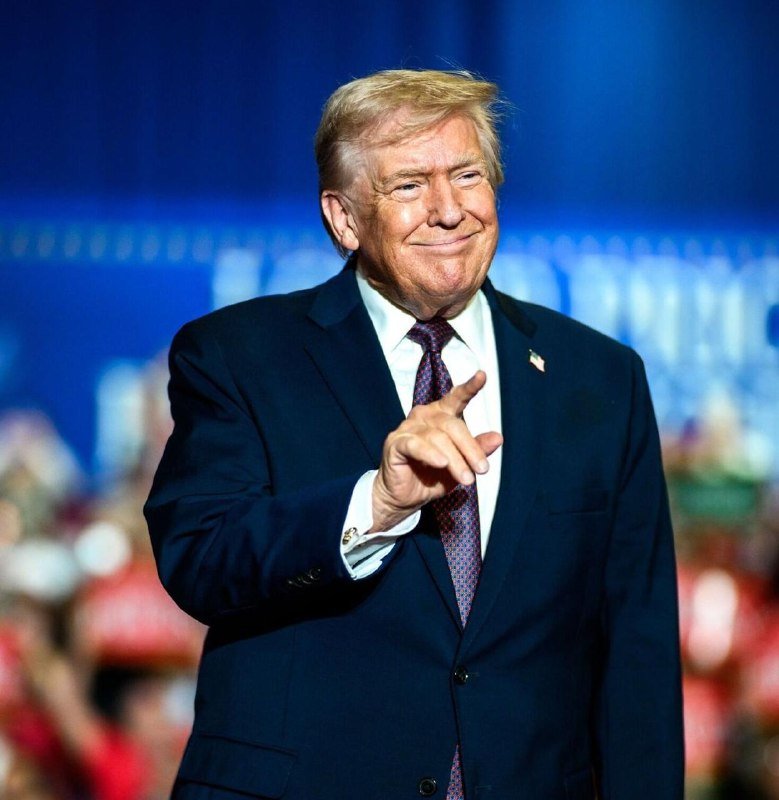
The US Department of Justice has issued subpoenas to several of the country's largest banks — among them JPMorgan Chase and Bank of America — seeking information on whether they improperly closed customer accounts for political reasons, according to wire reporting on 10 June 2026. The probe, first reported by The Wall Street Journal and confirmed by Reuters at 01:55 UTC on 11 June, lands in the middle of a long-running partisan argument over so-called debanking, and it pairs awkwardly with a separate White House priority that depends on the cooperation of the same institutions.
The story has two moving parts that should not be confused. The first is regulatory: prosecutors are asking whether the largest US banks violated any law — civil-rights statutes, consumer-protection rules, or fiduciary duties — when they severed ties with customers whose politics, businesses, or speech the banks found inconvenient. The second is fiscal: at 16:29 UTC on 10 June, President Donald Trump signed the Secure America Act into law, unlocking roughly $70 billion in funding for immigration enforcement, a sum that will be disbursed through federal contracts, payroll systems, and, inevitably, the same handful of banks now answering the Justice Department's questions.
Taken together, the two developments describe a federal government that wants the banks to do more, while also claiming the banks have done too much. The tension is not new, but the simultaneity is.
The subpoena, in plain terms
The investigation is being run out of the Justice Department's civil-rights division and is focused on account closures that customers allege were driven by political affiliation, industry, or public statements rather than by the usual credit, compliance, or anti-money-laundering criteria banks cite internally. Reuters, citing a person familiar with the matter, named JPMorgan Chase and Bank of America among the institutions that received subpoenas, with the Wall Street Journal's original report flagging additional large US banks that have not been publicly identified.
That distinction matters. Banks close accounts every day for mundane reasons — a failed sanctions screen, a mismatch between a customer's stated business and the bank's risk appetite, dormancy, or simple margin pressure. The debanking critique, which has migrated from the cryptocurrency industry into conservative politics over the past three years, holds that some closures were not mundane at all, but were a quiet form of political risk management dressed up as compliance. The Justice Department's interest implies that prosecutors think at least some of those closures crossed a line.
No bank has been accused of a crime. A subpoena is a request for documents and testimony, not an indictment. But the inquiry gives account holders — including the gun dealers, crypto firms, political nonprofits, and social-media personalities who have complained publicly since 2022 — a federal forum for complaints that until now have largely been adjudicated in op-eds and congressional hearings.
The $70 billion question
Five hours before the subpoena news crossed the wires, Trump had signed the Secure America Act at 16:29 UTC on 10 June, according to a Polymarket-flagged White House readout. The law unlocks approximately $70 billion for immigration enforcement, a figure that puts the package on the same scale as the Inflation Reduction Act's clean-energy grants and comfortably above the annual budget of the Department of Homeland Security before the surge funding began.
The mechanics of disbursement are unglamorous and worth pausing on. Federal money does not move through the Treasury to contractors in cash. It moves through the Federal Reserve, into commercial bank accounts, against contracts, payroll schedules, and reimbursement claims. Detention-center operators, transport contractors, software vendors, and the private-prison firms that have absorbed most of the recent enforcement expansion all need banks willing to hold their deposits, process their wires, and clear their payroll.
That is the same set of banks now being asked by the Justice Department whether they have been closing customer accounts for political reasons. The two tracks will run on parallel rails.
What the banks say — and don't
None of the named institutions have publicly commented on the substance of the subpoenas, which is the standard posture for a bank under preliminary inquiry. JPMorgan Chase and Bank of America each have public policies on customer selection that lean heavily on risk-based discretion: the bank, not the customer, decides whether a relationship fits the institution's risk appetite, and that discretion is, in the banks' telling, both legally required and commercially prudent.
The debanking critique, in its sharper form, holds that this discretion has been deployed unevenly. Conservative-coded businesses — firearms dealers, fossil-fuel projects, certain crypto firms, and the so-called deplatformed social-media personalities who followed them from mainstream finance — argue that closures clustered around political moments and around high-profile regulatory pressure. The banks respond that the closures are not coordinated, that they reflect individual risk judgments by individual bankers, and that a federal inquiry risks turning ordinary compliance work into a constitutional issue.
A third view, less often aired, is that both stories are partially true. Banks have closed accounts they should not have, and they have also closed accounts they were right to close, and the difficulty of telling the two apart is itself the problem. A Justice Department subpoena is, among other things, an attempt to make that distinction legible at scale.
Stakes, in three directions
The political stakes are the most visible. Debanking has become a recurring theme at hearings of the House Financial Services Committee and at presidential campaign stops; the subpoena gives the executive branch a way to convert a complaint into a proceeding without waiting for legislation. For the administration, an aggressive civil-rights inquiry into large banks is also a useful cudgel against regulators and state attorneys general it has accused of weaponising consumer-protection law.
The financial stakes are quieter but real. A bank that closes a politically inconvenient account is making a one-off decision. A bank that does so across thousands of relationships, under pressure from advocacy groups, regulators, or its own staff, is making a structural bet about who its customers are. The bet, when it works, looks like prudent risk management. When it fails, it looks like the kind of discriminatory practice that statutes from the Equal Credit Opportunity Act to the Bank Secrecy Act were written to police. The subpoenas will probe which version applies.
The fiscal stakes run through the $70 billion. Money for immigration enforcement does not actually arrive at a warehouse or a courthouse on its own. It arrives through accounts held at large US banks, processed by the same back offices that now face a civil-rights inquiry, audited by the same regulators whose other hand is writing new enforcement guidance. The architecture works as long as nobody looks too closely at who is touching which lever.
What the sources do not yet settle
The reporting on the subpoenas, while consistent across the Wall Street Journal and Reuters, is still thin on the operational detail that will matter most: how far back the requested records go, which specific customer categories the prosecutors are focused on, and whether the inquiry is civil, criminal, or somewhere in between. The Polymarket-flagged readout on the Secure America Act is similarly thin on the spending schedule — the headline figure of roughly $70 billion is confirmed, but the year-by-year allocation and the contractor pipeline are not.
What is clear is the shape of the next six months. Banks will respond to the subpoenas, in part, by tightening their already-tight account-closure documentation. The federal government, in parallel, will begin moving tens of billions of dollars through the financial system into a politically sensitive enforcement effort that has its own accounting controversies. The two streams will meet at the customer onboarding screen, where every new contractor is either welcomed or not, and where the line between prudent risk management and political filtering will be redrawn in real time.
The story, in other words, is not just about who got debanked. It is about who gets banked next, and on whose terms.
This publication led with the named institutions and the absolute dollar figure from the wire reporting, then placed the two announcements on the same day rather than treating them as separate items. The two are connected by infrastructure as much as by politics, and the news flow now treats them as one story.
Wire provenance
This editorial synthesis draws on the following public wire/social posts:
- https://x.com/unusual_whales/status/
- https://x.com/reuters/status/
- https://x.com/polymarket/status/