The dollar no longer buys quiet: oil above $92, UAE–Iran talks, and a Situation Room that can't settle on a frame
A 33% Polymarket line, a $92 barrel, a Situation Room meeting, and UAE–Iran back-channel contact are all happening at once. Something in the architecture of US coercion has stopped working as advertised.
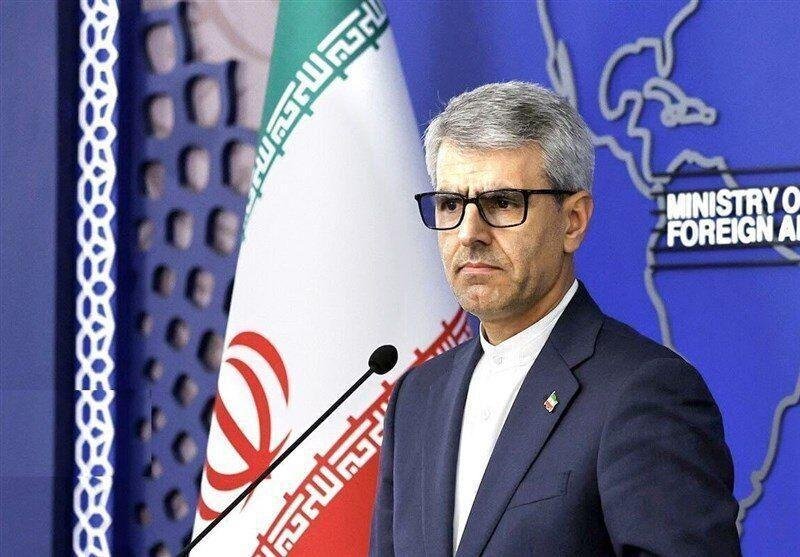
On the evening of 10 June 2026, with Brent trading above $92 a barrel, President Donald Trump convened a Situation Room meeting to weigh the next move against Iran, per Axios reporting relayed through the @unusual_whales wire at 20:20 UTC and corroborated at 20:28 UTC by the @polymarket feed. Twelve hours later, Tehran's diplomatic apparatus was telling the BRICS-aligned Telegram channel @bricsnews that US strikes had made any ceasefire "meaningless"; in the same window, the same channel reported that the United Arab Emirates and Iran had held face-to-face talks aimed at easing tensions. None of these are isolated headlines. Read together, they describe a coercion regime that is producing noise at every node it was meant to silence.
The standard reading of the last three months — strikes, sanctions, a nuclear-file leverage play, an implied threat that enough pressure produces a docile negotiating partner — runs into a problem on 11 June 2026: the actors on the receiving end are no longer waiting for Washington to choose its frame. The market, the corridor, and the back-channel are all pricing in the absence of resolution. Polymarket assigns a 33% probability to a US–Iran ceasefire agreement being reached this month, with the figure itself functioning as commentary on how thin Washington's room to manoeuvre has become. A 33% line is not a denial of talks; it is a market's honest answer to the question of whether this administration can convert strikes into a deal on terms it would still recognise as a deal.
The oil price is the policy
The $92 print is not a background detail. It is the verdict of physical markets on the credibility of the US bargaining position. When a great power signals escalation, two things should happen in a textbook order: energy prices rise as a risk premium, and that premium pressures the counterpart back to the table. In June 2026, the premium is being absorbed by Washington's own domestic politics and by the inflation expectations that the Federal Reserve has spent three years trying to anchor. The harder Trump leans on Tehran, the more expensive the cost-of-living politics gets at home, and the less leverage the threat of further action actually carries on the other end of the line. Sanctions regimes depend on the assumption that the issuer can absorb the second-order costs. That assumption is what the tape is now pricing.
The UAE–Iran channel is the story
The reported face-to-face between Emirati and Iranian officials — flagged at 14:50 UTC on 11 June by @bricsnews — should be read as a structural fact, not a curiosity. The Gulf states spent the late 2010s and early 2020s under quiet US security umbrellas that came with an implicit obligation not to develop independent escalation ladders with the Islamic Republic. Those umbrellas did not vanish on 10 June. What vanished, for the duration of this crisis, is the assumption that they are sufficient. Abu Dhabi is signalling to Tehran — and to Washington — that the corridor has its own temperature gauge. The back-channel is what a region does when the dominant patron has become a source of volatility rather than its dampener. Anyone who treats the UAE as a passive transit zone for US policy is reading a 2019 map.
Tehran has read the room better than its critics admit
The Iranian statement that US strikes have rendered any ceasefire "meaningless" is rhetorical, but it is rhetorical in a specific direction. It is asserting that the cost of accepting a deal shaped by the post-strike balance is higher than the cost of continuing to absorb pressure. That is a contestable calculation, and the Iranian economy is plainly under strain; but it is also a calculation that Gulf mediators appear to take seriously enough to fly delegations for. The combination — a defiant public line, a private willingness to talk, and a regional neighbour willing to host the conversation — is the configuration of a negotiation that is not going to be settled inside the Situation Room. It is going to be settled, if it is settled, in a hotel corridor in Abu Dhabi or Muscat, with Washington eventually brought in as one party among several rather than as the convener.
The dollar architecture is what is really being stress-tested
A coercion regime built on dollar clearance, sanctions enforcement, and an oil market priced in petrodollars assumes that the issuer can raise the cost on the counterpart faster than the cost rebounds at home. That assumption is breaking across three joints at once. The first is energy: a sustained $92+ regime bleeds into gasoline, into shipping insurance, into the political oxygen around any central bank with a dual mandate. The second is corridor politics: the Gulf states are openly hedging their alignment in real time, which is what the UAE–Iran contact materially represents. The third is narrative: a market that prices ceasefire probability at one in three is, in effect, telling the Treasury that the credibility premium on the US threat has been marked down. None of this is a verdict that the dollar order collapses in 2026. It is a verdict that the order no longer behaves as if it has no competitors, and that the cost of exercising it is now legible to the people who pay it.
The Situation Room meeting will produce a posture, not a frame. The frame is already being written in Abu Dhabi, in Tehran, and on a Polymarket page. The administration can still choose escalation; it can no longer choose the price.
Monexus framed this as a stress test of dollar-centred coercion rather than a Middle East crisis narrowly, because the three source streams — oil price, back-channel diplomacy, and market-implied ceasefire probability — only cohere as a single story when read through the architecture they sit inside.
Wire provenance
This editorial synthesis draws on the following public wire/social posts:
- https://x.com/unusual_whales/status/203780063175127040
- https://x.com/polymarket/status/203780063175127041
- https://x.com/polymarket/status/203780063175127042
- https://t.me/bricsnews/203780063175127043
- https://t.me/bricsnews/203780063175127044