Erdogan's Hitler framing of Netanyahu crosses a line — and exposes a deeper fracture in Middle East diplomacy
Ankara's invocation of Hitler to describe the Israeli premier is a diplomatic escalation on its own. It also tells us something useful about how the war in Gaza has rearranged the room.
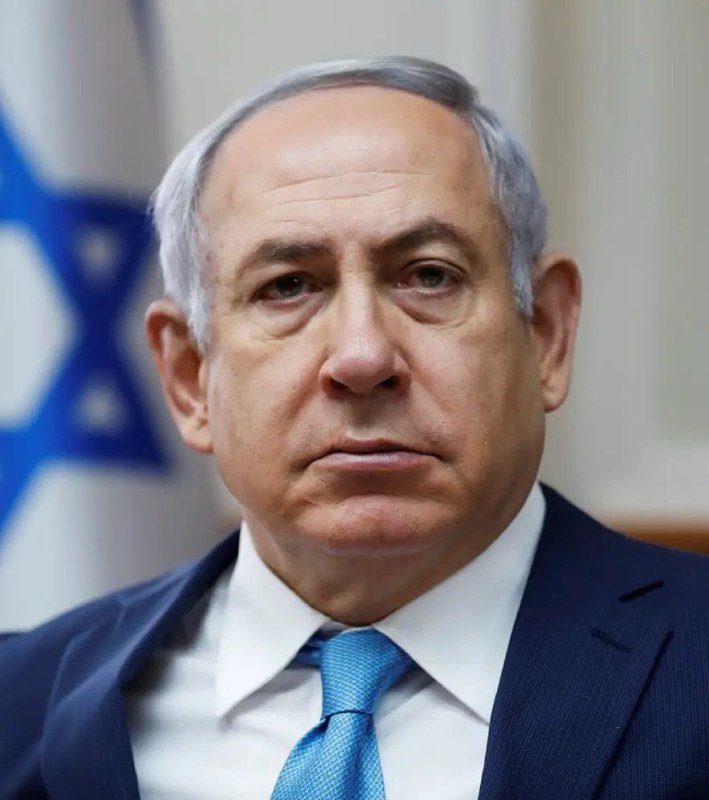
On 11 June 2026, Turkish President Recep Tayyip Erdogan compared Israeli Prime Minister Benjamin Netanyahu to Adolf Hitler, telling an audience that those who "follow in Hitler's footsteps" will meet "the same fate as other tyrants throughout history." He also described Israel, under its current administration, as a "factory of discord whose only raw materials are blood and tears, producing nothing but instability and chaos." The remarks, reported on 11 June 2026 by Open Source Intel and Clash Report on Telegram, land at a moment when Ankara has positioned itself as one of the sharpest diplomatic critics of Israel's conduct in Gaza and the wider region.
The Hitler analogy is not a new weapon in Erdogan's rhetoric, but it is the most inflammatory comparison he has deployed in this phase of the war — and it tells us something about how the diplomatic grammar of the Middle East has shifted since October 2023. This article is not concerned with the moral contest of analogies. It is concerned with what the rhetoric reveals about the gap between Western-allied capitals and a rising bloc of Muslim-majority states that increasingly refuse to modulate their language to keep the West comfortable.
A pattern, not a slip
Erdogan has used historically loaded comparisons before. The relevant fact is the audience and the timing. The remarks come weeks into a grinding Israeli campaign in Gaza that has produced civilian casualties on a scale Western wire reporting has increasingly treated as central, not incidental. They come at a moment when several Muslim-majority states — Türkiye, Qatar, Saudi Arabia in its quieter registers, Indonesia, Malaysia, South Africa in its ICJ filings — have moved from behind-the-scenes pressure toward public confrontation. The shared assumption under which many of these governments once calibrated their language — that a stable relationship with Washington required restraint on Israel — has weakened.
Two things can be true at once. The rhetorical escalation is real, and so is the underlying policy disagreement. Ankara is not making these statements in a vacuum; it is speaking inside an emerging consensus among states that have lost patience with the framework that prevailed in 2020–2023, when normalisation treaties and quiet back-channels dominated.
The structural shift underneath the headline
What the speech reflects, more than personal animus, is the recomposition of the diplomatic middle. For two decades, the architecture of Middle East diplomacy assumed a US-led alignment system in which allied Arab and Muslim-majority governments, however uneasy, kept their distance from maximalist language about Israel. The Trump-era Abraham Accords accelerated that logic. The war in Gaza has, for now, broken it.
The states now most willing to invoke historical analogies that would have been unacceptable in that earlier period share a structural feature: they are not the states that depend most directly on US security guarantees. Türkiye is a NATO member with its own regional ambitions and a defence industry that has matured to the point of exporting drones across three continents. South Africa does not need Washington's permission to file a case at the International Court of Justice. Indonesia and Malaysia are large enough to carry diplomatic weight without US cover. The countries that remain most cautious — Egypt, Jordan, the UAE — are precisely the ones whose security and economic exposure to Washington and the Gulf is most direct.
In other words, what looks like rhetoric is, in part, a function of strategic room.
The counter-read, taken seriously
The dominant Western framing will treat Erdogan's statement as another data point in a familiar pattern: the Turkish president as a polarising figure whose comparisons are designed for domestic consumption, who picks fights that the West treats as gratuitous. That reading is not baseless. Turkish public opinion has shifted markedly over the war, and Erdogan's standing at home has been partly rebuilt on a posture of principled defiance toward Israel. The remark also sits awkwardly alongside Ankara's continued economic and security engagement with Israel-adjacent actors, including in the eastern Mediterranean.
But the counter-read runs the other way too. If a NATO member's head of state is willing to say this on the record, the question worth asking is not whether the comparison is proportionate, but what the diplomatic system is supposed to do about it. Treating the statement as noise to be deplored and moved past is the response that produced the present moment.
Stakes
The short-term stakes are procedural. Israel has historically recalled ambassadors over comparable remarks; diplomatic downgrades are a likely response. The medium-term stakes are about the architecture of any future Gaza settlement, and any broader Israeli-Palestinian track. Türkiye was, until recently, a quiet channel to Hamas. It is no longer positioned to play that role. The replacement channel — Qatar, Egypt, Saudi Arabia — is narrower, and the demands being transmitted through it are hardening, not softening.
The longer-term stakes are about the coherence of the Western-allied position. If the language gap between Ankara and Washington widens further, the cost is not rhetorical. It is measured in arms deals, intelligence cooperation, NATO cohesion, and the ability of the United States to assemble regional coalitions for any of the other files that compete for attention — Iran, the eastern Mediterranean, Syria's post-Assad transition, Red Sea shipping.
What remains uncertain
The sourcing for the exact wording is currently Telegram-based monitoring (Open Source Intel and Clash Report), which carries clear caveats: the outlets aggregate and translate public statements, and the precise transcript matters for any diplomatic response. It is not yet clear whether the remarks were delivered in a closed-door setting or at a public rally — a distinction that historically affects the protocol of the response. And it is not yet clear which Western or Israeli counterparties will treat the statement as actionable, and which will file it as atmospherics.
What is not uncertain is that the line Erdogan's government has chosen to cross is not the line it crossed last year. The room of acceptable language among Muslim-majority states has expanded, and the diplomatic system has not yet caught up.
Desk note: Monexus reports the remarks as carried by Telegram monitoring channels on 11 June 2026 and does not assign a moral equivalence between the analogy and its subject. The analytic interest is what the rhetoric reveals about a realignment in regional diplomacy, not the comparison itself.
Wire provenance
This editorial synthesis draws on the following public wire/social posts:
- https://t.me/OpenSourceIntel
- https://t.me/ClashReport
- https://t.me/ClashReport