The warning from Tehran that Washington is choosing not to hear
Iran's parliament speaker has publicly warned that impulsive escalation would 'reset the entire board.' The harder question is why that warning keeps getting ignored in Washington.
At 15:48 UTC on 11 June 2026, a message crossed several Telegram channels in near-identical wording: Mohammad Bagher Ghalibaf, Iran's parliament speaker and chief negotiator, was publicly warning that "wrong strategies and impulsive actions will reset the entire board for the worse, explode energy infrastructure and markets" and unleash consequences across the region. The same lines were carried within minutes by FotrosResistancee, Middle East Spectator, Warfootprint Witness and GeoPWatch — independent of one another, all pointing at a single signal from Tehran's top elected official. The unusual coordination is itself the story. Iran does not usually let its speaker talk like this unless the Supreme National Security Council wants the words on the record.
The implicit audience is Washington. The implicit threat is energy. And the implicit bet is that the White House, looking at polling and a midterm map, will blink before the Strait of Hormuz does.
What Ghalibaf is actually saying
Read past the rhetoric and the message has three concrete layers. First, that further escalation — understood in Tehran as fresh sanctions packages, kinetic action against Iranian assets, or moves to collapse the negotiating track — will not be absorbed quietly. Second, that the retaliatory surface area extends well beyond Iranian territory, to the energy infrastructure on which Asian and European importers depend. Third, that this is a calibrated, on-the-record warning from the institution that has to ratify any final deal — the Islamic Consultative Assembly, not the foreign ministry. The speaker is not freelancing.
Why the warning keeps getting ignored
In Washington, the dominant frame treats Iranian public warnings as theatre: bluster designed for a domestic audience, useful for leverage, ultimately bounded by the regime's interest in regime survival. That reading is not wrong as far as it goes. But it mistakes the function of the warning. Ghalibaf is not pitching to Tehran's bazaar; he is pitching to the U.S. Treasury, the National Security Council, and the Gulf monarchies. The message is: there is a level of pressure at which the cost of a deal rises faster than the cost of a confrontation. The fact that a sitting speaker is forced to deliver that message in public, on Telegram, to multiple aggregators simultaneously, suggests the private channels have already been tried and are not being heard.
The structural problem is information asymmetry dressed up as resolve. Washington's internal debate is dominated by voices that frame any negotiation as a concession to a collapsing regime, and any warning as a sign of weakness. Tehran's internal debate is dominated by voices that frame any deal as a strategic victory for the United States, and any warning as patriotic duty. The result is two escalatory equilibria moving in parallel, each confident the other will flinch first.
The energy markets dimension that nobody is pricing
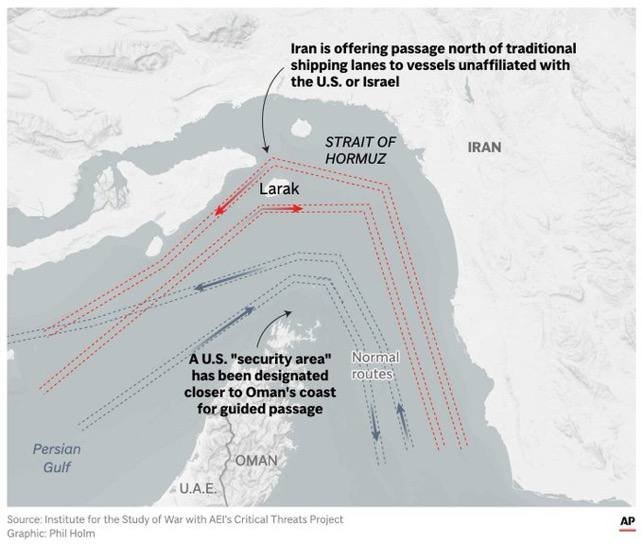
The line in the warning that deserves the most attention is "explode energy infrastructure and markets." That is not generic. It is a direct reference to a corridor of escalation in which Gulf production, shipping lanes, and refining capacity become variable inputs to a political negotiation. Insurance markets have already started to reprice. Freight rate volatility on VLCCs in the Strait of Hormuz is the kind of indicator that, once it moves, feeds back into inflation prints in Europe and Asia faster than any central bank can dampen. The warning is, in effect, a reminder that Iran retains the ability to make the cost of confrontation visible to voters in importing countries within days, not months.
The counter-narrative worth steelmanning
There is an honest counter-read. Iranian warnings in 2019 and in the spring of 2024 produced rhetoric without kinetic follow-through; the regime, the argument goes, lacks the willingness to absorb the retaliation that energy escalation would invite. That reading may even be right. But the cost of misreading it is asymmetric: a misjudged Israeli strike on Iranian energy assets in late 2024 demonstrated that escalation ladders, once triggered, do not come with circuit breakers. The same logic applies in reverse. Tehran's restraint under prior provocations is not a reliable predictor of restraint under a different combination of pressure, leadership positioning, and perceived survival stakes.
The serious paragraph
The stakes here are not abstract. A negotiated framework that leaves Iran's enrichment programme constrained but verifiable, and that delivers sanctions relief tied to monitored compliance, is the only path on which energy markets do not become a weapon in 2027. The warning from Ghalibaf is a signal that the political space for that path in Tehran is narrowing. It is also, by construction, a signal that the political space in Washington is being mispriced. Public warnings from a regime's top negotiator are usually the last move before the last move. The next move belongs to the side that still has a working phone line.
The wire channels carried the same lines, in the same hour, in the same order. The pattern is the point. When a foreign ministry, a security council, and a parliamentary speaker all let the same sentence go out unedited, the warning is institutional, not personal. Ignoring it is a choice — and a costly one.
Desk note: Monexus carries the Ghalibaf warning in full and treats Iranian official messaging as a primary source, not a sideshow. The editorial frame is that of a negotiator warning his counterpart, not of a regime threatening the world. Where mainstream Western coverage leans on the "bluster" reading, this publication reads the coordinated, multi-channel release as evidence of seriousness.
Wire provenance
This editorial synthesis draws on the following public wire/social posts:
- https://t.me/FotrosResistancee
- https://t.me/wfwitness
- https://t.me/Middle_East_Spectator
- https://t.me/GeoPWatch