Tehran calls US strikes on Iranian soil a 'blatant aggression' — and points at the words being used to justify them
Tehran's deputy foreign minister says the latest US strikes on Iranian targets cannot be laundered through vocabulary, and the framing fight is now the story.
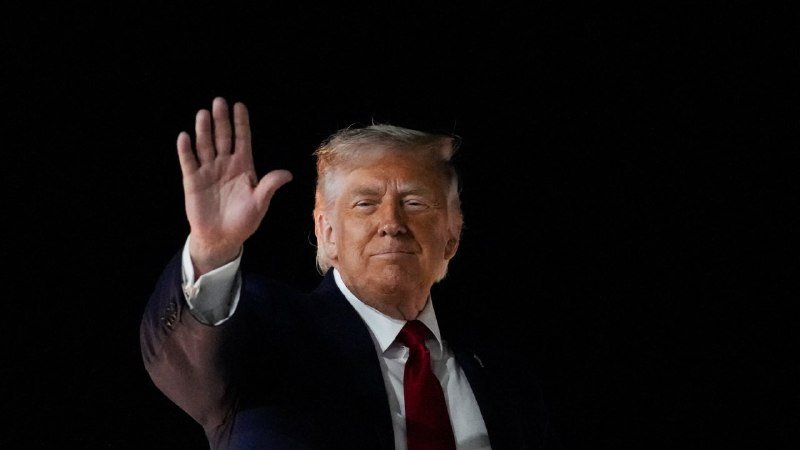
Iran's deputy foreign minister went public on 11 June 2026 with a pointed objection to the vocabulary surrounding the latest US strikes on Iranian territory. In a post on X logged at 10:31 UTC and amplified by the Iranian outlet Tasnim News, Kazem Gharibabadi argued that "in international law, military aggression is not legitimized by creating words." Within seventeen minutes, the framing had migrated to Al Alam Arabic (10:40 UTC), and by 10:48 UTC the English-language service of Iran's Mehr News Agency had carried the same line, this time sharpened: "the American attacks against Iranian territory constitute a document of the blatant aggression against Iran's sovereignty."
The argument is less about the strikes themselves — those are now a reported fact — and more about the language used to describe them. Tehran is signalling that the legitimacy battle is being fought in the same place the kinetic one is: on Iranian soil.
The line Tehran is drawing
Gharibabadi's formulation targets the most consequential phrase in any post-strike communique: whether the action is called an "attack," a "strike," an "operation," or a "defensive action." In his telling, the label is the authorisation. If the new US strikes on targets on Iranian soil can be rebranded in plain English as something less than an act of war, then in his reading the political and legal cover for the next round is automatically extended. Mehr News and Al Alam Arabic both reproduce the framing in identical terms, a coordinated cross-platform push designed to lock the language in place before Western wires settle on their own descriptors.
It is, in other words, a fight about who gets to define the verb.
What the framing buys
The Iranian position is structurally familiar. The same playbook has been used in reverse by Western spokespeople in other theatres: when strikes are framed as "targeted," "surgical," or "calibrated," they sit in a different legal and moral bucket than "aggression." Tehran is now insisting on the latter word and tying it to a well-established concept in the international-law lexicon. The Mehr News framing — "blatant aggression against Iran's sovereignty" — borrows the language of the UN Charter's Article 2(4) prohibition on the use of force, and the unitarity of Iran's messaging across state-aligned outlets suggests this is the line the foreign ministry wants anchored in any future multilateral discussion.
That matters for two reasons. First, it pre-positions Iran for any UN Security Council referral or General Assembly resolution, where the operative wording is decided in advance of the vote. Second, it sets the public baseline for any future Iranian counter-action, diplomatic or otherwise: the strikes are aggression, the response is self-defence, and the legal scaffolding is in place before the next headline lands.
The counter-narrative that isn't here yet
What is conspicuously absent from the available sourcing is the US government's own characterisation of the strikes. The thread of items before this publication does not include a State Department briefing, a White House statement, or a Pentagon readout that would let us weigh Washington's framing against Tehran's. Western wires have not yet appeared in the visible record. That asymmetry is itself the story: when a state-targeted strike is announced through a deputy foreign minister's X account and a cluster of state-aligned outlets, the information environment is being shaped by the actor with the most to lose from ambiguity.
In past episodes — the January 2020 killing of Qasem Soleimani, the strikes on Iran-linked facilities in Syria and Iraq in 2023 and 2024 — the US side typically insisted on a tightly worded "self-defence" or "deterrence" frame within hours. The absence of that frame in the current record leaves the descriptive field wider than usual, and Tehran is moving to fill it.
Stakes beyond the headline
The shorter-term stake is the legal record. If the next round of diplomatic activity — whether a back-channel de-escalation, a UN debate, or a sanctions motion — proceeds from the premise that Iran's territory was struck in a documented act of aggression, Iran's negotiating posture in any of those forums is materially stronger. Western diplomats privately understand that language, once embedded in UN records, is hard to walk back.
The longer-term stake is precedent. The US has struck targets on Iranian soil before, but each prior episode was followed by a swift diplomatic or back-channel mechanism to cap escalation. If the current cycle breaks that pattern, Gharibabadi's framing positions Tehran to argue, in any future international forum, that it acted in response to a documented breach of sovereignty — a cleaner legal posture than the one Iran has had to defend in previous confrontations.
What we don't know
The available sourcing does not specify which Iranian targets were struck, the scale or yield of the operation, or whether there were Iranian casualties. The White House, State Department, and Pentagon have not been quoted in the visible record at the time of writing, and no independent wire has yet corroborated the strike from the US side. The Iranian framing is therefore being established in a near-vacuum of competing accounts, which is exactly the condition in which vocabulary does the most work. Readers should treat the legal characterisation as the opening of a contest, not its conclusion — the language is being locked in before the facts are fully on the page.
Desk note: Monexus is carrying the Iranian framing on its own terms, as a primary-source-driven account of how Tehran is reading the strikes, and flagging that the US-side characterisation is not yet in the public record. Where later reporting from Western wires or the State Department emerges, the framing contest itself will be the lead.
Wire provenance
This editorial synthesis draws on the following public wire/social posts:
- https://t.me/mehrnews
- https://t.me/alalamarabic
- https://t.me/tasnimnews_en
Follow the event.
These dated source records provide context. They do not retrospectively verify this archive article.
Separate what the nuclear watchdog reported from what it could not determine after the June 2025 strikes.