Hamas reports 'tangible progress' in Cairo unity talks with Palestinian factions
Hamas's chief negotiator says Cairo meetings with rival Palestinian factions have produced 'tangible progress' on a unified national platform, though no agreement has been published and key questions on governance and post-war arrangements remain open.
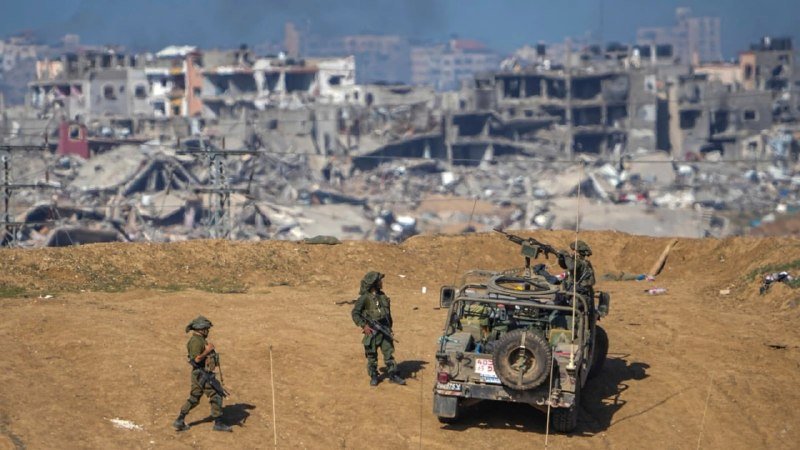
Hamas announced on 11 June 2026 that multi-day meetings in Cairo between Palestinian factions had produced "tangible progress," with negotiators describing a "broad agreement" taking shape around a unified national position on the roadmap for the territories. The framing of the talks — and the conspicuous absence of a published text — leaves the substance of that convergence largely in the hands of the factions' own spokespeople.
The announcement, carried almost simultaneously by regional outlets aligned with different ends of the Palestinian political spectrum, is the strongest signal in months that Gaza's dominant faction and its rivals are converging on at least the procedural shape of a common platform. It is also a reminder that intra-Palestinian diplomacy has its own rhythm, one that does not always match the public cadence of cease-fire negotiations elsewhere.
What was said, and by whom
Hossam Badran, a member of Hamas's political bureau and a member of the movement's negotiating team, told reporters on 11 June 2026 that the Cairo discussions had been "positive" and that the delegations had reached "tangible progress," according to the Iranian state-linked Tasnim News Agency, which published a wire report at 15:29 UTC. The Cradle, a Beirut-based outlet closely read across the Axis of Resistance, carried a parallel statement at 15:47 UTC attributing to Hamas a description of the meetings as "positive and constructive, with broad agreement emerging around a unified national position on the roadmap." Both reports were sourced to the same Hamas statement; neither published a draft text, a list of participating factions, or a schedule for follow-up.
That is the working substance of the day's news: a single, sourced characterisation of a meeting, repeated through sympathetic wires, with no documentary exhibit attached. The diplomatic signal is real — Badran is one of Hamas's most senior political-bureau figures and a recurring lead negotiator in cross-factional talks — but the verifiable scope of the "agreement" is, on the public record, narrower than the language implies.
Why Cairo, why now
Cairo has hosted intra-Palestinian reconciliation talks on and off since 2017. The current round sits inside a wider set of negotiations that have, at various points, involved the Palestinian Authority, Hamas, Islamic Jihad, the Popular Front for the Liberation of Palestine and other factions, with Egyptian intelligence as the recurring convener. The Egyptian role is structural: Cairo is one of the few regional mediators that maintains working channels with every major Palestinian faction, with Israel, and with Qatar, which has historically hosted the Hamas political office.
The political incentive for visible movement is significant. A unified Palestinian negotiating position has long been a precondition — formally requested by the Arab League, by successive UN resolutions, and by Palestinian civil-society groups — for any internationally backed political process to proceed on terms that the PA, Hamas, and the wider diplomatic ecosystem could all sign off on. The absence of such unity is one of the standard explanations, in Western and Arab capitals alike, for the durability of the post-2007 political split between Ramallah and Gaza.
What "tangible progress" can plausibly cover
A "unified national position on the roadmap" can mean several different things, and the Hamas statement does not distinguish between them. It could refer to a common position on the sequencing of a cease-fire, on the governance arrangements for Gaza during any transitional period, on a prisoners-and-hostages exchange, on the parameters of a future Palestinian state, or on a joint negotiating team for any subsequent phase of diplomacy. All five tracks have been live in regional discussion at different points in 2026.
The honest read of the available reporting is that the factions have aligned on the form of a unified position — a single document, a single delegation, a single set of talking points — and not, on the public record, on the content of any of those documents. Western and Israeli officials have, in past rounds of similar language, treated this kind of announcement as procedural rather than substantive. Palestinian factions have, just as often, treated it as the necessary precondition for the substance to follow.
Counter-reads
There are two plausible alternative readings of the announcement. The first is that the factions have, in fact, made more progress than the absence of a text would suggest, and that publication is being held back to preserve negotiating leverage in a separate, still-active track of diplomacy. The second is that the language is calibrated for internal Palestinian audiences and for the Arab League, neither of which rewards public stalemate, and that the substance remains genuinely contested. Both reads are consistent with the same set of wires. The state of the public evidence does not yet let an outside reader choose between them.
What can be said with more confidence is the direction of travel. Badran's visibility as the lead communicator, the symmetry of the language across outlets with different alignments, and the choice of Cairo as the venue together suggest a meeting that was meant to produce a deliverable. Whether that deliverable was a communiqué, a draft framework, or simply a shared confidence in the room is the question the 11 June announcements do not, in the end, answer.
Stakes and what to watch
The immediate audience for any unified Palestinian position is the next round of regional diplomacy, most plausibly mediated by Egypt and Qatar and, depending on the track, involving the United States, the European Union and the UN. A common platform compresses the negotiation: mediators no longer have to reconcile two or more Palestinian papers before they can sit down with external parties. It also, in the long run, raises the political cost for any future Israeli or American effort to bypass Palestinian leadership in shaping the post-war order.
The principal risk is the opposite of progress. A framework that satisfies Hamas, Islamic Jihad, the PFLP, the PA and the wider diaspora simultaneously is, by construction, a compromise document — and compromises of this kind have, in past rounds, collapsed at the point of signature. The factions have not, in this set of wires, named a date for a follow-up meeting, a publication window for a draft, or a mediator for the next stage. Until one or more of those appears in the record, the announcement should be read as a real but partial step: an alignment of language, not yet an alignment of positions.
This publication treats intra-Palestinian diplomacy as a distinct reporting stream from the Israel–Hamas cease-fire track, and frames both inside the same regional process. Where the public record is limited, the article says so rather than inferring substance from procedural language.
Wire provenance
This editorial synthesis draws on the following public wire/social posts:
- https://t.me/thecradlemedia
- https://t.me/tasnimnews_en
- https://t.me/JahanTasnim