Healey quits, accusing Starmer of starving Britain's defence of cash
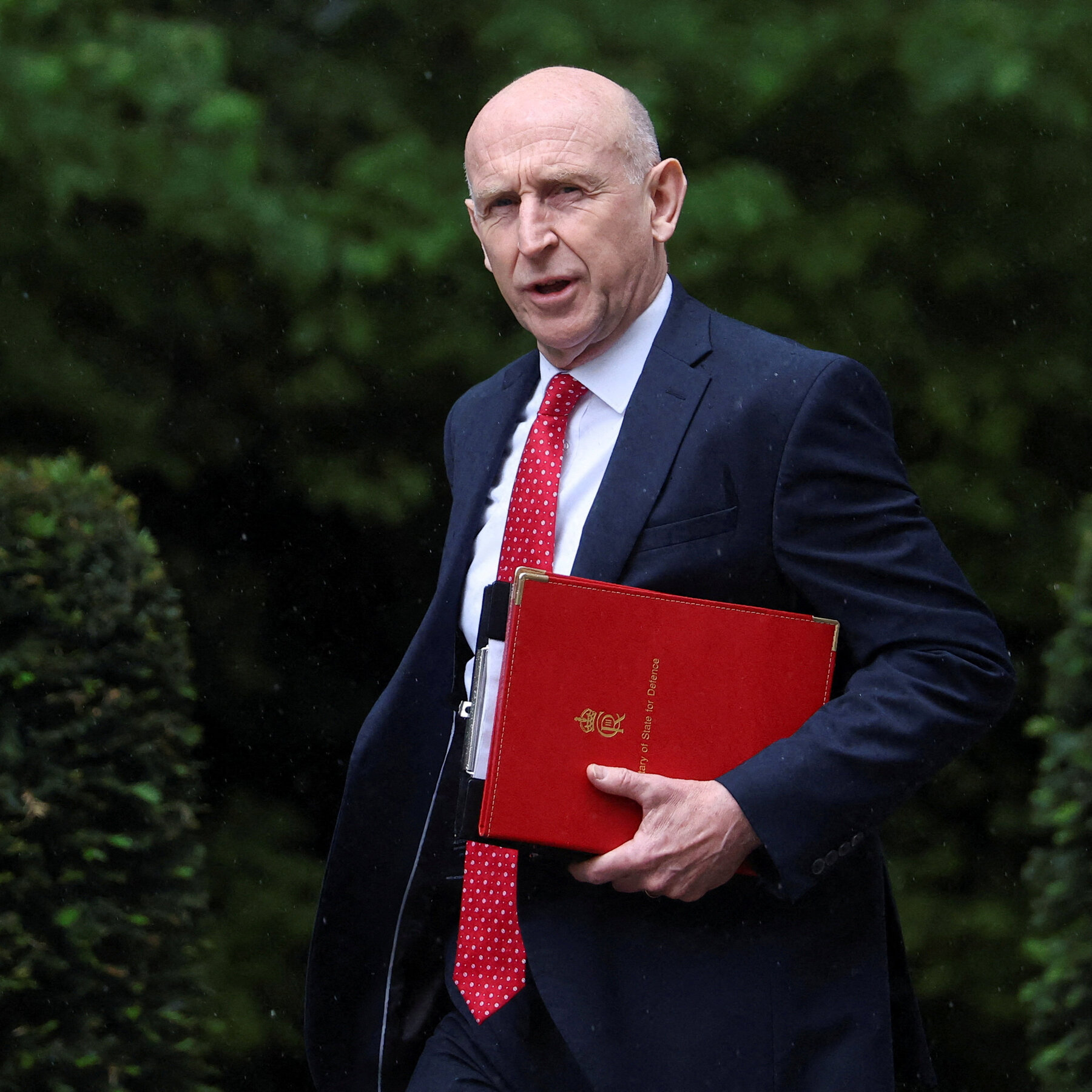
At just before midday on Thursday 11 June 2026, UK Defence Secretary John Healey handed Prime Minister Keir Starmer a resignation letter that amounted to a public indictment of the government's own defence policy. The New York Times reported the move as an "unexpected" departure by a member of Starmer's cabinet, citing Healey's claim that the Prime Minister had "failed to invest enough money in British defence." Within the hour, Telegram channels tracking the defence beat — @abualiexpress and @GeoPWatch — were carrying the same core facts, with both noting that Healey framed the resignation around the Treasury's refusal to allocate a budget adequate to Britain's stated security needs.
The resignation lands at a moment when the UK's fiscal ceiling is the only thing keeping defence spending visibly below NATO's two-percent-of-GDP guideline, and below the three-percent figure that officials in London, Brussels and Washington have spent the past year calling "the floor, not the ceiling." Healey's exit turns an internal budget row into a political crisis: the minister tasked with delivering the armed forces' modernisation programme is now on record saying the money on the table is not enough to do the job.
A budget that has been shrinking in real terms
The complaint Healey put on paper is not new. Successive British defence reviews over the past decade have warned that the equipment plan is underfunded and that the gap between Treasury settlements and the cost of the existing programme has widened into the tens of billions of pounds. The Telegram channel @abualiexpress framed the resignation in precisely those terms on 11 June, reporting that Healey cited the failure to allocate a defence budget adequate to Britain's needs. The New York Times, in its 11:29 UTC world-news item on the same day, captured the political dimension: Healey's letter accuses Starmer personally of having "failed to invest enough money in British defence."
What the resignation does is move that argument from a paragraph buried in a National Audit Office report to the front of the British press. The defence secretary, in other words, is no longer willing to be the public face of a settlement he does not believe in. That is a different kind of political fact from a routine departmental row over whether to buy more F-35s or trim the surface fleet.
What the resignation does not change — yet
Two caveats are worth flagging at the outset. First, the reporting as of 12:00 UTC on 11 June 2026 is limited to the letter, the Telegram-channel corroboration, and The New York Times' world-news flash. The thread context does not contain an on-the-record Downing Street response, a Treasury statement, or a statement from the Leader of the Opposition naming a specific alternative settlement. Any analysis of what happens next is therefore necessarily provisional.
Second, resignation letters from defence secretaries in recent British history have more often than not been the first move in a negotiation, not the last. A minister who publicly walks out of Whitehall in a row over money is, in effect, demanding that the Prime Minister pick between the Chancellor and the defence plan. The pattern is familiar from the 1980s and from the coalition years: ministers go, money is found, the programme is reset. The Starmer government now has to decide which version of that script it wants to perform.
The structural read: hollowing out by attrition
The bigger story, if Healey's numbers are even roughly right, is not a single budget cycle but a slow erosion of the British defence base that has been visible to anyone willing to read the NAO's annual reports. The Royal Navy has fewer escorts than it did a decade ago. The British Army is smaller, and its armoured-vehicle programmes have been delayed. Procurement decisions that would once have been made inside the Ministry of Defence have, in effect, been made by the Treasury — because the Treasury is the only part of government that can say no.
That dynamic is not unique to Britain. Across Europe, finance ministries have spent the post-Cold War era presiding over defence budgets in slow-motion decline, while defence ministries have complained, accurately, that the equipment plan and the personnel plan cannot both be funded at the headline number. The Ukraine war forced a rhetorical reset in 2022 — the German Zeitenwende, the Danish two-percent pledge, the Polish three-and-a-half — but the underlying budget mechanics have moved more slowly than the rhetoric. Healey's resignation is a British expression of a European problem: the gap between the security posture governments are willing to advertise and the budgets they are willing to authorise.
The NATO dimension sharpens the point. A British defence secretary who publicly says the settlement is inadequate is, by implication, saying the United Kingdom is not paying its way inside the alliance at a moment when Washington is leaning on European capitals to do more, not less. That is a difficult message to deliver from a Treasury box in Whitehall, and an easier one to deliver from the back benches of the House of Commons, which is presumably why Healey has chosen to deliver it by resigning rather than by leaking.
Stakes: who wins, who loses, who decides
The immediate winner is the Chancellor, Rachel Reeves, whose fiscal rules have just been publicly endorsed — or at any rate not contradicted — by a sitting minister with nothing left to lose by contradicting them. The immediate loser is Starmer, who now faces a by-election-by-resignation inside his own cabinet, with Labour MPs asked to explain why the man running defence thinks defence is underfunded. The medium-term loser, if the budget Healey is complaining about is the one that ships, is the British armed forces, which would carry the visible consequences of a smaller equipment plan into the late 2020s.
The reader-relevant question is whether this is a realignment or a tantrum. The reporting as of 12:00 UTC on 11 June 2026 cannot answer that. What it can say is that the British government now has a defence-policy argument being conducted in public, in writing, by two of the people most directly responsible for it. That is, on the available evidence, the most direct internal challenge to a Labour defence settlement in living memory.
How Monexus framed this vs the wire: the US and UK wire coverage on 11 June is treating the resignation as a personal blow to Starmer. Monexus is reading it as a structural argument over the defence budget that is being aired, unusually, by someone inside the tent who has chosen to leave it.
Wire provenance
This editorial synthesis draws on the following public wire/social posts:
- https://t.me/abualiexpress
- https://t.me/GeoPWatch