The mother bear of Abbasabad, and the road she must still cross
A radio-collared brown bear called Helia and her three cubs have become the unlikely mascots of a long-running fight over whether Iran's last east-west highway should finally be tamed.
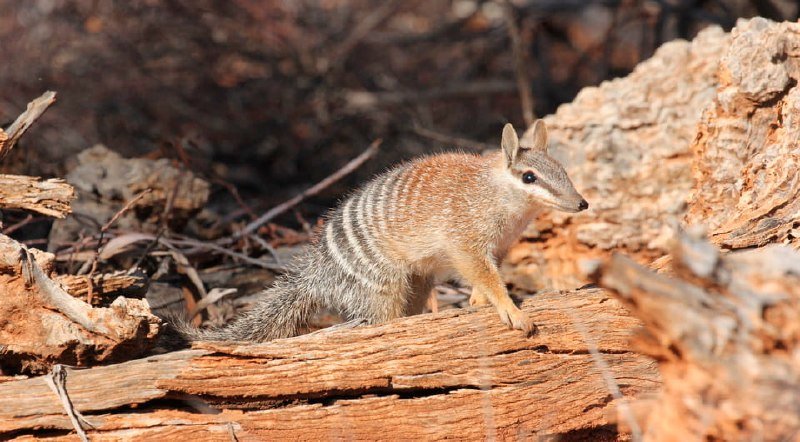
On a stretch of the old Abbasabad–Mianeh road in East Azerbaijan province, a brown bear named Helia and her three cubs picked the worst possible moment to move. The single sentence carried by Fars News on 11 June 2026 — "drive slowly; 'Helia' and her cubs cross the road of death" — captures a campaign that has run, in one form or another, since at least the spring of 2023, and that turns on a deceptively simple question: can Iran reconcile a 1,400-kilometre east-west highway with the bears, leopards, and shepherds who share its verges?
The story is small in scale and large in implication. A handful of animals, a regional traffic corridor, and a conservation bureaucracy that has spent three years trying to thread the needle between infrastructure continuity and biological survival. The outcome will tell us something useful about how a sanctioned, climate-stressed state balances its development ambitions against the unglamorous work of letting wildlife pass.
A bear with a collar, and a road with a nickname
Fars's dispatch, distributed via Telegram on 11 June 2026 at 19:38 UTC, treats Helia as a recurring character rather than a fresh sighting. Iranian wildlife biologists fitted the female brown bear with a tracking collar several years ago, and her movements have been followed by the Department of Environment ever since. Fars describes her current trajectory as crossing the "road of death" — local shorthand for a section of the Abbasabad–Mianeh corridor that has become notorious for collisions between vehicles and large carnivores, as well as for the shepherds and herders who walk the verges.
The cubs are the news. Brown bears (Ursus arctos) in the Alborz and the high country of northwestern Iran typically emerge from winter dens between February and April; by June the cubs are several months old and mobile enough to follow their mother across hostile terrain. That Helia is leading three across a paved road, on a known collision hotspot, is the kind of detail that wildlife campaigners seize on because it forces a specific, dated, photographable event out of an otherwise diffuse mortality curve.
The campaign, three years on
The "drive slowly" slogan is not new. Fars's own coverage in 2023 urged motorists in the same province to slow for crossing bears, and the framing has appeared in Persian-language conservation reporting throughout 2024 and 2025. What is new is the persistence. The Department of Environment has not, in the materials available, released a public count of bear-vehicle collisions on this corridor, and Iranian road-safety data does not break out wildlife strikes as a category. That leaves a campaign driven by visible animals and identifiable mothers — Helia being the most prominent — rather than by statistics.
The structural read is straightforward. Iran's road network expanded rapidly in the 2000s and 2010s; the east-west axis through Mianeh is a freight and passenger artery, and it cuts through habitats that biologists in Tehran and East Azerbaijan have long flagged. Wildlife crossings — overpasses planted with native vegetation, underpasses sized for large carnivores, fencing to funnel animals toward them — are a known mitigation. They are also expensive, and in a sanctions environment where the state's hard-currency budget is constrained, the case for spending on bear crossings has to compete with hospitals and housing.
What the counter-narrative looks like
There is a counter-narrative, and it deserves to be stated in its strongest form. The same highway that endangers Helia moves grain, fuel, and people. The herders who share the verges with bears are not incidental to the landscape; they are its working population, and livestock losses to large carnivores are a real and recurrent economic problem in northwestern Iran. Any infrastructure decision that slows freight to protect a small number of bears has a cost that falls disproportionately on people who are not the campaign's audience. The Fars framing — "road of death" applied to the motorists' perspective, with the implicit demand that drivers slow — is a moral position, not a neutral one. It assumes that the bear's right of way outweighs the human demand for speed. That assumption is defensible, but it is not free.
A second, quieter counter-narrative sits in the regional development record. Iranian conservation NGOs, several of them operating in the Caspian and Alborz corridors, have argued for years that the better answer is engineered crossings, not exhortation. Slowing traffic is a stopgap. The structural fix is capital.
The pattern this sits inside
This is, in plain terms, a textbook case of road ecology meeting development finance. The technical literature is settled on the principle: where a high-volume road bisects carnivore habitat, the choice is between crossings and dead animals, and crossings are cheaper in the long run. The political question is who pays, and on what timetable. In Europe, the answer has been EU cohesion funds applied to a transnational ecological network. In Iran, the answer is whatever the Department of Environment can negotiate against the Ministry of Roads, in a fiscal environment shaped by sanctions.
The Helia story is also, more locally, a test of how visible a single animal can become in a media ecosystem that otherwise treats wildlife as scenery. Fars — a state-aligned outlet, not a nature publication — has carried the "drive slowly" framing for three consecutive years. That continuity is itself the story: a campaign that survived because the face of it walked across the road on camera.
Stakes, in concrete terms
If the trajectory continues, the most likely outcome is a hybrid one: more signage, more seasonal advisories, occasional speed enforcement, and a small number of purpose-built crossings funded either through the domestic budget or, possibly, through international conservation grants that have continued to operate in Iran despite broader sanctions. The wins would be partial — a reduction in collisions, not their elimination. The losses would fall on the cubs that don't make it across, and on the herders whose livestock encounters won't be reduced by a sign.
The window for the engineering solution is narrow. Helia's cubs, if they survive the year, will disperse. The corridor's traffic volume is not going down. The Department of Environment's budget is not going up in any dramatic way under current conditions. What is plausible is a pilot crossing on the worst hotspot, paid for out of a combination of state and conservation-NGO money, justified in part by the visibility of one named bear. That is how these things get built: not on a national plan, but on the patience of a mother who keeps returning to the same dangerous road.
What remains uncertain
The sources available do not specify how many crossings, if any, have been built on the Abbasabad–Mianeh corridor since 2023, nor do they give a collision count that would let a reader judge whether the campaign has measurably reduced mortality. The Department's published materials are not part of the available thread, and Fars's reporting is by design a campaign vehicle rather than an audit. The most honest read is that Helia is doing important work as a symbol, and that the engineering work her symbol is meant to justify has not yet been confirmed.
— Monexus framing note: Fars's coverage is a campaign dispatch, not a baseline survey. This publication treats the "road of death" framing as the dominant Persian-language read of the corridor, and has surfaced the livestock and freight counter-narrative on its merits rather than as a footnote.
Wire provenance
This editorial synthesis draws on the following public wire/social posts:
- https://t.me/farsna/