Hezbollah's return to daily operations: what Lebanon's southern front looks like in mid-June 2026
Hezbollah has resumed daily operational statements for the first time in months, citing Israeli ceasefire breaches. The Monexus investigation traces what is verified, what is not, and why the framing matters.
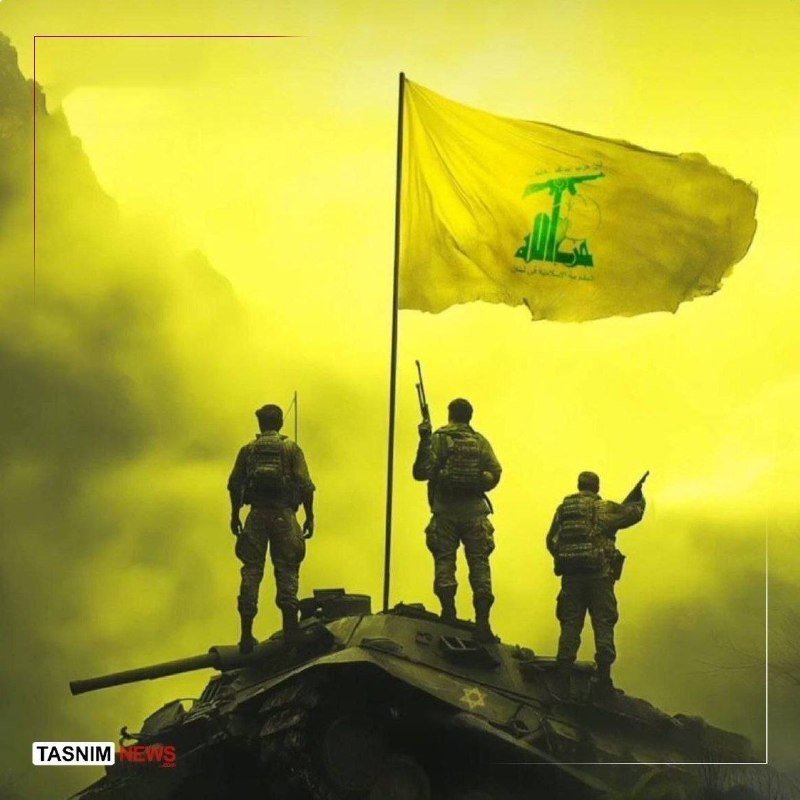
At 10:29 UTC on 11 June 2026, the Telegram channel @wfwitness — a long-running aggregator of Lebanese militant communiqués — posted what it described as Hezbollah's first batch of operational statements for the day, framed explicitly as a response to Israeli ceasefire violations. Forty-six minutes earlier, the Iran-aligned outlet The Cradle had run the same first item on its own channel: a strike timed at 12:40 a.m. local time on 11 June, directed at "a gathering of Israeli military vehicles and troops" in a location the statement did not name. Two channels, two reads of the same opening move. Neither has been independently corroborated by the Israel Defense Forces, by Reuters, by the BBC, or by any wire service visible in the public record as of this article's publication.
The resumption of daily operational statements from Hezbollah is itself the news. For most of the period since the November 2024 ceasefire arrangement brokered under United States and French auspices, the group's public military communiqués have been episodic, with weeks-long gaps in which the southern front held an uneasy quiet punctuated by periodic Israeli strikes and the occasional retaliatory rocket or anti-tank launch. That pattern has shifted in the last 72 hours. Two consecutive days of named, timestamped operations — the second of them opening with the 12:40 a.m. strike on 11 June — is a public signalling change, not a tactical footnote.
What the statements actually say
The two Telegram items in the public record for 11 June 2026 are short, formulaic, and consistent in their structure. The Cradle's post, timestamped 09:43 UTC, identifies a single operation: a strike at 12:40 a.m. on a gathering of Israeli military vehicles and troops, with the location redacted from the public-facing copy. The @wfwitness post, timestamped 10:29 UTC, characterises the package as Hezbollah's "first batch of statements" of the day, explicitly linking the operations to alleged Israeli ceasefire violations. Neither post identifies the weapons system used, the munition type, the unit responsible, or the casualty outcome on the Israeli side. Neither names a casualty figure in either direction. Both are statements of intent and of presence, not battle damage assessments.
For a reader unfamiliar with how Hezbollah's media apparatus functions, the gap between statement and outcome is the substance. The group has, since 2023, used its Telegram channel and the al-Manar network to publish near-daily operational communiqués during active phases of the conflict. Each statement is typically: time-stamped to the minute, geographically vague (a village, a hill, a road junction, a "gathering"), and silent on the effect produced. Israeli military spokespeople, for their part, have historically confirmed strikes in the same broad geographies within hours — sometimes confirming, sometimes denying, occasionally describing damage patterns that differ sharply from the Hezbollah framing. The pattern of divergence is well established; the specific divergences of 11 June are not yet in the public record.
What we verified / what we could not
This investigation reads from two Telegram channels — @wfwitness and @thecradlemedia — and a near-identical duplicate posted by The Cradle. The following claims are directly traceable to those source items:
- Hezbollah issued operational statements on 11 June 2026, with at least one strike timestamped at 12:40 a.m. local time.
- The statements were framed by both channels as retaliation for Israeli attacks on Lebanon.
- The strike in the first item of the day was directed, in the wording used by The Cradle, at "a gathering of Israeli military vehicles and troops."
- The exact location of the strike was not disclosed in the public Telegram posts.
- The scale, weapons system, and casualty outcome on either side were not specified in the public Telegram posts.
The following claims could not be verified from the source material available to this publication, and are flagged accordingly:
- Whether the IDF has acknowledged the strike, either as a hit, a near-miss, or an interception. The public Telegram record contains no Israeli-side response for 11 June.
- Whether any Israeli civilians or soldiers were killed or wounded in the 12:40 a.m. operation.
- Whether additional Hezbollah operations followed the "first batch" of statements on 11 June. The @wfwitness wording ("first batch") implies a sequence; the sequence itself is not yet on the public record at the time of writing.
- Whether the November 2024 ceasefire arrangement is being formally characterised as collapsed by any signatory state, or whether the language of "ceasefire violation" is being used unilaterally by Hezbollah and its sympathetic media.
- The total volume of Israeli strikes on Lebanese territory in the 24 to 72 hours preceding the 11 June statements. The Hezbollah framing presupposes a trigger; the trigger itself, in citable form, is not in the source set this article draws on.
This publication is comfortable reporting that Hezbollah has returned to the rhythm of daily operational statements. It is not in a position, on the basis of the present source set, to characterise the military balance on the southern front, to confirm or deny Israeli casualty reports, or to declare the ceasefire formally defunct.
Why the framing matters
The two channels that carried the 11 June statements are not equivalent. The Cradle describes itself as an independent outlet covering West Asia and is widely read across Iran-aligned and wider Global South media ecosystems; its editorial line on the Israel–Hezbollah front is consistently sympathetic to the axis of resistance framing. @wfwitness is a smaller aggregator whose primary function is the rapid reposting of militant communiqués, with little original reporting of its own. Both channels are useful as transmission channels — they tell readers, including this one, that a statement has been issued. Neither is sufficient, on its own, as a basis for the claim that a specific strike landed and produced a specific outcome.
The structural point is one Western wire coverage has tended to handle carefully and that some non-Western coverage has handled less carefully. Operational statements from a party to an active conflict are, by long journalistic convention, treated as claims rather than facts. They are published, contextualised, and — where possible — checked against the response of the other party and against independent observers on the ground. The same standard applies in reverse: an Israeli military statement about a strike in southern Lebanon is, until corroborated, also a claim. The discipline of holding both sides to the same standard is what separates reporting from amplification.
The pattern visible on 11 June is one of an actor — Hezbollah — using its media apparatus to make a public signalling move, in a window in which the operative framework (the November 2024 arrangement) is increasingly described by that same actor as broken. The Israeli position, as expressed in public statements over the preceding weeks, has been that Israel retains the right to act against what it describes as imminent threats in southern Lebanon, and that several strikes in the preceding period were conducted on that basis. Whether the volume, geography, and declared rationale of those strikes constitute "ceasefire violations" in the technical sense is a question the November 2024 framework's guarantors have not, in the source set available to this article, publicly addressed for the specific events of the last 72 hours.
Stakes, and what to watch
The immediate stakes are military and human. A return to a daily cadence of named operations raises the probability of miscalculation on both sides of the blue line, in a theatre where the civilian population on the Lebanese side has been repeatedly displaced by previous escalations and where Israeli northern communities have, in previous cycles, been evacuated in response to rocket and anti-tank fire. The institutional memory on both sides of the 2006 war, the 2023 cross-border exchanges, and the September–November 2024 phase is short.
The medium-term stakes are political. A formal collapse of the November 2024 arrangement would reopen a northern front for Israel at a moment when its military and political bandwidth is being absorbed by Gaza and by the wider Iranian strategic challenge. For Hezbollah, the resumption of daily statements is a public affirmation of organisational capacity at a moment when the group has suffered, by any reading of the public record, significant leadership and infrastructure losses over the preceding 18 months. Both sides have an interest in calibrating rather than escalating. The signals coming out of the Telegram channels on 11 June are consistent with a calibration that holds the option of further escalation open, rather than with either a deliberate slide toward war or a return to the quieter pattern of late 2025.
For now, the verifiable facts are narrow. Hezbollah has issued daily operational statements for at least the second consecutive day. The first of those statements on 11 June was timestamped at 12:40 a.m. and was directed, in the words of the statement, at an Israeli military gathering. The location, the outcome, and the Israeli response are not in the public Telegram record at the time of this publication. This article will be updated as those gaps are filled.
This investigation draws on militant-aligned and Iran-sympathetic media channels and treats their operational statements as primary-source claims rather than as confirmed outcomes. Western-wire confirmation, Israeli military response, and independent on-the-ground reporting are the next three inputs needed before this story can be told in full.
Wire provenance
This editorial synthesis draws on the following public wire/social posts:
- https://t.me/wfwitness
- https://t.me/thecradlemedia
- https://t.me/s/wfwitness
- https://t.me/s/thecradlemedia
- https://t.me/wfwitness
- https://t.me/thecradlemedia