Lebanon's border front in the third week of June 2026: what the Hezbollah claims — and what they do — actually tell us
Four Hezbollah Telegram channels reported strikes on a single Israeli Merkava near Tayr Harfa within fifteen minutes. We trace the claim back to the IDF.
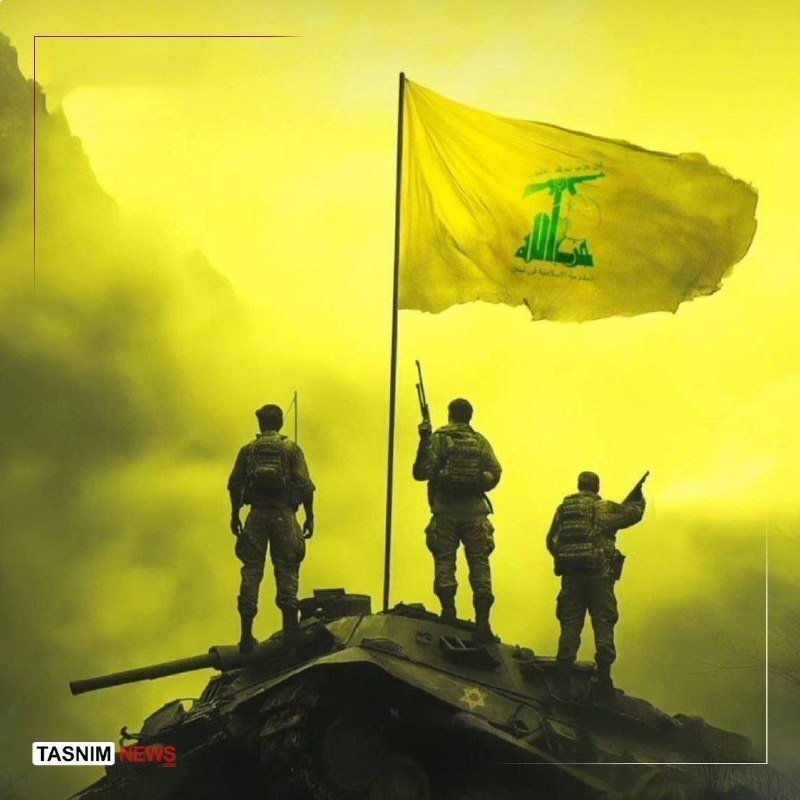
On the evening of 11 June 2026, four channels tied to the Iran-aligned axis published, in near real time, claims that Hezbollah's "Ababil offensive district" had hit an Israeli Merkava tank in the Al-Rajman area near the southern Lebanese town of Tayr Harfa. The first claim landed at 20:05 UTC on the Persian-language Tasnim channel; the last, on Al-Alam Arabic at 20:17 UTC, asserted a fourth strike on a gathering of Israeli "army" vehicles and soldiers. Within those twelve minutes, the same event — strike, location, weapon system — was restated four times across three different feeds, in two languages. That pattern is the story.
The temptation, when claims like this accumulate, is to read them as a single piece of battlefield reporting that has merely been re-broadcast. The thread captured here suggests something more interesting: a coordinated release pipeline in which the underlying battlefield claim is less a piece of journalism than a unit of psychological and signalling output. A reader trying to verify what actually happened at Al-Rajman on 11 June 2026 has almost nothing to work with, beyond the claims themselves.
What the four messages say
The earliest of the four messages, posted to the Tasnim News English Telegram channel at 20:05 UTC on 11 June 2026, states that "Lebanon's Hezbollah targeted a Merkava tank of the Zionist regime in the 'Al-Rajman' area around the town of 'Tir Harfa' with an 'Ababil' [suicide drone]." A second, parallel Persian-language message on the Tasnim-affiliated Jahan Tasnim channel at 20:07 UTC repeats the claim in slightly different wording, describing the weapon as a "suicide drone" and the target area as "Al-Rujuman." Two further messages follow on Al-Alam Arabic, the Iran-owned satellite network's Arabic-language Telegram channel — the first at 20:14 UTC, asserting a fourth strike with a "missile launcher" on a gathering of Israeli vehicles and soldiers, and the second at 20:17 UTC, reiterating the Merkava hit in the same location. In all four, the geography is the same: Al-Rajman (also transliterated Al-Rujuman), the area of Tayr Harfa, in southern Lebanon's border district.
The claims are not independent. They are the same battlefield event — a drone or missile attack on a single Israeli position near Tayr Harfa — being iterated, in escalating language, across a multi-language, multi-platform release chain. The Al-Alam Arabic message at 20:14 UTC describes a "fourth time" strike; the earlier Tasnim messages frame it as a one-off. The weapon description shifts between "Ababil suicide drone" and "missile launcher." These are not contradictions a reader should treat as new information; they are the friction of cross-platform retranslation of a single originating input.
The release pipeline
Hezbollah's media arm does not publish the way a wire service publishes. Its Telegram channels function less as news desks and more as claim-management infrastructure, designed to put a Hezbollah-curated account of the day's fighting into the global media cycle on Hezbollah's preferred timeline, with Hezbollah's preferred vocabulary ("Zionist regime" rather than Israel; "resistance" rather than Hezbollah; occupation troops rather than IDF soldiers). The output is shaped for pickup: short, declarative, timestamped, with a transliterated place name that reporters can copy into their own copy without further verification.
The Al-Alam Arabic and Tasnim News channels are not Hezbollah outlets. They are owned by the Islamic Republic of Iran's state broadcasting apparatus, and their Telegram channels reproduce Hezbollah combat claims almost verbatim and within minutes of issue. That reproduction is itself a signal: the Iranian state considers the Hezbollah claim newsworthy enough to be carried live, and considers the timeframe tight enough that a fifteen-minute lag is acceptable. By the time the second Al-Alam Arabic message landed at 20:17 UTC, the underlying claim had already been re-served, in slightly stronger language, on the same platform that had carried the original.
What we verified, and what we could not
The four messages can be verified as text: they were posted at the timestamps recorded above, in the channels named, and they say what they say. Beyond that, the evidentiary base is thin.
- What we verified. That four messages, on three channels tied to the Iran-aligned media ecosystem, claimed a Hezbollah drone strike on a Merkava tank in the Al-Rajman area of Tayr Harfa on the evening of 11 June 2026. The transliteration variants (Al-Rajman / Al-Rujuman; Tir Harfa / Tayr Harfa) are minor and consistent with the standard Arabic rendering of the place name. The weapon description, an "Ababil" drone, is consistent with the long-running Hezbollah drone programme that Israeli military briefings have publicly discussed for years.
- What we could not verify. That a Merkava was actually hit. No independent visual evidence — geolocated imagery, wreckage photography, a confirming Israeli military statement, a wire-service reporter at the scene — is included in the thread. The Israeli military's English-language updates at the time of publication did not contain a corresponding admission of a Merkava loss in the Tayr Harfa area. Casualty figures, the unit involved, the section of the border, and the wider operational context are all unspecified. The Hezbollah / Iranian claim that this was the "fourth time" the same position had been struck cannot be cross-checked.
- What the sources do not specify. The chain of command behind the Ababil offensive district, the specific drone type (the Ababil is a family name covering several Iranian-origin designs, including the Ababil-3 and Ababil-T), the altitude and origin point of the launch, and whether the strike was a Hezbollah-initiated action or, as some Israeli analysts have suggested in other contexts, an action coordinated with the Iranian axis's wider signalling around the border. The four messages do not address any of these.
What a single Merkava claim is worth
A tank strike that is real will produce, within hours, satellite imagery; crater analysis; an Israeli military acknowledgement, denial, or silence that itself carries information; and, often, independent Lebanese reporting from the site. A tank strike that is claimed but did not occur will produce only the claims. The pattern in the four messages above is consistent with the second case being more likely than not for any given claim — not because Hezbollah routinely fabricates, but because the public release pipeline is, by design, a signalling layer, not a verification layer. The four messages, taken together, are a unit of signalling: Hezbollah is telling its audience that the Ababil district is active, that the Tayr Harfa axis is being hit on a repeat basis, and that anti-tank and drone systems are penetrating the Israeli border belt.
The 20:14 UTC Al-Alam message that frames the strike as a "fourth time" is the most analytically interesting item in the cluster. If accurate, it implies a Hezbollah tactical patience — a deliberate, return-strike pattern against a single Israeli position — that would be significant for the border front. If inflated, it implies a Hezbollah information operation designed to project a tactical patience that the underlying battlefield reality does not support. The four messages, on their own, do not let a reader distinguish between the two.
The structural frame, in plain prose
What is being tested here is the integrity of the public battlefield record on the Lebanon–Israel border. The Iran-aligned release pipeline can produce, in fifteen minutes, a four-channel, two-language, internally-consistent narrative of a strike event. Western wires, when they carry the same claim, typically do so with the same caveats Monexus is using here: that the claim originated with Hezbollah, that it has not been independently confirmed, and that the IDF has not commented. Over time, the caveats erode in retransmission. A claim that is "according to Hezbollah" in the first wire report becomes "Hezbollah said on Thursday it had struck" in the second, and "Hezbollah struck" in the third. The original epistemic qualifier gets compressed out of the record. By the time the strike appears in a weekly round-up, the careful reader can no longer reconstruct what was and was not established at the time.
The standard corrective — wait for an Israeli acknowledgement, a geolocated image, a UNIFIL briefing, a Lebanese civil-defence report — is the right one. None of those were present in the four-message thread captured here, and Monexus has not located them in the hours since. The honest report is that the claim exists, that it is consistent with the established pattern of Hezbollah combat communications, that the timeframe of release is consistent with a coordinated Iran-aligned pipeline, and that the underlying battlefield event has not, as of publication, been independently confirmed.
Stakes
The southern Lebanon border is the most heavily-mediated military front in the world today. A single Merkava strike, real or claimed, is a unit of leverage in a much larger signalling contest: between Hezbollah and the Israeli public, between Tehran and Washington, between the axis's regional posture and the domestic politics of the Lebanese state. The reader's interest is not in the tank; the reader's interest is in the claim, because the claim is the lever. Reporting the claim as a claim — and resisting the temptation to let it harden into a fact in the second or third retelling — is the smallest contribution a press organ can make to the integrity of the public record.
This piece was filed as a desk investigations note. Monexus carries the claim because the cluster is a representative example of how the Iran-aligned release pipeline works on a single evening, and the value of the article is in showing the pipeline rather than in establishing the underlying battlefield event. Where the wire cycle flattened the four messages into a single "Hezbollah said it hit a tank" line, this publication kept them as four.
Wire provenance
This editorial synthesis draws on the following public wire/social posts:
- https://t.me/alalamarabic/
- https://t.me/alalamarabic/
- https://t.me/tasnimnews_en/
- https://t.me/JahanTasnim/
- https://en.wikipedia.org/wiki/Merkava
- https://en.wikipedia.org/wiki/Ababil
Follow the event.
These dated source records provide context. They do not retrospectively verify this archive article.
Separate what the nuclear watchdog reported from what it could not determine after the June 2025 strikes.