Hormuz and the Limits of Coercive Control
Tehran's closure announcement and Washington's counter-claim landed within hours of each other. The dispute over who controls the waterway is now a dispute over who controls the narrative.
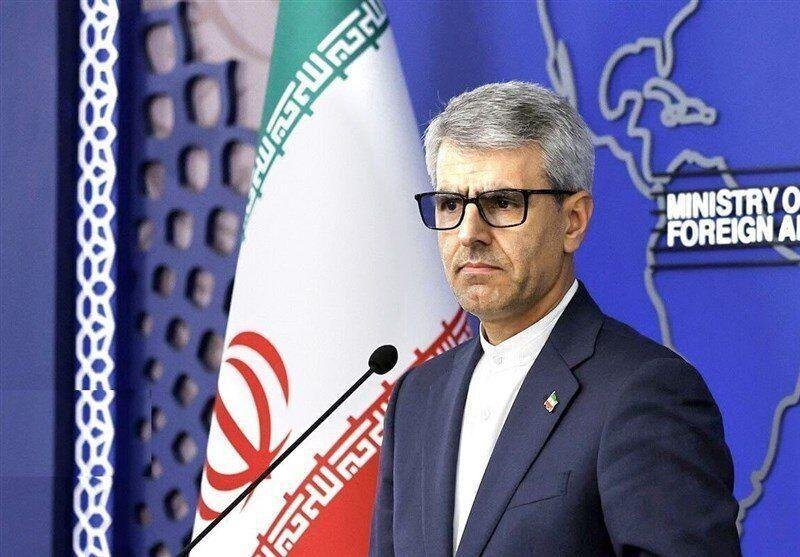
Around 23:43 UTC on 10 June 2026, Iran's military command declared the Strait of Hormuz closed to all vessels and warned that any ship attempting passage would be fired upon. By 08:00 UTC the following morning, Reuters was carrying Iran's formal announcement of the closure, attributed to "US attacks." By 09:05 UTC, the US military was on the record, via Reuters, stating that none of its warships had been struck. The gap between those two statements — one Iranian, one American, both confident, both issued within twelve hours of each other — is the story. Everything else is commentary.
This publication has no interest in the theatre of who struck whom first. The more revealing question is what the closure announcement, and the American denial, tell us about the actual balance of force in the Gulf. For two decades, the standard read of Hormuz was that the United States could keep the lane open by threatening to keep it open. Iran's ability to harass shipping was treated as a nuisance, not a strategic variable. The events of 10–11 June suggest that nuisance has matured into something closer to a veto.
The closure as communication
The Iranian declaration, carried by Telegram channels including Cointelegraph and amplified on X via Unusual Whales and Polymarket accounts, was not framed as a one-off retaliation. It was framed as a closure — indefinite in language, categorical in scope. "Closed to all vessels" leaves no carve-out for tankers flying neutral flags, no safe-passage corridor for Chinese or Indian cargo, no exemption for the LNG carriers that feed Asian power grids. That is a deliberate choice. A targeted harassment campaign can be denied, calibrated, walked back. A categorical closure cannot.
The structural logic is straightforward. Iran does not need to win a naval engagement in the Gulf. It needs to make the risk of transit high enough that insurance underwriters reprice war-risk premiums above the cost of routing around Africa. Once that happens, the closure becomes self-fulfilling even without a single shot fired in anger. Tehran has, in effect, been trying to weaponise Lloyd's of London for years. The 10 June announcement is the most explicit attempt yet.
The American counter-claim, and what it doesn't say
President Trump, in remarks carried on Telegram and on X via Unusual Whales, said US military operations had helped more than 100 million barrels of oil and over 200 commercial ships safely transit the Strait — a claim that sits oddly with an Iranian announcement that the Strait is now closed. The same channel of communication carried his statement that the US would continue bombing Iran "very hard" after Iran shot down a US helicopter over the Strait.
Two things are worth noticing. First, the administration is still speaking the language of escort and protection — the visual of the US Navy shepherding tankers through a hostile waterway. That is a 1980s frame. The actual contested terrain in 2026 is over risk pricing, refinery throughput, and Asian buyer behaviour, none of which an aircraft carrier group resolves on its own. Second, the explicit threat to bomb "very hard" is being delivered into a market that has just been told the waterway is closed. The signalling is contradictory: reassure shippers, threaten escalation, deny losses, claim transit successes. Each of those messages is aimed at a different audience.
What the sources actually show
The sourcing here is honest about its own limits. The Iranian closure declaration comes from Iranian military channels, relayed through Telegram aggregators and crypto-market accounts on X; it has not yet been independently verified by Western wire reporting with on-the-ground confirmation. The American denial, by contrast, comes through Reuters and is the kind of statement a Pentagon spokesperson issues reflexively in the first hours of an incident. Both are primary statements by interested parties. Neither is, on its own, dispositive.
What is dispositive is the sequence. Iranian declaration first, then US denial, then US claim of past transit success, then US threat of further bombing. The sequence is consistent with a pattern this publication has noted before: when the United States is genuinely in control of a situation, its messaging is monosemic. When the messaging proliferates — multiple framings, multiple audiences, contradictory emphases — the situation is usually slipping.
The structural read
The Strait of Hormuz has always been a test of imperial overstretch dressed up as a freedom-of-navigation argument. Roughly a fifth of seaborne oil passes through it. The US Fifth Fleet exists, in part, to guarantee that passage. Iran's anti-ship missiles, mining capability, and fast-attack craft exist to make that guarantee expensive. The arithmetic has been shifting for a decade as Iran has layered asymmetric capability on top of conventional force. What 10 June demonstrates is that the shift has now produced a political fact: Iran can announce closure credibly enough that markets have to price it, even if the announcement is partly performative.
That is a different kind of power from holding territory or sinking ships. It is the power to set the agenda. The Trump administration is now responding to an Iranian timeline rather than setting one. That inversion is what the next 72 hours will test.
The stakes, plainly stated
If the closure holds for any sustained period, the burden falls on Asian buyers — China, India, Japan, South Korea — to either break the blockade diplomatically, route oil around the Cape of Good Hope at a multi-week delay, or accept discounted Iranian crude via overland pipelines and shadow-fleet transfers. None of those options is free. All of them restructure the long-term energy map in ways that favour Iran's residual leverage and dilute the US-led sanctions architecture that has been the spine of Gulf policy since 2018.
If the closure collapses under US pressure within a week, the lesson is that Iran overreached and the old frame still holds. The interesting question is not which outcome is more likely. It is whether Washington can afford the cost of the lesson either way teaches.
What remains uncertain
The sources do not specify the exact rules of engagement Iran has issued to its own naval forces, the number of commercial vessels currently holding position outside the Strait, or whether China's foreign ministry has issued a public response to the closure declaration. The polymarket and Unusual Whales posts that amplified the announcement are sentiment indicators, not confirmations. The Reuters item confirming the closure is the strongest Western-wire anchor in the chain, and even it attributes the announcement to Tehran. Readers should treat the closure as announced rather than enforced until independent shipping data and satellite imagery corroborate a sustained halt in transit.
— Monexus framed this as a contest over narrative control, not a clash of navies. The wire coverage is split between the Pentagon's denial and Tehran's declaration. Monexus reads the sequence as evidence that the burden of proof in the Gulf has moved.
Wire provenance
This editorial synthesis draws on the following public wire/social posts:
- http://reut.rs/4uN5fER
- http://reut.rs/3QwMRSo
- https://t.me/cointelegraph