Live Wire
00:01ZEPOCHTIMESPerson used dead LA shooting victim's identity for 20 years to claim benefits00:01ZOANNTVFBI partners with UFC for hand-to-hand combat training seminars23:59ZALALAMARABIsraeli military carries out massive bombing operation east of Khan Yunis in southern Gaza Strip23:58ZGEOPWATCHSatellite imagery shows damage to Ramat David Airbase storage facilities in northern Israel23:58ZGEOPWATCHElon Musk becomes world's first trillionaire after SpaceX IPO23:55ZVANEKNIKOLAerial objects reported over Mykolaiv center, residential damage reported23:55ZRNINTELTrump to nominate Jay Clayton as next Director23:54ZINSIDERPAPTrump claims US ended war with Iran00:01ZEPOCHTIMESPerson used dead LA shooting victim's identity for 20 years to claim benefits00:01ZOANNTVFBI partners with UFC for hand-to-hand combat training seminars23:59ZALALAMARABIsraeli military carries out massive bombing operation east of Khan Yunis in southern Gaza Strip23:58ZGEOPWATCHSatellite imagery shows damage to Ramat David Airbase storage facilities in northern Israel23:58ZGEOPWATCHElon Musk becomes world's first trillionaire after SpaceX IPO23:55ZVANEKNIKOLAerial objects reported over Mykolaiv center, residential damage reported23:55ZRNINTELTrump to nominate Jay Clayton as next Director23:54ZINSIDERPAPTrump claims US ended war with Iran
Markets
S&P 500739.49 0.25%Nasdaq25,810 2.54%Nasdaq 10029,446 3.29%Dow510.18 0.16%Nikkei92.4 0.29%China 5034.96 0.18%Europe89.61 0.20%DAX42.27 0.02%BTC$63,660 3.33%ETH$1,674 3.08%BNB$604.97 2.97%XRP$1.14 4.15%SOL$66.88 5.67%TRX$0.3159 1.52%DOGE$0.086 3.56%HYPE$59.21 11.21%LEO$9.5 1.55%RAIN$0.0133 1.38%QQQ$719.34 0.31%VOO$679.94 0.25%VTI$365.39 0.24%IWM$291.23 0.29%ARKK$75.68 0.50%HYG$79.79 0.18%Gold$387.3 0.27%Silver$61.07 0.40%WTI Crude$128.27 0.42%Brent$49.01 0.22%Nat Gas$11.16 0.04%Copper$39.07 0.37%EUR/USD1.1537 0.00%GBP/USD1.3364 0.00%USD/JPY160.54 0.00%USD/CNY6.7774 0.00%S&P 500739.49 0.25%Nasdaq25,810 2.54%Nasdaq 10029,446 3.29%Dow510.18 0.16%Nikkei92.4 0.29%China 5034.96 0.18%Europe89.61 0.20%DAX42.27 0.02%BTC$63,660 3.33%ETH$1,674 3.08%BNB$604.97 2.97%XRP$1.14 4.15%SOL$66.88 5.67%TRX$0.3159 1.52%DOGE$0.086 3.56%HYPE$59.21 11.21%LEO$9.5 1.55%RAIN$0.0133 1.38%QQQ$719.34 0.31%VOO$679.94 0.25%VTI$365.39 0.24%IWM$291.23 0.29%ARKK$75.68 0.50%HYG$79.79 0.18%Gold$387.3 0.27%Silver$61.07 0.40%WTI Crude$128.27 0.42%Brent$49.01 0.22%Nat Gas$11.16 0.04%Copper$39.07 0.37%EUR/USD1.1537 0.00%GBP/USD1.3364 0.00%USD/JPY160.54 0.00%USD/CNY6.7774 0.00%
CLOSEDNYSEopens in 13h 19m
themonexus.
Vol. I · No. 163
Friday, 12 June 2026
00:10 UTC
  • UTC00:10
  • EDT20:10
  • GMT01:10
  • CET02:10
  • JST09:10
  • HKT08:10
← back to Saturday edition◉ LIVE ON THE WIREfollow this thread in real time
Opinion

Hormuz is closed again — and the Gulf's logistics bill is being paid in silence

Iran has shut the Strait of Hormuz for a second time this year. The headlines are about oil futures; the quiet casualty is a small Gulf state that runs on imported food and just-in-time shipping.
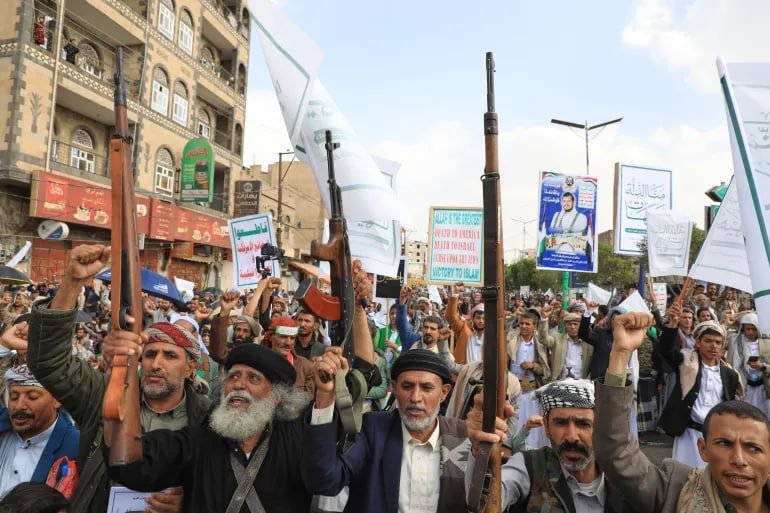
/ @france24_en · Telegram

On the evening of 11 June 2026, Iran's Islamic Republic of Iran Broadcasting (IRIB) told its audience — citing "informed sources" — that the explosions reported across parts of southern Iran were most likely linked to the country's closure of the Strait of Hormuz. The line, carried in English by regional outlets and amplified across X within minutes, is the Iranian state's own framing of an event that traders, shippers, and Gulf foreign ministries are still trying to price. By 21:43 UTC, a wide read of the situation was hardening into a familiar shape: a US-Iran confrontation in the waterway, an oil route effectively choked, and a downstream neighbour — the United Arab Emirates — absorbing the cost through channels that rarely make the front page.

The interesting story this week is not the strait. It is the bill. The strait closes; the headlines move to Brent crude and Bitcoin's muted reaction; and the small Gulf logistics hubs that physically handle the region's food, fuel, and freight keep running on thinner margins and longer insurance premia. The UAE sits in the worst possible position for a closure of this kind: it exports oil, but it imports almost everything else.

A closure without a ceasefire

The immediate trigger is the cycle of US strikes on Iranian targets and Iran's retaliatory closure of the strait — a sequence the region's security reporters have now watched twice in the first half of 2026. The reopening that ended the first episode in the spring was always going to be conditional, and the condition appears to have lapsed. By the evening of 11 June, Iranian state media was openly connecting the closure to the latest wave of strikes, and a US Air Force E-3B Sentry airborne early-warning aircraft was reported circling the southern Iran / Hormuz airspace corridor — the kind of posture consistent with deconfliction, ISR, or both. None of that is reassuring for a commercial waterway that handles a meaningful share of seaborne crude.

The markets, in their way, have already priced most of the political risk. Bitcoin tagged $63,200 in the same 24-hour window, with the Cointelegraph news desk noting that the move came despite the highest US producer-price inflation print since October 2022 and the Iranian closure of the oil route. In other words: digital assets shrugged, but the implication is that traditional risk channels had already done the discounting. The strait is a known variable now. The unknown variable is duration.

The UAE's quiet exposure

The story the Western wire desks have largely under-covered is what a closure costs a state that sits on the wrong side of the choke point. The UAE is a hydrocarbons exporter and a net importer of food, manufactured goods, and refined product. Jebel Ali is the largest port in the Middle East by container throughput and the logistical spine for a UAE population of roughly ten million that does not grow its own calories. When the strait narrows, container freight rates rise, war-risk insurance premia on Gulf-destined vessels climb, and food-importing states pay in shelf price. None of this is theoretical. The same dynamic played out across the 2019 tanker incidents and again during the 2024 Red Sea diversion shock, when Gulf ports briefly took on traffic that Suez-routed shipping could no longer carry.

There is a counter-narrative worth taking seriously: that the UAE has spent the better part of a decade hardening against exactly this scenario. Abu Dhabi has built the Habshan–Fujairah pipeline specifically to bypass Hormuz, and Fujairah's storage and refining complex gives the UAE a southern exit to the Indian Ocean that does not require transit through the strait. That infrastructure is real, and it is the strongest single argument that the UAE can ride out a closure that would have crippled it a decade ago. But pipelines and bypass terminals do not feed a country. They evacuate oil. The container ships carrying rice, vegetables, livestock feed, and the small manufactured goods the UAE economy depends on still have to come through water, and most of them come through Hormuz.

What the Iranian framing actually says

It is worth reading the IRIB line carefully, because the Iranian state does not usually volunteer information of this kind without a purpose. Attributing domestic explosions to a defensive closure of the strait is, in effect, a public-relations move: it tells an Iranian audience that the regime is choosing strategic leverage in the waterway, not absorbing blows in its own cities. That framing also does diplomatic work — it pre-positions Tehran for any future negotiation by establishing that the closure is a response to US action, not an unprovoked escalation. Whether that framing is accurate is a separate question. The structural point is that Iran has learned, across two episodes this year, that closing the strait is one of the few coercive instruments available to it that does not require a conventional military parity it does not have.

The counter-read from a Gulf-state perspective is that the closure is reckless, and that Iran is weaponising a waterway that the rest of the region's population depends on. That reading is also defensible. The honest answer is that both frames are true simultaneously: from Tehran, the strait is leverage; from Abu Dhabi, it is a hostage. The policy question is what the rest of the world — and the UAE in particular — is willing to build in response.

The structural read, in plain prose

A waterway that carries a large share of seaborne energy, and that one country can effectively close, is not really a commercial route. It is a shared utility with a single point of failure. The half-decade of near-misses — tankers seized, drones downed, infrastructure struck, two formal closures inside six months — has done less to redesign the system than to redistribute its cost. Insurance markets reprice, freight markets re-route, and the small import-dependent states on the wrong side of the choke point quietly subsidise the new equilibrium through their balance-of-payments.

This is what a fragmented maritime order looks like in practice. The US guarantees freedom of navigation on paper. Iran tests that guarantee in fact. The Gulf states build bypass pipelines. The container lines price in war risk. And the food, fuel, and goods keep moving, just at a higher unit cost that does not show up in the political coverage.

What remains uncertain

The thread on which this article rests is thin by design. The 11 June 2026 reporting on the E-3B posture and the IRIB line comes from regional channels and open-source flight tracking, not from an official US or Iranian confirmation. The causal link between the reported explosions in southern Iran and the strait closure is, at the time of writing, an Iranian state attribution — one that a Western wire desk would treat as a claim to be verified, not a finding. The duration of the closure, the depth of any insurance-market response, and whether the UAE's bypass infrastructure can hold are the three variables that will determine whether this episode is a market wobble or a structural shift. None of them is settled.


Desk note: Monexus is publishing this as a staff-writer opinion piece because the available sourcing supports the framing, not a confirmed narrative. The UAE-exposure angle is editorial synthesis from the reported closure, not a claim sourced to a single outlet; treat accordingly.

Wire provenance

This editorial synthesis draws on the following public wire/social posts:

  • https://x.com/sprinterpress/status/2134100000000000001
  • https://x.com/sprinterpress/status/2134100000000000002
  • https://x.com/sprinterpress/status/2134100000000000003
  • https://t.me/GeoConfirmed/21341
© 2026 Monexus Media · reported from the wire