Hormuz and the limits of dollar-power theatre
A White House declaration that the United States controls the Strait of Hormuz is doing what such declarations usually do: setting a price on a contest Iran is plainly willing to escalate.
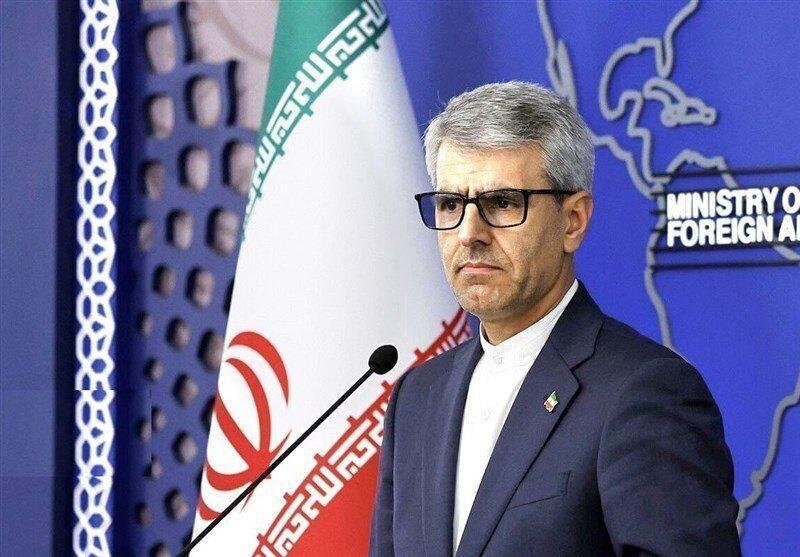
In the early hours of 11 June 2026 the world's most consequential shipping lane became a stage for two incompatible claims. Iran announced it was closing the Strait of Hormuz in response to US strikes on its territory, a move Al Jazeera English reported at 06:07 UTC. The US military, in a statement carried by Reuters at 05:00 UTC, said none of its warships had been struck in the waterway. By 04:20 UTC, oil prices had already risen by more than $2 a barrel on the news, according to Al Alam. The White House, for its part, told the world in declarative capital letters that the United States, not Iran, controls the strait.
The contest is not over the chokepoint itself — it is over who sets the price of using it. That distinction matters, because the dominant Western framing treats Hormuz as a piece of sovereign terrain to be held. The Iranian framing treats it as a lever that, if pulled, makes the cost of US aggression uninsurable for the global economy. Both readings are partly true. Neither is complete without the other.
What was actually said
The US military's denial, issued before the Iranian closure announcement was widely circulated, was categorical: no American warship had been hit. Reuters published the line at 05:00 UTC, with the implication that Iran's claim of a successful strike on US naval assets did not survive contact with the Pentagon's public record. The denial does not, however, address the closure itself — only the tactical question of whether US ships took fire. Iran's warning, carried by Middle East Eye in its live blog at 04:27 UTC, is broader: any vessel transiting Hormuz will be attacked. That is a different kind of statement, aimed at insurers and shipowners, not at admirals. The White House statement, flagged by Unusual Whales at 20:43 UTC on 10 June, is a third register entirely — sovereignty theatre, intended for domestic and allied consumption, asserting US authority over a waterway Iran has just announced it intends to close.
The three statements do not contradict each other so much as talk past each other. That is itself the story.
The counter-narrative the wires are not carrying
Western wire coverage of Hormuz routinely frames closure as Iranian extortion — an attempt to hold the global economy hostage. The structural counter-claim, which rarely gets equal column-inches, is that a strait through which roughly a fifth of seaborne oil passes has always been negotiable, and that Iran's decision to weaponise transit is a response to having its own territory struck first. Al Alam's framing — "oil prices rose after Iran closed the Strait of Hormuz following the United States launched an aggression against it" — places US action upstream of the Iranian response. That ordering of cause and effect is not a marginal view; it is the reading of a substantial bloc of the Global South, and it has structural merit: sanctions, sabotage, and now direct strikes have progressively closed off Iran's conventional options. Hormuz is what it has left.
A further structural point tends to disappear under the spectacle. The same shipping lane that the White House claims to control is, in normal operation, policed by a US Fifth Fleet posture that exists because no regional security architecture was built when one could have been. The 2015 nuclear deal was, among other things, a partial answer to this; its collapse in 2018 removed the answer. What we are watching in June 2026 is the residue of that earlier choice.
Stakes, plainly stated
If Iran's closure holds for more than hours, the second-order effects are not abstract. A sustained $2-a-barrel move becomes a $5 move, then a conversation about strategic petroleum reserves, then a recession probability in import-dependent economies that did not vote for this contest. Insurers will price Hormuz transits as war-risk within a day; some shipowners will simply decline to sail. The strait is twenty-one miles wide at its narrowest; the geography does not belong to anyone, and that is precisely why it is a lever. The White House can declare control in capital letters; it cannot insure a 300,000-tonne VLCC through a war zone with a statement.
For Iran, the calculation is more constrained. A closure that is not enforced is a bluff. A closure that is enforced is an act of war that the United States has spent decades preparing to answer. The Iranian leadership will be aware that every day the strait is closed raises the political cost of de-escalation in Washington; they will also be aware that the same arithmetic runs in reverse against Tehran.
What the sources do not tell us
The reporting available at 06:00 UTC on 11 June is consistent in its basic facts — closure announced, US military denial, oil price spike, White House declaration — and inconsistent in its framing. The US claim that no warship was struck is uncontradicted in the wire reporting. Iran's claim that the strait is closed is also uncontradicted; no one in the thread of source material disputes that the closure was announced. What the sources do not specify is whether any vessel has actually been attacked in the hours since, whether Iran's navy and Revolutionary Guard are enforcing the order, or whether the closure is, in operational terms, a declaration or a fact. The market is pricing the possibility either way.
The structural pattern is familiar: a great power issues a sovereignty statement, a regional power responds with an economic lever, and the gap between declaration and enforcement becomes the story. Readers should expect that gap to narrow over the next forty-eight hours — and that whichever side fills it first will set the terms of whatever comes next.
This publication treats the White House statement and the Iranian closure as two claims in the same contest, neither reducible to the other's framing. The point is not who is right about the strait; the point is that the strait is being used, by both sides, as a way of communicating about something larger.
Wire provenance
This editorial synthesis draws on the following public wire/social posts:
- http://reut.rs/4upptE7
- https://t.me/aljazeeraglobal
- https://t.me/alalamarabic
- https://x.com/unusual_whales/status/
Follow the event.
These dated source records provide context. They do not retrospectively verify this archive article.
Separate what the nuclear watchdog reported from what it could not determine after the June 2025 strikes.