The Hormuz handshake: reading Trump's Iran deal through the man at the lectern
A 20:21 UTC string of presidential statements announced a deal with Tehran, the reopening of the Strait of Hormuz, and a personal verdict of victory. The rest is still unverified.
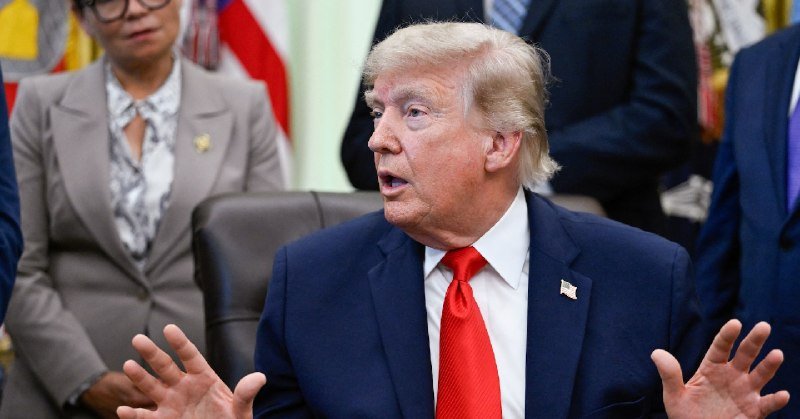
At 20:21 UTC on 11 June 2026, a single Telegram channel pushed out ten separate statements from the same lectern in roughly the time it takes a newsroom to read one. The channel, Open Source Intel, framed each as a short Trump quote. Read in sequence, they sketch a settlement: a "memorandum of understanding," Iranian abandonment of a nuclear weapon, the reopening of the Strait of Hormuz, a possible weekend signing with Vice President Vance in the room, and the President's own verdict that "we won this war."
The choreography is familiar, and so is the problem. The deal is being narrated by the man who announced it, in fragments, before any text is on the record. That is not nothing. It is also, on its own, not enough to call it a deal.
The case the President is making
Strip the rhetoric and the substantive claim has four parts. First, Iran "will not have a nuclear weapon. They've agreed to that. They will not only not have, they will not purchase, develop in any way, shape, or form, a nuclear weapon." Second, the Strait of Hormuz, the chokepoint through which roughly a fifth of seaborne oil moves, "will open as soon as we have it signed." Third, the document is a "very strong memorandum of understanding," not, in his telling, a full treaty. Fourth, regional actors are happy: "the whole Middle East is happy. And long beyond the Middle East."
To that, the President added a political reading. Asked whether Iran's supreme leader had agreed, he answered: "I understand the answer is yes." He described Iran as having "taken a pounding" and wanting the deal more than the United States, and he framed the press as the only party that had not yet conceded: "the only thing we didn't win is the fake news."
What the sources do not yet show
Open Source Intel's string is a wire of one voice. There is no joint communiqué. There is no Iranian foreign ministry readout, no text from the Office of the Supreme Leader, no IAEA confirmation, no description of the verification architecture, no length, no enforcement mechanism, and no named counterpart. The Telegram channel's posts cite only the President's words, mostly labelled "tweet." That makes the source base, for the moment, an unsourced claim of agreement on the American side, repeated in real time.
This matters more than usual. A memorandum of understanding is precisely the kind of instrument that can be described as binding by one signatory and aspirational by another, depending on which clause is read aloud. The President's own phrasing — "maybe we will sign over the weekend" — leaves the document unsigned, the vice president not yet in the room, and the Strait still, in the literal sense of his words, closed.
The structural frame
The Strait of Hormuz is the only chokepoint in the world whose closure moves the price of petrol in a Nebraska filling station within hours. Any US-Iran understanding is, beneath the nuclear text, an oil-pricing instrument before it is a non-proliferation instrument. A deal that reopens the strait "as soon as we have it signed" is, functionally, a deal that resets the risk premium on a non-trivial share of global supply. That is a global outcome, and it is the part of the announcement that has the cleanest claim to being consequential — independent of whether a single centrifuge is ever turned off or verified to be off.
The "settlement of war" language sits on top of that. The United States has, on the record, struck Iranian assets and partners; Iran has retaliated against Gulf shipping. Calling that a war and then settling it is a definitional choice the President is making for political reasons. The sources do not establish a corresponding Iranian framing, and they do not establish that the shooting has actually stopped. Until they do, "settlement of war" is a narrative instrument, not a ceasefire.
The reading that is more skeptical of the President
The honest counter-read is structural, not conspiratorial. Two of the President's central claims are not in the available record. A deal that strips Iran of a nuclear weapon has to be verified by inspectors the IAEA still has not been allowed to redeploy to sites damaged in 2025; the source items do not show that Iran has agreed to that. A deal that reopens the strait has to be reciprocated by Iran; the source items show an American promise, not an Iranian commitment. And the political verdict — that Iran wants the deal more than the United States because it "took a pounding" — is the kind of claim that holds up only if a future round of negotiation confirms it, not on the day the deal is announced.
A second, more cautious read treats the event as a stage-managed victory lap designed to set a weekend headline. A memorandum, unsigned, announced by one party in fragments, with the press treated as the only remaining obstacle, is a recognizable Washington pattern. It can precede a real document. It can also precede a document that exists primarily to be waved at a domestic audience.
Stakes
If the deal holds — meaning a text is signed, Iran freezes and verifies, and the strait physically reopens — the beneficiaries are global: oil prices ease, maritime insurance falls, and a US-Iran escalatory cycle that has dragged in Gulf states, the Huthis, and a long list of second-order actors goes into remission. If it does not, the same chokepoint that has just been rhetorically opened can be rhetorically closed again, and the next round of escalation will arrive with the freight of having been announced as peace first. That is the cost of selling a memorandum as a settlement before the ink is dry.
For now, the public record at 20:21 UTC on 11 June 2026 is what Open Source Intel carried: one voice, in fragments, claiming a win, with the document still to appear and the signature still a "maybe." That is a claim of a deal. It is not, yet, the deal itself.
Wire provenance
This editorial synthesis draws on the following public wire/social posts:
- https://t.me/s/osintlive
- https://t.me/s/osintlive
- https://t.me/s/osintlive
- https://t.me/s/osintlive
Follow the event.
These dated source records provide context. They do not retrospectively verify this archive article.
Separate what the nuclear watchdog reported from what it could not determine after the June 2025 strikes.