The Hormuz Precipice: How a US Strike on an Iranian Water Plant Reset the Gulf Crisis
A US strike near Hormuz appears to have hit a civilian water facility, Iran has closed the strait to commercial shipping, and the world’s most important oil chokepoint is now contested in real time.
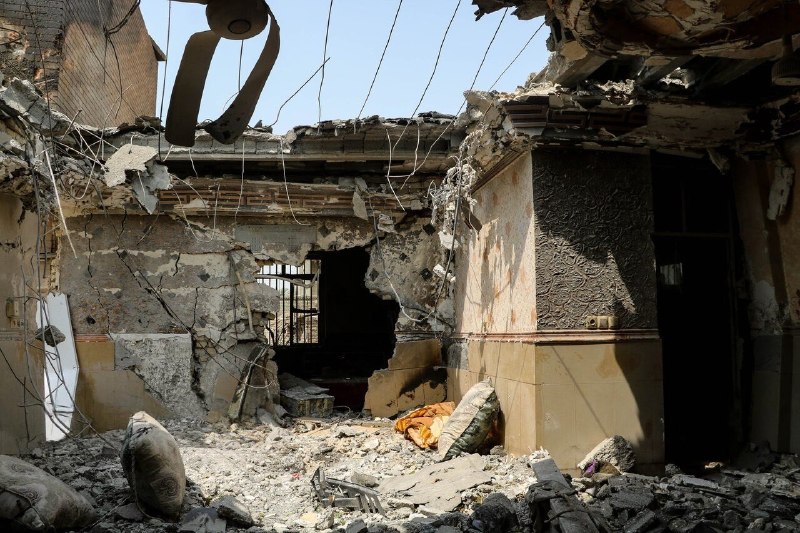
The arithmetic of the Gulf has rarely been so blunt. In the early hours of 11 June 2026, satellite imagery and open-source video reviewed by The New York Times indicated that a US strike near the Strait of Hormuz destroyed what appears to have been a drinking-water facility on Iran’s southern coast. CGTN’s English service reported that US forces had attacked multiple targets in Iran after a US helicopter was hit over the strait, and that the waterway is now closed. Iran’s joint military command separately announced it was shutting the Strait of Hormuz to oil tankers and commercial shipping, according to a wire alert carried on the Unusual Whales account. The chain of events, condensed into roughly twelve hours, has converted a tactical exchange over a single helicopter into an open confrontation over the world’s most consequential energy corridor.
What is unfolding is not a bilateral flare-up but a structural test of how the global economy absorbs a kinetic event at a single maritime chokepoint. Roughly a fifth of the world’s seaborne oil, and a comparable share of liquefied natural gas, transits the strait. Closing it does not require a blockade in any classical sense: the threat of anti-ship fire, mines, or fast-attack craft is sufficient to reroute tanker insurance, freight rates, and refinery feedstock. Even before the first formal closure, Iran warned, per Middle East Eye’s live blog, that it would attack any vessels transiting Hormuz — a statement designed less to convert than to deter. The market response will not wait for the diplomatic response.
From helicopter to closure in twelve hours
The triggering event was a US helicopter brought down over the strait. Reporting from CGTN, citing regional wires, placed the downing at the centre of a US decision to widen its target set inside Iran. President Donald Trump, quoted on 10 June in remarks carried by Unusual Whales, said the United States would “be attacking them and attacking them very hard” after the helicopter loss. By 04:00 UTC on 11 June, CGTN was reporting multiple US strikes on Iranian targets; by 04:16 UTC, Iran’s top joint military command had declared the strait closed to tankers and commercial ships; by 04:27 UTC, Iran’s warning that it would attack any vessel in transit was in circulation via Middle East Eye’s live feed; by 06:00 UTC, the satellite review indicating a civilian water site among the damaged infrastructure was public.
The compression matters. Each step is causally legible in isolation: a helicopter is shot down, the US retaliates, Tehran responds by escalating the threat to shipping, the threat is partially executed. Read as a sequence, however, the steps are disproportionate in scale. A single airframe loss is a battlefield event; a strait closure is a global macroeconomic event. The choice to move from the first to the second in a half-day window is itself a policy decision, taken by the Iranian command and, in its permissive framing, by Washington in the run-up to the helicopter mission.
The reported destruction of a drinking-water facility sharpens the legal and political profile of the US strikes. Civilian infrastructure — water, electricity, health — is protected under the law of armed conflict; targeting it requires a specific military necessity that the public reporting does not, so far, document. The satellite evidence reviewed by The New York Times and circulated by Middle East Eye does not by itself identify intent. It does establish that a facility with a civilian function has been hit, and that the strike was conducted at a moment when the US was explicitly signalling a punishing escalation. That asymmetry — military action in pursuit of deterrence, civilian infrastructure in the impact footprint — is the framing Tehran will use in every diplomatic channel it still has access to.
The counter-narrative: deterrence, sovereignty, and the helicopter question
Two competing readings of the sequence deserve to be set out in full. The first, dominant in Western capitals and in the broader press cycle, treats Iran as the escalator: an Iranian action shot down a US helicopter, an Iranian command closed the strait, and an Iranian threat to fire on shipping converts a tactical loss into a strategic crisis. Under this reading, US strikes are reactive and proportionate, and the appropriate response is to reinforce the carrier group already in the Gulf, escort commercial traffic, and signal to Tehran that closure has a cost.
The second reading, foregrounded in Iranian state media and in the framing of outlets such as Press TV, Tasnim, and the Iranian foreign ministry briefings Monexus has tracked, treats the helicopter incident as the surface of a deeper provocation. On this account, US naval activity inside Iran’s declared maritime zone, repeated overflights, and an accumulation of sanctions and covert action produced the conditions for the helicopter engagement; the downing was the predictable consequence of an extended US posture; the closure is a sovereign response to an act of war. The water-facility strike is then the second-order evidence: that US “proportionate” retaliation has, in fact, hit civilian infrastructure, validating the Iranian framing and recruiting global public opinion to it.
Neither reading is fully self-contained. The first understates the gap between an airframe loss and a strait closure; the second understates that the strait is not Iran’s domestic waterway but a corridor the world economy pays to keep open. The honest account holds both: the US appears to have struck a civilian site, which the law treats as a serious matter; and Iran’s closure of a global commons is, on any reading, an aggressive act with third-party costs that fall mostly on importers in Asia and on the Global South.
Oil, insurance, and the speed of the chokepoint
The structural fact beneath the politics is the strait’s irreplaceability. There is no land-route substitute at the relevant scale for Gulf crude. Pipelines bypassing Hormuz exist — the UAE’s Habshan–Fujairah line, Saudi Arabia’s East–West pipeline to Yanbu — but their combined spare capacity is a fraction of seaborne flows, and they terminate at terminals that themselves face disruption risk. Insurance markets respond before governments do: war-risk premiums for tankers transiting Hormuz typically move on the first credible threat of fire, not on the first confirmed hit. By the time the Iranian command’s closure announcement was in circulation at 04:16 UTC, Lloyd’s-market underwriters were already repricing the next several sailings.
The macroeconomic transmission, when it comes, will not be subtle. Brent and Dubai benchmarks will gap; freights on alternative routes — around the Cape of Good Hope, through the Suez–Sumed pipeline, via the Strait of Bab-el-Mandeb — will rise; Asian importers (China, India, Japan, South Korea) will absorb the largest share of the cost because their crude is most Hormuz-dependent. Refinery margins will diverge sharply between Atlantic Basin and Mediterranean–Asian basins. Central banks in importing economies will be obliged to choose between absorbing the terms-of-trade shock and tightening policy in response to imported inflation, with currencies most exposed on the weaker side of that trade.
The strait is also a global public good in a political sense. Its closure is a tax on the world economy levied by a single state. The post-1945 order — the UN Convention on the Law of the Sea, the doctrine of transit passage, the standing of the International Maritime Organization — exists in part to prevent exactly this kind of unilateral imposition. Iran’s argument that the closure is a defensive response to a US attack does not dissolve the third-party cost; it relocates the cost from a bilateral dispute to a global one, and on the historical record, the international community treats such relocations as acts of coercion regardless of the underlying grievance.
What is being tested in plain terms
Strip the event of its diplomatic packaging and the underlying contest is over who controls the cost of escalation. The United States is testing whether a kinetic exchange inside Iran can be conducted without the strait becoming a battleground, and without global energy prices forcing a political reversal. Iran is testing whether closing a chokepoint can produce a diplomatic intervention — Chinese, Russian, Indian, or European — that arrests the US campaign on terms more favourable than the military balance would allow. The Gulf states are testing whether they can ride out the period between the first Iranian threat and the first effective escort operation without their own export infrastructure being drawn into the firing line. The shipping and insurance industry is testing whether commercial actors can continue to transit a waterway where the state actor on its shore has publicly declared it will fire.
The pattern here is familiar from the 1980s tanker war, from the 2019 attacks on Saudi Aramco’s Abqaiq facility, and from the long tail of incidents between 2019 and 2024. The 2019 episode is the most useful precedent: a strike on Saudi infrastructure produced a brief, sharp oil-price spike and a muted political response, because the spare capacity of the system absorbed the shock. The 2026 episode is testing the system without that buffer. OPEC+ spare capacity is thinner; refinery utilisation is high; demand from Asian importers is rebounding. A sustained closure of even a few days would impose a cost the system has not had to absorb in this cycle.
Stakes and the next seventy-two hours
If the closure holds for seventy-two hours, the political question shifts from whether to reopen the strait to who pays for reopening it. The US option of an escorted convoy is technically available; politically, it would require a posture that looks, to a domestic audience, like a wider war. The Iranian option of selective targeting of one or two commercial vessels, followed by a partial de-escalation, is also available; politically, it would require a domestic audience willing to accept a return to the pre-closure equilibrium after having tasted the leverage of closure. The Chinese and Indian options — public calls for restraint, private pressure on both sides, oil released from strategic reserves — are the most likely first moves, because they shift the cost of inaction onto Tehran and Washington without committing either importer to a military role.
The water-facility strike is the variable with the longest half-life. Even if the strait reopens within a week, the documented hit on a civilian site will be cited for years — in UN debates, in International Court of Justice filings, in domestic Iranian politics, in the framing of any future negotiation over Iran’s nuclear file. The Iranian government will treat the site as evidence of intent; the US government will, in the predictable pattern, dispute the characterisation of the site and the proportionality of the strike. The dispute is unlikely to be resolved on the merits inside the present crisis window, and that is itself the point: civilian-infrastructure hits in a contested environment are designed to outlast the immediate military exchange.
What remains uncertain
The reporting is sufficient to establish the broad sequence: a US helicopter loss, US strikes inside Iran, a documented hit on what appears to be a water facility, and an Iranian closure announcement. It is not yet sufficient to establish the precise target set of the US operation, the number and nationality of any casualties, the legal status of the water facility under Iranian and international classifications, or the operational state of the strait’s shipping channels. The satellite review reported by The New York Times and circulated by Middle East Eye is preliminary; the Iranian command’s closure announcement is a public posture, not yet a confirmed physical interdiction. The next twelve to forty-eight hours will determine whether the closure is a signalling device — designed to be walked back under pressure — or the opening move in a sustained disruption. The honest read, on the evidence available, is that both Tehran and Washington are still calibrating; the global economy should not assume the calibration will conclude cheaply.
Desk note: Monexus has led with the open-source and wire-reported facts of the strikes and the closure, set out the Iranian counter-framing in full, and identified the civilian-infrastructure hit as a politically durable fact independent of the military exchange. The framing is that this is a global-commons event, not a bilateral one — a posture that recent Gulf-crisis coverage in the Western wire has tended to under-weight.
Wire provenance
This editorial synthesis draws on the following public wire/social posts:
- https://x.com/unusual_whales/status/2064817714581893120
- https://x.com/unusual_whales/status/2064817691451072000
- https://x.com/middleeasteye/status/2064817714581893120
- https://t.me/middleeasteye/2064817714581893120
- https://t.me/cgtnofficial/2064817700000000000
- https://t.me/unusual_whales/2064817714581893120
- https://x.com/unusual_whales/status/2064817714581893120
- https://x.com/unusual_whales/status/2064817691451072000
- https://x.com/middleeasteye/status/2064817714581893120
- https://t.me/middleeasteye/2064817714581893120
- https://t.me/cgtnofficial/2064817700000000000
- https://t.me/unusual_whales/2064817714581893120