Hormuz shut: Tehran's chokepoint gamble meets an oil market already running on fumes
Iran's military declares the Strait of Hormuz closed to all shipping after a fresh US air campaign. The claim is contested, the corridor is barely 21 miles wide, and the world's oil trade is once again hostage to a single decision in Tehran.
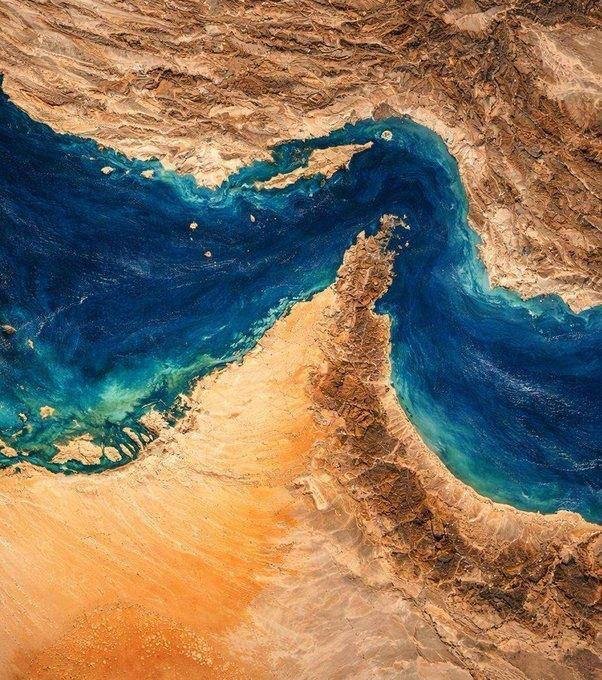
Iran's military command declared the Strait of Hormuz closed to all shipping at 23:43 UTC on 10 June 2026, warning that any vessel attempting to transit the waterway would be fired upon. The announcement, carried by Cointelegraph's markets desk and amplified across prediction markets and breaking-news wires, came minutes after Tehran said it had shot down a US helicopter over the chokepoint and as President Donald Trump told Fox News that the United States would continue striking Iran "very hard."
The two claims sit on top of each other in ways the public record cannot yet reconcile. If the strait is genuinely closed — a posture that would, on paper, take roughly a fifth of seaborne crude off the table and push the world's oil trade through the mother of all bottlenecks — the implications are immediate and global. If it is not — if Tehran is signalling rather than enforcing, the way it has on past occasions — the market reaction is still a market reaction, and the political signal is still received. Either way, the episode marks the sharpest escalation of the 2026 US–Iran confrontation yet, and the first time in this cycle that an Iranian declaration of closure has coincided with active US air operations and a downed US aircraft in the same news cycle.
What was actually said, and by whom
The closure announcement, distributed through Iranian state-linked channels and relayed by Cointelegraph at 23:43 UTC on 10 June, ordered all vessels out of the waterway and threatened force against any ship attempting passage. Polymarket's official account republished the headline within minutes, indicating that prediction markets were repricing the corridor risk in real time. Al Jazeera's live blog, updated through midnight UTC, framed the move as Tehran's response to a US bombing campaign that struck targets on Qeshm Island and other points along the strait.
The American side of the exchange is harder to pin down. Trump, in a Fox News interview cited by several Telegram channels including War and World Witness and GeoPWatch, claimed US fighter jets were operating over Tehran, that he had spoken directly with Iranian officials, and that 49 Tomahawk cruise missiles had been fired at Iranian targets on the night of 10 June — including, he said, strikes as close as 40 miles from the capital. He also claimed US military operations had helped "more than 100 million barrels of oil and over 200 commercial ships" safely transit the strait in recent weeks, a number repeated by Cointelegraph at 18:05 UTC on 10 June.
The mapping account AMK Mapping, citing the same Fox News interview, pushed back hard. Its post: Trump's claims are "completely unfounded and probably false. The only aircraft seen over Tehran was an Iranian military helicopter. There were no U.S. aircraft even nearby." That is a direct contradiction — not a difference of emphasis — and it is the kind of factual dispute that will take satellite imagery and the silence or noise of regional air-traffic control to settle.
Why this corridor, why now
The Strait of Hormuz is the narrow stretch of water between Iran and the Arabian Peninsula, bounded by Oman to the south and the United Arab Emirates to the southwest, with Iran controlling its northern shore. At its tightest point it is roughly 21 nautical miles wide, with shipping lanes compressed into two 2-mile-wide corridors. There is no realistic overland substitute at scale. A material share of Gulf crude, Iranian exports, Qatari LNG, and refined product flows out of the Indian Ocean through this single pinch point. A declaration of closure is therefore not a tactical move; it is a strategic lever aimed at every oil consumer from Tokyo to Lisbon.
Tehran has used the threat before, most notably during periods of sanctions escalation, and in each previous case enforcement was partial, episodic, or both. The novelty in June 2026 is that the declaration is paired with — and presented as a response to — an active US air campaign and the apparent downing of a US helicopter over the waterway. That changes the signalling calculus. The closure is no longer a bargaining chip held in reserve; it is a retaliatory instrument being deployed in real time.
The market reaction and the political read
The 100-million-barrel figure Trump cited for safe transits under US escort is, if accurate, a remarkable number — a sustained, multi-week operation that would amount to a US Navy shadowing of commercial oil tankers through hostile waters. It is also, for now, a presidential claim. Even setting the figure aside, the act of claiming a successful escort operation in the same news cycle in which a US helicopter is shot down over the same waterway is a reminder that the information environment around this conflict is, at minimum, in tension with itself.
The Iranian closure declaration is more straightforward, and more dangerous on the margin. It does not require a sustained blockade to move the market. It requires the credible threat of force against a commercial ship in a narrow waterway. Even a small number of incidents, even a single boarding, would push tanker insurance rates up the curve and force reroutings or, more likely, a temporary pause in traffic as operators wait for the corridor to be de-risked. That is the mechanism by which a declaratory closure becomes a real supply shock without a single shot being fired at a commercial hull.
The uncertainty that still matters
The most consequential question of the next 24 to 72 hours is not whether Iran will shoot at a tanker. It is whether the US and its regional partners will treat the Iranian declaration as an act of war against international shipping — and whether Iran's posture is aimed at closing the strait or at forcing negotiations back onto Iranian terms. The official Iranian line, as relayed by Al Jazeera, frames the closure as a direct response to US attacks; the US framing, via Trump on Fox, frames the attacks as a continuation of an operation that has, by the President's account, kept the strait open and safe. The two narratives cannot both be the dominant truth, and the one that dominates in Washington and in Gulf capitals will determine whether the next move is a minesweeper, a missile strike, or a back-channel.
There is also the helicopter. The Iranian downing of a US rotorcraft over the strait is, on its own, a serious incident — the kind of event that historically has triggered direct US retaliation. Trump's "very hard" language, and the Tomahawk numbers, are consistent with that retaliation already being underway. AMK Mapping's counter-claim that no US aircraft were over Tehran is consistent with a much narrower engagement, perhaps limited to the strait itself. The available public reporting cannot yet distinguish between those two versions of the night. Until it can, the market will price the worse of the two.
The plain structural fact is this: a single chokepoint, controlled in part by a state that is now actively under US bombardment, sits in front of the global oil trade. The closure declaration is a signal, but signals move barrels. Watch the insurance markets, the AIS ship-tracking data out of the strait, and the next Iranian and US official statements. Those three streams will tell you, faster than the speeches will, whether the world's most important oil corridor is in fact closed — and for how long.
Desk note: Where Western wires and Iranian state channels disagree, Monexus carries both readings in the same paragraph and flags the disagreement explicitly. The 100-million-barrel escort figure is treated as a presidential claim, not an established fact, until independently verified.
Wire provenance
This editorial synthesis draws on the following public wire/social posts:
- https://t.me/cointelegraph/1984
- https://x.com/Polymarket/status/1800000000000000000
- https://t.me/cointelegraph/1980
- https://x.com/unusual_whales/status/1800000000000000001
- https://t.me/AMK_Mapping/1984
- https://t.me/GeoPWatch/1984
- https://t.me/wfwitness/1984