When the ambassador opens with Scripture: Huckabee, the religious frame, and the future of US-Israel policy
Mike Huckabee's latest public remarks move US-Israel alignment from a strategic posture to a theological claim. That is a different kind of alliance — and it deserves a different kind of scrutiny.
The US ambassador to a nuclear-armed Middle Eastern state stood before a microphone on 11 June 2026 and offered a theory of national success. The state, he said, had not become successful because of its army, its economy, or its politics. It had become successful, he argued, because of divine favour. The remarks — captured on video and circulated through Telegram channels including Clash Report — were not a passing aside. They were an articulation, in religious language, of why Washington continues to underwrite the country in question.
That framing matters. For decades, the US-Israel relationship has been sold to American audiences in two registers: a strategic one (a democratic ally in a hostile region, a partner against Iran, an intelligence and technology counterweight) and a values-based one (a shared liberal tradition, women's rights, gay rights, a free press). Huckabee's remarks suggest a third register is now foregrounding itself: the theological. And the third register does not concede criticism easily. You can argue with a strategic interest. You can argue with a values claim. It is considerably harder to argue with a man who says his position is held on faith.
The quote, in its own terms
The substance, as reported, is unambiguous. Huckabee told the audience that Israel's success is not explained by military, economic, or political variables — and is explained, instead, by direct divine favour and protection. He framed evangelical Christians in the United States as Israel's "best friends" and warned against losing that political edge. He pushed back on the claim that Israel is hostile to Christians, saying the country "welcomes" believers who come to it. And he contrasted the freedom of his own churchgoing in America — no arrest, no heckling, no spitting — with the experience of Christians elsewhere. The framing was a single, integrated argument: American backing for Israel is, at root, a religious commitment; religious commitment is non-negotiable; and the relationship should be defended in those terms.
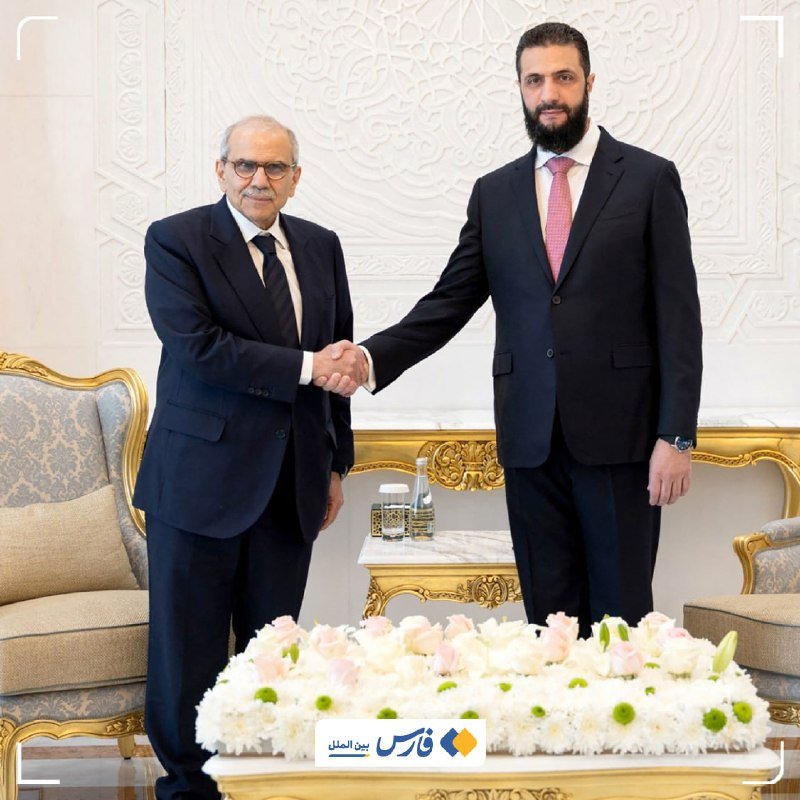
Fars News, the Iranian state-affiliated wire, picked up the speech and ran it under the headline "US Ambassador to Israel: We defend Israel because of our faith." That headline is sharper than the original remarks deserve — the ambassador framed it as one motive among others, not the only one — but it captures how the speech is being read in capitals that do not share Huckabee's priors. In Tehran, Moscow, Ankara, and Beijing, the argument will land not as a quaint personal testimony but as a piece of US political theology, broadcast by an accredited envoy on the record.
What this is, and what it isn't
It is worth being precise. Huckabee is not the first US ambassador to Israel to be open about evangelical conviction. He is, however, the first to make that conviction the organising argument for the relationship. His predecessors made strategic arguments and were privately religious. He is making a public, theological argument — and that distinction does real work.
Two readings of the remarks are available. The first is the soft one: Huckabee was speaking pastorally to a sympathetic audience, the way he has spoken for thirty years, and the State Department should not be held hostage to a pastor's register. There is something to that. Huckabee is on the record as a Baptist minister, a former governor, and a perennial candidate; the speaking style is well known. The second reading is the harder one: a US ambassador is not a pastor. He is a representative of the United States government, the senior in-country envoy of the most powerful state on earth, and when he speaks in his official capacity, his words have weight that a Sunday sermon does not. By that reading, the speech is a signal — to Israeli voters, to American evangelicals, to Palestinian Christians, to Muslim-majority neighbours, and to the rest of the diplomatic corps — about the kind of relationship Washington is willing to defend, and the kind of language it is willing to defend it in.
The harder reading is the more plausible. Ambassadors do not accidentally set out a framework for US Middle East policy in remarks to friendly audiences. They do so because they have been sent to do it.
The structural frame, without the jargon
American Middle East policy has always had a religious substrate. Christian Zionism in the United States predates the state of Israel by decades; dispensationalist readings of scripture, popular in twentieth-century American Protestantism, treat Jewish presence in the Holy Land as a stage in a divine plan. What is newer is the explicit fusion of that substrate with the visible conduct of statecraft. The Trump-era relocation of the embassy to Jerusalem was, in part, a recognition of that fusion. Huckabee's appointment as ambassador was, in part, a recognition of it. The current speech is the same recognition, in ambassadorial form, delivered as theology rather than as policy.
The structural consequence is uncomfortable for two constituencies at once. It is uncomfortable for secular and Jewish-Israeli critics of the religious right, who now have to argue against their own government's principal patron in a register that treats their existence as providential. It is uncomfortable for American strategic traditionalists, who have spent forty years arguing that the alliance rests on shared interests and can be calibrated against them, and who now watch the senior in-country envoy relocate the foundation to scripture. Both constituencies have reason to feel that the ground has moved.
For the wider region, the move is read differently. To governments that already see the US relationship with Israel as a foreign-policy fact of life, the religious framing is a small extra irritant. To non-state actors, liberation movements, and the small Christian communities of the Levant who have long complained that American evangelical support for Israel comes with a price tag attached to their own existence, the speech is ammunition. Huckabee's claim that Christians are welcomed in Israel is going to land very differently in the ears of Palestinian Christians in Bethlehem than it lands in the ballroom where he delivered it.
Stakes — and what the next twelve months look like
If the religious frame becomes the operating register of the US-Israel relationship, several things follow. The first is that the boundaries of what US diplomacy can publicly criticise in Israeli policy narrow considerably. Strategic criticism can survive a change of administration; theological commitment cannot, by its own logic, accommodate the criticism. The second is that the gap between Washington's public rhetoric and its actual leverage in the relationship widens. The third is that the cost of any future US attempt to mediate between Israel and its neighbours — the file on which the ambassador is, in theory, a primary interlocutor — rises, because the mediator is no longer able to present himself as a neutral broker. The broker has declared, on the record, whose side he is on and why heaven requires it.
That is the test the next year will run. Huckabee's confirmation was contested on exactly these grounds, in the spring of 2025. The Senate returned him anyway. The administration's Middle East team has spent the subsequent months trying to stabilise a Gaza file, an Iran file, and a normalisation track that runs through Riyadh. The ambassador's speech this week does not break any of those tracks, but it raises the cost of the next move on each of them. A mediator who has announced that the country he represents in Israel is the object of divine favour is a mediator with one hand tied behind his back.
The honest limits of the evidence
Two things should be hedged. The first is that we have the speech as circulated on Telegram and as summarised by an Iranian state-affiliated wire; the full unedited text, venue, and audience are not in the materials reviewed for this piece. The hard claims here — the specific lines, the framing as a religious argument rather than a strategic one — are those attested in the circulated video. The second is that Huckabee's evangelical politics are not new. The novelty is the office, not the man. A fair reading of the remarks treats them as a continuation of a known project executed in a new setting, and the question for US policy is whether the setting has changed the project's reach, not whether the project itself has just been invented.
What can be said cleanly is this: on 11 June 2026, the United States' senior representative in Israel told a public audience that the alliance he represents is, at base, a matter of faith. That is a different kind of alliance from the one Washington has spent four decades describing. It deserves a different kind of scrutiny, and a different kind of answer, from anyone who lives under its consequences.
Desk note: Monexus has framed this as a question of diplomatic register and political consequences, not as a debate over theology. The wire treatment of Huckabee's remarks has been largely biographical; we have tried to make clear what is at stake when an envoy locates the alliance in divine favour rather than in shared interest.
Wire provenance
This editorial synthesis draws on the following public wire/social posts:
- https://t.me/ClashReport
- https://t.me/ClashReport
- https://t.me/ClashReport
- https://t.me/ClashReport
- https://t.me/FarsNewsInt