Tehran reaches for Brussels as US pressure mounts
Iran's foreign minister dialled his EU counterpart on 11 June 2026 to complain about American aggression, a routine bit of crisis choreography that says more about Europe's limited leverage than about Tehran's strategic options.
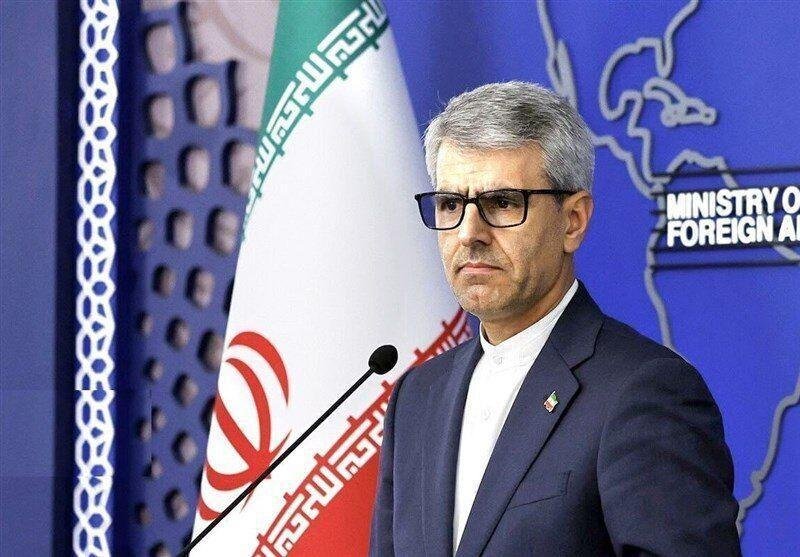
At roughly 10:35 UTC on 11 June 2026, three Iranian-aligned wire channels — Al-Alam, Tasnim, and Fars — carried near-identical readouts of a phone call between Foreign Minister Seyed Abbas Araghchi and European Union foreign policy chief Kaja Kallas. The Al-Alam account, posted at 10:40 UTC, and the Tasnim account at 10:39 UTC, both framed the conversation around "America's aggressive attacks," the language of complaint dressed up as the language of diplomacy. The Fars readout, timestamped 10:35 UTC, described the call in more neutral terms, simply noting the noon-hour exchange between Araghchi and Kallas.
The substantive point of the call, as filtered through Iranian state-adjacent media, was Tehran's effort to keep a European channel of communication open at a moment when pressure from Washington is visibly tightening. Whether that channel produces anything more than a recorded statement is a separate question.
What the readouts actually say
The Tasnim framing is the most explicit. It places "America's aggressive attacks" at the centre of the call — a phrase that does diplomatic work in Tehran, signalling to domestic audiences that the government is fighting back, and to European partners that Iran expects solidarity against a common irritant. The Al-Alam account matches that emphasis. Fars, traditionally more measured, sticks to the procedural fact: two officials spoke on the phone at midday.
What none of the three readouts disclose is the content of Kallas's side of the conversation. European Commission and Council readouts, when they exist, usually appear in Brussels within hours. The fact that only the Iranian side is on the wire, roughly five minutes apart, suggests the conversation is being packaged for an Iranian audience first and a European one second.
The structural pattern
Iran's pattern in moments of escalation with the United States is to pick up the Brussels phone. The logic is consistent: the EU is the one Western actor that has both the political incentive to preserve the 2015 nuclear framework's residual architecture and the institutional habit of receiving Iranian foreign ministers without theatre. Washington, by contrast, treats direct contact as a concession to be earned.
The arrangement gives Tehran two things. It guarantees an audience in a Western capital that will at least transcribe the Iranian position. And it gives European diplomats a reason to believe they remain relevant in a file the United States has been steadily monopolising. Whether either side gets more than that from a single call is doubtful. The European lever on Iran's nuclear file has shrunk over the last three years; the lever on Iran's regional behaviour was always limited.
What Europe can plausibly do
Kaja Kallas, in office since late 2024, has spent most of her tenure managing the consequences of US unpredictability rather than setting an independent European line on Iran. The honest read of a 10:35 UTC phone call is that the EU is being asked to perform a function it cannot actually perform: to moderate American behaviour toward Iran in real time.
European governments can, in principle, slow the implementation of new sanctions packages, preserve humanitarian carve-outs, and keep diplomatic channels technically open. They cannot, however, veto American decisions made under the authorities Washington has been accumulating. The phone call is therefore a maintenance operation — useful for keeping lines warm, unlikely to alter the trajectory of the underlying dispute.
Stakes and the plausible counter-read
The case for taking these readouts at face value as evidence of an active European mediation is thin. The more plausible interpretation is that Tehran is performing diplomatic activity for multiple audiences simultaneously: signalling to its own base that it is not isolated; signalling to Gulf neighbours that it retains Western interlocutors; and quietly reminding Washington that escalation carries a cost in European irritation.
The counter-read — that the call reflects a genuine new European initiative — cannot be ruled out from the Iranian readouts alone. If Brussels issues its own readout in the coming hours describing specific proposals or demands, the picture changes. Until then, the available evidence supports the more sceptical reading. The sources do not specify any concrete outcome, any agreed next step, or any joint statement — all of which a genuine new initiative would normally produce.
The phone call is, in other words, real diplomacy of a kind. It is also, on the evidence so far, a ritual one.
Monexus framed this as a structural read on European leverage in the Iran file rather than as a discrete news event; the wire readouts from Iranian state-adjacent outlets are the only public record at time of writing.
Wire provenance
This editorial synthesis draws on the following public wire/social posts:
- https://t.me/alalamfa
- https://t.me/tasnimnews_en
- https://t.me/FarsNewsInt