Iran fires ballistic missiles from Tabriz in early-hours launch, monitoring channels say
Initial open-source monitoring channels reported multiple ballistic missile launches from Tabriz in northwest Iran in the early hours of 11 June 2026, with targets unconfirmed and the launch count still being tallied.
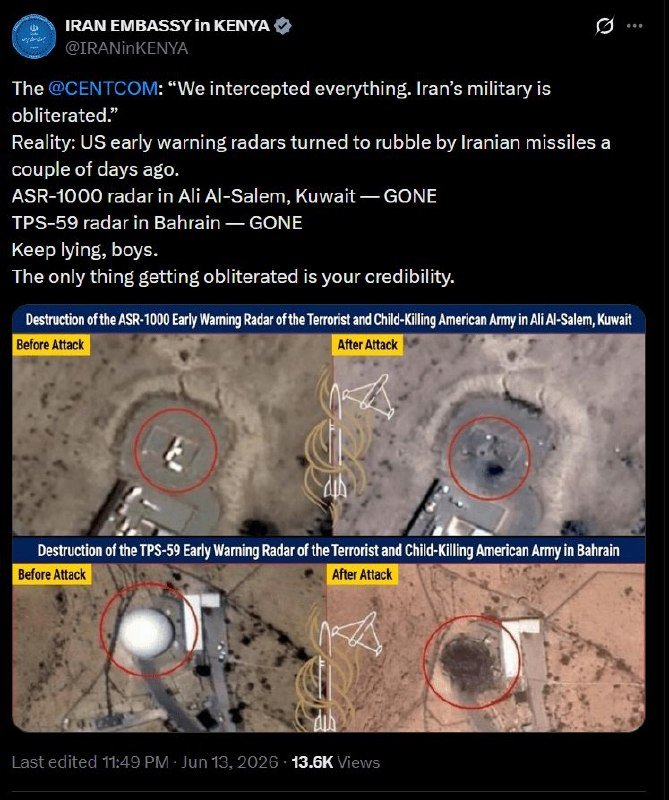
Open-source monitoring accounts began flagging ballistic-missile activity out of Iran in the half-hour after 00:48 UTC on 11 June 2026, with the first wave of alerts posted to Telegram channels that specialise in tracking military movements across the Middle East. The reports were, by the standards of this corner of the information ecosystem, unusually clustered: four separate channels, drawing on different feeds, posted almost in lockstep.
The first alert surfaced on the Middle East Spectator channel at 00:48 UTC, headlined "BREAKING: Initial reports of ballistics launched from Iran." Within two minutes, DD Geopolitics reposted the same item. By 00:53 UTC, Middle East Spectator was appending a caveat — the early imagery, the channel noted, might be older footage misattributed to the present moment. At 01:49 UTC, the geopolitical-watcher account GeoPWatch tagged the activity to Tabriz, in northwest Iran, near the Azeri and Turkish borders. At 01:50 UTC, AMK Mapping sharpened the picture: "Iran launched at least 3 ballistic missiles from Tabriz just now." One minute later, Middle East Spectator posted again, this time without a location and with the destination still described as unknown.
That sequence — early alert, an oscillation between confidence and doubt, then a geographic fix — is a familiar shape. It is how the open-source intelligence layer tends to handle a fast-moving launch event in a region where official confirmation is slow and where image verification is the only real currency.
What the threads actually said
Read in chronological order, the Telegram posts form a narrow evidentiary record. The earliest item, on Middle East Spectator at 00:48 UTC, contains no location, no count, and no destination — only the fact of a launch. The follow-up at 00:53 UTC, on the same channel, hedged the original post, suggesting the circulated video might be old. DD Geopolitics, reposting at 00:50 UTC, carried the same original wording without adding sourcing detail.
The picture tightened with GeoPWatch at 01:49 UTC, which placed the launches at Tabriz in northwest Iran. AMK Mapping at 01:50 UTC gave the most specific count — "at least 3 ballistic missiles" — and confirmed the Tabriz origin point. The closing item, at 01:51 UTC on Middle East Spectator, retained the original breaking-news framing but restored the destination as "unknown."
In other words, the only firm facts in the public record as of the 01:51 UTC window are: (a) multiple monitoring accounts detected ballistic-missile activity originating in Iranian territory, (b) at least one credible channel identified the launch point as Tabriz, and (c) one channel counted "at least 3" missiles. No source in the thread specified a target, a warhead type, a trajectory, or a receiving end. The 00:53 UTC caveat on old footage has not been resolved one way or the other in the available material.
Why Tabriz matters — and why the location is being read carefully
Tabriz sits in East Azerbaijan Province, in the far northwest of the country, roughly 600 kilometres from Tehran and within easy reach of three sensitive vectors: the Turkish border to the west, the Azeri border to the north, and the Caspian Sea approaches. It is not the most common launch point publicly associated with Iran's longer-range ballistic work — that distinction typically belongs to sites in the central and southern provinces, including facilities in Semnan, Khorasan, and the Persian Gulf coast that have featured in past open-source inventories of the country's missile infrastructure.
A northwest launch point changes the geometry. Missiles fired from Tabriz can reach Turkey, the South Caucasus, the eastern Mediterranean, and — depending on staging — points further west, on a shorter and more arcing trajectory than launches from central Iran. The geography does not, on its own, say anything about intent. It does narrow the field of plausible target sets and explain why monitoring accounts moved quickly to attach a location to the activity.
The structural frame: how an Iran launch reaches the wire
What is worth pausing on is not the launch itself, but the reporting chain. The first public word of a major Iranian military event almost never comes from an Iranian state outlet. It comes from a tightly clustered set of Telegram channels that aggregate eyewitness footage, satellite-imagery analysts, flight-tracking data, and the chatter of regional correspondents. In this case, the cluster was Middle East Spectator, DD Geopolitics, GeoPWatch, and AMK Mapping — four channels with overlapping but distinct sourcing. The first three tend to be fast; AMK Mapping is often slower but more specific on coordinates and counts.
This is the layer that, in the absence of official statements from Tehran or the most likely receiving capitals, defines the public conversation for the first hour of any such event. Western wire desks — Reuters, AP, AFP, Bloomberg, the BBC — typically take between thirty minutes and several hours to confirm, by which time the open-source record has already set the terms of the debate. In an information environment where the public often learns of major Middle Eastern military events through Telegram before they reach a cable broadcast, the editorial responsibility of those channels is unusually high and their sourcing unusually thin. The 00:53 UTC caveat on Middle East Spectator — "possibly old footage" — is a small but instructive example of a channel trying to manage that asymmetry in real time.
Stakes and what is still unconfirmed
If the Tabriz launches hold up under later verification, the policy-relevant questions will turn on destination, payload, and the diplomatic context in which they occur. The thread material contains none of those answers. Iranian state media had not, on the record available here, addressed the launches; no Western capital had acknowledged receipt of a launch warning; no defending country had reported an impact or interception. The caveats attached by Middle East Spectator within minutes of the original alert also remain unresolved — old footage circulating in a tense moment is a common enough artefact of this information layer that the early picture can shift materially once OSINT analysts with access to commercial satellite imagery weigh in.
What can be said with the present record: multiple independent monitoring accounts detected ballistic-missile activity attributed to Iranian territory in the early hours of 11 June 2026; the most specific sourcing tied the activity to Tabriz and a count of at least three missiles; the destination was, as of the last item in the thread, unknown. The next several hours of reporting from wire services and from the same open-source channels will determine whether the event lands as a regional provocation, a long-planned test, or, as one of the early caveats suggested, a misattribution of older imagery. Until then, the honest framing is the narrow one: the launches are reported, the location is plausible, and the rest is still to be verified.
— Monexus is running this story on the open-source monitoring record, not on official confirmation. The piece will be updated as wire reporting and verified imagery reach the desk.
Wire provenance
This editorial synthesis draws on the following public wire/social posts:
- https://t.me/Middle_East_Spectator
- https://t.me/DDGeopolitics
- https://t.me/Middle_East_Spectator
- https://t.me/GeoPWatch
- https://t.me/AMK_Mapping
- https://t.me/Middle_East_Spectator