Strikes on Bandar Abbas, Qazvin and Bandar Kangan: what the early Telegram wire actually says
Multiple Telegram channels reported explosions at three Iranian sites on the night of 10–11 June 2026. The picture is consistent but thin — and that matters for how the story is told.
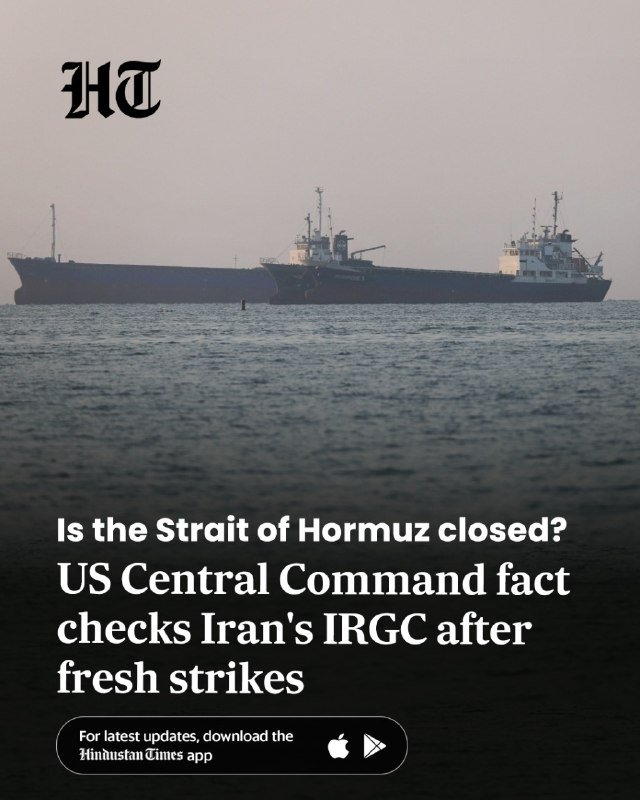
At 00:38 UTC on 11 June 2026, the open-source channel GeoPWatch posted its first flash: an explosion in Bandar Abbas. By 01:03 UTC, two further channels — RN Intel and WFWITNESS — were running the same alert with added locations, Qazvin in the north and Bandar Kangan on the southern coast, and the same dual attribution flags. The night that began as a single rumour had, inside twenty-five minutes, become a multi-site incident being reported in near-real time by accounts that specialise in tracking military activity in the Middle East.
The shape of what is knowable, and what is not, is itself the story. The early wire is unusually uniform for a breaking incident, and unusually thin on the fundamentals a reader would need to act on it. Both qualities are worth holding at once.
What the alerts actually say
Read in sequence, the five items cluster into a clear factual spine. The first report, at 00:38 UTC, is a single sentence: an explosion in Bandar Abbas (GeoPWatch). Two minutes later, GeoPWatch updates with a second explosion in the same city. At 00:52 UTC, GeoPWatch adds a third location, Bandar Kangan in southern Iran, also reporting an explosion. By 01:02 UTC, RN Intel broadens the picture with reports of blasts in Qazvin — roughly 1,100 kilometres north-west of Bandar Abbas, deep inside the country's interior — alongside the southern sites. WFWITNESS, at 01:03 UTC, repeats the Bandar Abbas headline.
Five alerts, three sources, twenty-five minutes. The locations span more than half the length of the Iranian landmass. The accounts that produced them — GeoPWatch, RN Intel, WFWITNESS — operate as open-source intelligence (OSINT) aggregators, distributing geolocated footage, flight-tracking screenshots, and eyewitness accounts that they do not always originate. Their flags, including the dual-country emoji combinations attached to each post, are editorial signals about who the channels believe is responsible, not confirmed attribution.
What the alerts do not say
Strip the spine of repeated language and a longer list emerges: no source names the weapon used, the target struck, the casualty figure, the agency responsible, the damage extent, or the official Iranian reaction. No source cites an official spokesperson. No source links to a primary document, a press release, or a verified video. The alerts describe sound and direction; they do not describe consequences.
This is not a failure of reporting so much as a feature of how a particular layer of the modern conflict-information ecosystem operates. Telegram channels optimised for speed run their alerts on the thinnest possible evidentiary base, knowing that the marginal cost of being wrong is corrected by followers, while the marginal cost of being late is lost reach. The wire that surfaces on an analyst's screen in the first hour is therefore a noise-tolerant signal: it tells you something happened, with reasonable confidence, and tells you almost nothing about what to do about it.
How the framing is being set
The emoji architecture of the alerts — flag combinations, lightning bolts, X marks — does framing work before any reading takes place. A reader skimming a Telegram channel at 01:00 UTC sees, in the channel header and the post itself, an editorial position on the responsible party, embedded in what looks like a raw alert. This is the operating layer below the editorial layer: a kind of headline machine, where the headline is the visual syntax of the post.
The structural question is not whether OSINT channels get things right; some of them, often, do. The structural question is that the global audience, including financial markets, governments, and ordinary readers, increasingly encounters breaking conflict through a layer in which editorial framing is indistinguishable from raw data. Coverage that defers to the language of official spokespeople has a recognisable Western counterpart in briefing-driven war reporting; the OSINT layer is its symmetrical image, with attribution flags replacing press conferences.
Stakes, and the cost of the pattern
If the trajectory of the last several years continues, two things harden. First, the time between an event and a globally circulated narrative of the event shrinks toward zero, with most of that time spent on Telegram rather than in editorial review. Second, the human consequences of the event — casualties, displacement, damage, the slow work of recovery — enter the same record hours later, in shorter form, and rarely as a corrective to the initial framing.
The near-term stakes are local and immediate: residents of Bandar Abbas, Qazvin, and Bandar Kangan are absorbing whatever physical event has produced the sound. The medium-term stakes are informational: each cycle of thin-but-fast alerts trains a global audience to treat early Telegram as a sufficient substitute for confirmation, and trains policymakers and markets to price-in unverified attribution. The longer-term stakes are harder to measure and easier to feel: an information environment in which the first signal is also the loudest.
What remains genuinely uncertain
The sources do not specify the cause of the explosions, the targets, the casualties, or the responsible party beyond an unverified flag-driven claim. Whether these were kinetic strikes, accidents, or unrelated incidents at three separate sites has not, as of 01:03 UTC on 11 June 2026, been independently corroborated in the items available. The most that can be said is that several accounts with overlapping area expertise reported the same cluster of locations within a short window, and that their framing flags pointed in the same direction. That is a reason to read further, and a reason to read carefully.
How Monexus framed this: the early wire carries a real signal and a real deficit, and the work for now is to keep both visible.
Wire provenance
This editorial synthesis draws on the following public wire/social posts:
- https://t.me/geopwatch
- https://t.me/geopwatch
- https://t.me/rnintel
- https://t.me/wfwitness
- https://en.wikipedia.org/wiki/Bandar_Abbas
Follow the event.
These dated source records provide context. They do not retrospectively verify this archive article.
Separate what the nuclear watchdog reported from what it could not determine after the June 2025 strikes.