Strait in the spotlight: Iran says Hormuz is closed; US reports no warships hit as the Gulf slides toward open escalation
Iran has declared the Strait of Hormuz closed 'until further notice' and claimed strikes on US positions across the Gulf. The US military says no warships were hit. The contradictions say more than the communiqués.
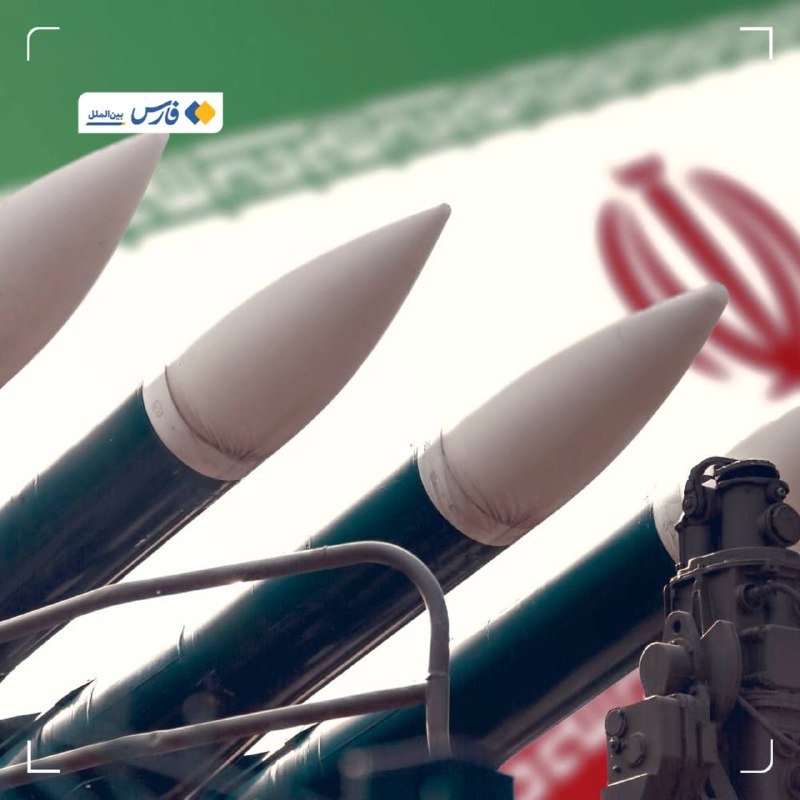
At 09:05 UTC on 11 June 2026, the United States military pushed back hard against an account spreading through Middle Eastern channels: no American warship in the Strait of Hormuz had been struck, a US spokesperson said, in a line first carried by Reuters. Forty minutes later, a Telegram channel with ties to war monitoring echoed a different version of the night, reporting that the US had fired 49 Tomahawk missiles at targets inside Iran. By 09:42 UTC, Iran's official line had hardened into an announcement of missile strikes on US military positions across the Gulf and a declaration that Hormuz would close. By 09:45 UTC, the same closure claim was being amplified in English by outlets aligned with the Iranian foreign-policy ecosystem.
What is unfolding on the morning of 11 June is not a single event with one authoritative read. It is two parallel narratives — one Iranian, one American — racing each other across the same narrow waterway that carries a substantial share of the world's seaborne oil. The Strait of Hormuz is twenty-one miles wide at its choke point. The margin for misunderstanding, on a day like this, is much smaller.
The competing claims on the record
The American account, as relayed by Reuters, is austere: no US warship was struck in the Strait of Hormuz on the night of 10–11 June. The framing leaves room for everything else — strikes elsewhere, counter-fire, intercepts — but draws a bright line at the warships. That line matters because it is the only claim that can be quickly verified by the fleet itself, by satellite tracking, and by allied navies operating in the Gulf.
The Iranian account, carried by the Palestine Chronicle and amplified by channels that routinely translate Iranian state messaging for English-language audiences, runs the other way. It asserts that Iran has struck US military positions across the region and is closing the Strait "until further notice." Insider Paper, a fast-moving aggregator that frequently surfaces Tehran-aligned wire copy, repeated the closure language within minutes. These claims are not adjudications; they are declarations. They are the kind of statement designed to move oil futures, shipping insurance rates, and the political weather in every Gulf capital before sunrise.
A third strand, the Telegram channel War Monitors, sits between the two and adds a different texture. Its claim is that the US struck first, with 49 Tomahawk missiles, the night before. The number is precise enough to look authoritative and round enough to be guessed. It is, in the language of open-source analysts, a single-source claim that has not been corroborated by US Central Command or by any Western wire in the materials available on the morning of 11 June.
Why the Strait is doing the talking
Even if every specific claim is true, none of them would be as economically consequential as the closure declaration. The Strait of Hormuz is the only maritime passage between the Persian Gulf and the open ocean. Roughly a fifth of the world's traded oil moves through it on any given day. There is no meaningful bypass for supertankers; pipelines to the Gulf of Oman and the Red Sea carry only a fraction of the volume. A closure — even a partial, rhetorical, or short-lived one — reprices the world within hours. Insurance war-risk premiums spike. Refiners in Asia scramble for non-Middle Eastern barrels. Airlines hedge jet fuel. Central banks in oil-importing economies run the same playbook they ran during previous Hormuz scares, and they run it whether the strait is physically closed or merely declared closed.
This is the asymmetry the Iranian statement is built to exploit. A declaration is cheap. A naval blockade, even a token one, is expensive. The cheapest escalation that still moves the market is a statement of closure that ships and their insurers must take seriously. The cost of being wrong, for a tanker captain or a charterer, is catastrophic and asymmetric. They will pay the war-risk premium; they will not test the statement.
The American response, in turn, is calibrated to a different audience. "No US warship was struck" is not a denial that anything happened. It is a statement designed to preserve freedom of navigation by the fleet, to reassure regional partners that the US Fifth Fleet remains operational, and to leave Washington the maximum diplomatic room to escalate or de-escalate in the hours ahead.
The structural frame: chokepoints, corridors, and the price of ambiguity
What is being tested on the morning of 11 June is not a single battle but a long-running arrangement. The post-1945 maritime order treats a handful of narrow passages — Hormuz, Bab el-Mandeb, Malacca, the Suez — as commons that no single power is permitted to close. The US Navy's presence in the Gulf is, in the most reductive sense, an insurance policy on that norm: a fleet big enough to make any closure attempt costly. Iran has, for four decades, probed the limit of that insurance. It has seized tankers, detained crews, and armed fast boats in ways that fall short of blockade but raise the cost of transit. The pattern is not new. What is new is the explicit, public, English-language framing of closure as a state instrument.
The pattern sits inside a larger realignment. As energy corridors diversify and as Gulf states hedge between Washington and Beijing, the political weight of Hormuz has shifted. China's purchases of Iranian oil at discounted prices, the slow drift of Saudi and Emirati diplomacy toward a more multipolar posture, and the growing footprint of Indian and East Asian refiners all mean that a Hormuz crisis now lands on more balance sheets than it did a decade ago. The chokepoint has not narrowed. The number of actors with a stake in it has widened.
Stakes, and what the next 48 hours will tell us
If Iran's closure declaration holds into the weekend, the world will know it through the shape of the oil curve and the routing of tankers — not through another statement. If the US fleet continues to transit, the closure claim is rhetorical and the escalation is verbal. If the fleet is told to stand off, the closure is operational and the price will be paid in shipping, insurance, and ultimately in the consumer price index of every oil-importing economy. Either way, the Gulf states that have spent two decades telling their publics and their investors that they are safe havens will spend the next 48 hours watching a different question: whether the security architecture they have bet their pension funds on still functions under this kind of stress.
For Washington, the harder calculation is the cost of letting a closure declaration stand unchallenged, even for a week. Norms, in the maritime commons, are enforced by use. If Hormuz is treated as closed for seventy-two hours without an escort operation, the precedent will outlast the crisis. For Tehran, the calculation runs the other way. A closure that the world prices in cheaply is a closure that no longer works as leverage; a closure that is enforced — even partially — converts a diplomatic signal into a structural fact.
What remains uncertain
The material available on the morning of 11 June does not yet allow a confident reconciliation of the two accounts. The US has, on the record, denied any warship strike. Iran has, on the record, claimed strikes on US positions across the Gulf and announced closure. The Tomahawk claim circulating on Telegram channels has not been independently corroborated by any Western wire or by US Central Command in the public record. Casualty figures, damage assessments, and the precise geography of the alleged strikes have not been published by either side in a verifiable form. The next hours will tell whether this is a coordinated exchange of signals, the opening of a wider operation, or the kind of rhetorical escalation that burns itself out before the oil markets open in London.
Desk note: Monexus is reporting the two competing claims on the record rather than adjudicating between them, and is treating Telegram-channel claims as unverified single-source material until corroborated by a Western wire, a regional government, or a UN agency.
Wire provenance
This editorial synthesis draws on the following public wire/social posts:
- https://t.me/WarMonitors
- https://t.me/insiderpaper
- http://reut.rs/4uN5fER
- https://t.me/PalestineChronicle
Follow the event.
These dated source records provide context. They do not retrospectively verify this archive article.
Separate what the nuclear watchdog reported from what it could not determine after the June 2025 strikes.