Iranian missiles over Jordan: what the overnight strikes do, and do not, tell us
Satellite imagery circulated on 11 June 2026 confirms Iranian strikes damaged a US surveillance radar in Kuwait and fuel storage in Bahrain, but the gap between verified damage and Tehran's broader framing is where the actual story sits.
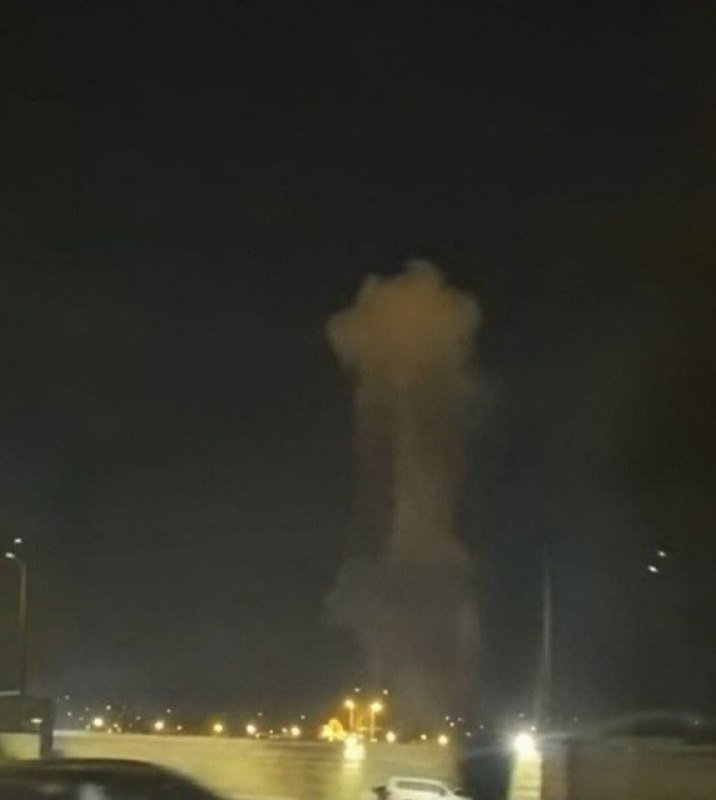
High-resolution satellite imagery surfaced on the evening of 11 June 2026 showing damage to a US-operated air defence radar at Ali Al Salem Airbase in Kuwait, the first concrete post-strike visual record of what Iranian-aligned channels and US Central Command sources describe as a multi-site retaliatory barrage across the Gulf. The images, circulated by Iranian-affiliated channels including Press TV and corroborated independently by open-source analysts at AMK Mapping and the Middle East Spectator feed, depict a destroyed ASR-1000L tactical air surveillance radar at the Kuwaiti base, alongside reports of fuel-storage damage at Sheikh Isa Airbase in Bahrain and the destruction of an AR-327 Commander long-range air surveillance radar at Bahrain's Jabal Ad Dukhan site.
The strikes, and the satellite record now attesting to them, cut in two directions at once. They confirm the operational reach of Iran's missile and drone force against US assets across the Gulf, a capability analysts have spent years modelling and that Israel and the United States have spent years attempting to degrade. They also expose the limits of that reach: the visible damage is to surveillance radars, fuel tanks, and support infrastructure rather than to runways, hardened aircraft shelters, or command nodes. The frame that has moved fastest across Telegram and X, that of Iranian channels publishing "remarkable HD satellite images" of precision destruction at US bases, is partially true and partially inflated, and the gap between those two things is where the actual story sits.
What the satellite record actually shows
The clearest image in circulation is of the ASR-1000L tactical air surveillance radar at Ali Al Salem Airbase in Kuwait. Press TV published the imagery on 11 June, describing it as evidence of "the complete destruction" of the unit following Iranian retaliatory strikes. The Middle East Spectator channel and AMK Mapping posted the same imagery independently, with AMK's caption specifying that "recent Iranian missile/drone strikes destroyed two fuel storage tanks at the Sheikh Isa Airbase in Bahrain." Intelslava, citing IRGC-linked channels, added a third data point: the destruction of an AR-327 Commander long-range air surveillance radar at Jabal Ad Dukhan in Bahrain, alongside the fuel-tank damage.
What the imagery does not show is aircraft destroyed on the ground, runways cratered, or hardened aircraft shelters (HAS) breached. The pattern of damage, radar arrays, fuel storage, and one long-range surveillance installation, is consistent with secondary-strike effects: hits on the support envelope of a US airbase rather than on its kinetic core. Iranian channels have framed the strikes as demonstrating "highly accurate strikes" on radars, hangars, and other facilities. The hangar claim is not supported by the satellite imagery currently in circulation, which shows radar and fuel-tank damage, not collapsed hangar structures.
For readers trying to calibrate the actual cost to US posture, the distinction matters. An airbase can lose a surveillance radar and two fuel tanks and continue flying missions within hours, albeit degraded. An airbase that has lost hardened shelters and aircraft cannot. The first is an inconvenience. The second is a degradation of deterrent capacity.
The Iranian state-media frame, and what it leaves out
Iranian state-aligned media, principally Press TV, Tasnim, and Fars, has run the satellite imagery as the lead visual of its coverage of the strikes. The frame is consistent across the channels: the Islamic Republic has demonstrated the ability to penetrate the air-defence envelope of US bases in Kuwait and Bahrain, to destroy high-value radar assets with precision, and to do so under conditions where those bases were presumably at their highest alert state. Tasnim's editor-in-chief, in an interview with IRIB the same evening, used the moment to argue that Iran "should not trust the US," and characterised domestic public anxiety about ongoing negotiations as "a healthy sign of resistance."
The frame leaves out three things. It does not address whether any US or allied personnel were killed or injured in the strikes. It does not address whether Iranian forces absorbed meaningful counter-fire from US Patriot and THAAD batteries sited at the same bases. And it does not address the gap between "high-value radar destroyed" and "US air power degraded." The strikes, as visually documented, are a warning shot. The Iranian framing wants them read as a decisive blow.
The diplomatic context running underneath the strikes
The retaliatory barrage did not arrive in a vacuum. Iranian state and reformist outlets spent the days preceding the strikes arguing over a diplomatic track that appears to have collapsed. Reformist and centrist papers, including Etemad, Jomhouri-e Eslami, and Ta'adol, supported a deal that would "lift sanctions, unfreeze assets and rebuild the economy," according to a Washington File witness summary of Iranian press coverage. Pro-principlist voices, including a Persian-language sign appearing in public referencing Supreme Leader Ayatollah Seyed Mojtaba Khamenei's silence on the negotiations, pushed back. Fars News reported that Qatar had, at the beginning of the war, made a back-channel offer to Tehran to halt its gas-export infrastructure in exchange for Iranian restraint, an offer reportedly brokered through Doha and documented in the Washington Post.
The diplomatic context matters because it shapes what the strikes are for. If the negotiations were collapsing, the strikes functioned as a final coercive signal before a deal. If they were a feint, they functioned as cover for a climb-down. The same set of satellite images can be read either way, and the Iranian information space is reading them in both directions simultaneously.
Where the open-source record is thin
Three specific claims are circulating widely without independent corroboration. The first is that strikes hit and damaged US assets in Bahrain beyond the Sheikh Isa Airbase itself; Intelslava's reference to the AR-327 Commander radar at Jabal Ad Dukhan comes from "IRGC-linked channels," which is a sourcing caveat rather than a verification. The second is the Hezbollah footage dated 8 June 2026 showing strikes on IDF vehicles in southern Lebanon, including an Ofek command-and-control vehicle on a Merkava 3 chassis; Intelslava carried the footage without independent geolocation. The third is the larger Iranian framing of strikes on multiple Gulf states beyond Kuwait and Bahrain; the wire record currently supports the two sites and no more.
The honest reading is that Iran struck at least two US-operated airbases in Kuwait and Bahrain, inflicted real but limited damage to surveillance and fuel infrastructure, and used the satellite aftermath as a propaganda layer to claim a deeper success. Whether deeper success was actually achieved, in the form of degraded US air capacity, will become legible in the next 48 to 72 hours as the bases return to full operating posture and satellite revisits become available.
What the overnight strikes do, and do not, tell us
The strikes confirm what was already suspected: that Iran's missile and drone force can reach US bases across the Gulf, can penetrate layered air defences at least partially, and can produce verifiable post-strike damage that holds up to satellite scrutiny. They do not confirm that Iran can degrade US air power to a degree that changes the strategic balance, that US personnel losses were significant, or that the diplomatic track has collapsed beyond recovery.
For now, the image of the destroyed ASR-1000L at Ali Al Salem is doing work well beyond what a single radar represents. It is functioning as a piece of visual evidence in an information war that is being fought in parallel with the kinetic one, and in that information war, a verified radar loss is worth more to Tehran than a dozen unverified claims of base-wide devastation. The next test of the frame will arrive when the next round of satellite imagery is published, and when the bases in question either resume normal flight operations or visibly do not.
Sources
- Press TV (Telegram), 11 June 2026: "Satellite imagery captures the complete destruction of an ASR-1000L tactical air surveillance radar at the US Ali Al Salem Airbase in Kuwait." https://t.me/presstv
- Middle East Spectator (Telegram), 11 June 2026: satellite imagery of ASR-1000L radar destruction at Ali Al Salem. https://t.me/Middle_East_Spectator
- AMK Mapping (Telegram), 11 June 2026: "high-resolution satellite imagery reveals that recent Iranian missile/drone strikes destroyed two fuel storage tanks at the Sheikh Isa Airbase in Bahrain." https://t.me/AMK_Mapping
- Intelslava (Telegram), 11 June 2026: AR-327 Commander radar at Jabal Ad Dukhan, Bahrain, citing IRGC-linked channels. https://t.me/intelslava
- Boweschay (X), 11 June 2026: Iranian-affiliated channels publishing HD satellite imagery of targets struck at US air bases in Bahrain. https://x.com/boweschay
- Fars News (Telegram), 11 June 2026: Washington Post account of Qatar's back-channel offer to Iran at the beginning of the war. https://t.me/farsna
- Washington File witness summary (Telegram), 11 June 2026: Reformist and centrist Iranian press framing of the diplomatic deal. https://t.me/wfwitness
- Tasnim News (Telegram), 11 June 2026: Tasnim editor-in-chief on IRIB regarding US trust and domestic reaction to negotiations. https://t.me/DDGeopolitics
Desk note: Monexus ran the cluster against the wire beat and against Iranian state-media output. The frame that moved first is the Telegram frame. We have held back from restating its strongest claims as facts and have flagged the parts that remain unattributed. Where subsequent reporting confirms, contradicts, or qualifies the three posts above, this piece will be updated.
Follow the event.
These dated source records provide context. They do not retrospectively verify this archive article.
Separate what the nuclear watchdog reported from what it could not determine after the June 2025 strikes.