Kharijite in the Mirror: How a Single Telegram Insult Tells the Story of Iran's Fractured Hardliners
A single Telegram post accusing unnamed 'Kharijites' of negotiating with the devil and waiting to attack the 'guardian of God' lays bare the language, paranoia and self-justification of Iran's besieged ruling faction.
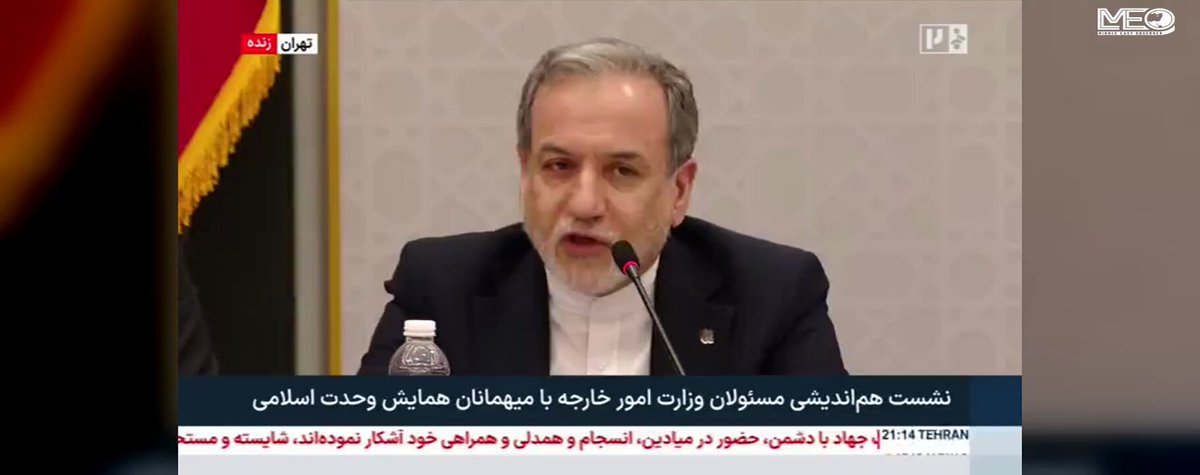
On 11 June 2026 at 11:56 UTC, a Telegram channel affiliated with the Africa News Agency network published a 34-word invective that, on its face, had nothing to do with Africa. The post denounced the "same Kharijites who impose and justify negotiations with the devil and say that everything is in harmony with the leadership," warning that these same actors would, "tomorrow when they get their money," turn on the "guardian of God." The vocabulary — Kharijite, the devil, the guardian of God — is not generic. It is the working language of Iran's ruling conservative faction, deployed against reformists, principalists who deviate, and any domestic actor seen as willing to negotiate with the United States. The Africa News Agency channel, read in Africa and the diaspora, has increasingly carried Persian-language political material repackaged for a wider audience; the post is one data point in that flow.
The insult matters less for who hurled it than for the taxonomy it reveals. In Iranian factional politics, the term "Kharijite" — historically a reference to the earliest sect to secede from the caliphate — has been re-purposed by loyalists of Supreme Leader Ayatollah Ali Khamenei as a slur against any political actor deemed insufficiently obedient. To call a negotiator a Kharijite is to accuse him of treason in religious dress. The post's central claim — that the same people who today defend diplomacy will, on receiving concessions, pivot to attacking the supreme leader — is a story the hardliners have been telling about themselves and their rivals for at least a decade, and it has acquired renewed intensity around the negotiations over Iran's nuclear file and the regional war footing.
A faction under stress
The Telegram post lands at a moment when the conservative camp around Khamenei is visibly anxious. Inside Iran, principalist newspapers and Friday-prayer imams have spent the spring of 2026 alternating between warnings about "infiltration" and demands for unity against the United States and Israel. The Africa News Agency circulation, however thin, is itself a symptom: a Persian-coded factional message travelling through a Lagos-headquartered network reaches readers in West Africa's Shia communities, in Lebanese and Iraqi diaspora channels, and on Telegram-aggregator feeds that mix African political news with translated material from Iranian outlets. The hardliners' rhetoric, in other words, is no longer broadcasting only in Farsi.
What the post presupposes is a recognisable political economy. A faction of Iranian elites is willing to talk to Washington; that same faction, the post alleges, is dependent on external money and will discard Khamenei once the funds arrive. The implicit referent is the cluster around former president Hassan Rouhani and the remaining reformist camp, but the post leaves the named target deliberately blank — a technique that lets loyalist media reuse the sentence against whichever negotiator is in the news that week. The grammar of suspicion is generic by design.
The counter-narrative the post refuses to name
The Telegram post does not engage with the actual content of the negotiations. It does not name a counterpart, cite a concession, or parse a clause. Its argumentative structure is circular: anyone who negotiates is a Kharijite, and any Kharijite who negotiates will betray the supreme leader, and the betrayal is proved by the negotiating. This is the rhetorical move the post performs twice in a single paragraph — first accusing Kharijites of "imposing and justifying negotiations with the devil," then predicting they will "attack the guardian of God" when paid. The two charges are presented as a continuous fact.
From the perspective of Iran's reformist and centrist press, the same sentence reads as evidence that the conservative camp is no longer offering a policy position so much as an identity test. The dominant framing in reformist outlets through the first half of 2026 has been that diplomacy with the United States is the only way to relieve sanctions pressure on ordinary Iranians; the hardliner counter is that any such relief will be captured by the political class and used to fund a challenge to the supreme leader. The Telegram post is the second argument stripped of its policy content and reduced to a tribal warning.
Structural frame: who gets to name the enemy
What this kind of post exposes, more sharply than any policy analysis, is the information architecture of factional politics inside the Islamic Republic. Telegram, banned in Iran since 2018 but routinely accessed via VPN, has become the de facto broadcast medium for factions that no longer trust each other's domestic outlets. State-aligned channels, diaspora channels, and now Africa-routed aggregators form a relay in which a single paragraph can be repurposed, repackaged, and reissued without any editor taking responsibility for its provenance.
Two structural facts follow. First, the people accused of negotiating — never named, always implied — are denied the right to defend themselves inside the same channel of communication. The accusation is a final verdict, not the opening of a debate. Second, the supreme leader's office is positioned as the natural audience for the warning, not as a principal actor with its own public posture. The post is a message of loyalty delivered upward, disguised as a message of analysis delivered sideways. In an environment where the supreme leader's direct interventions are rationed and his position is conveyed through proxies, the loyalist's job is to keep the reservoir of suspicion full.
Stakes and the limit of the Telegram genre
The stakes of a single Telegram post are small in the way that a single raindrop is small. The accumulated effect is not. When the African News Agency network, with its regional readership, republishes the hardliners' vocabulary of suspicion, it does two things at once. It gives the conservative camp an audience outside the Persian-language information space, and it imports the grammar of Iranian factional politics into African and diaspora media conversations where the term Kharijite has its own, very different, historical weight — originally a reference to the Kharijite secessionists of the seventh century, a name some Sunni militants have since adopted for themselves. The collision of these contexts is not edited; it is just shipped.
What the post cannot do, and what no single Telegram post can do, is settle the underlying argument. Iran's leadership is divided between those who treat negotiation as survival and those who treat it as apostasy; the Telegram genre rewards the latter, because suspicion is easier to type in 34 words than policy. The audience that matters — the readers who actually live under sanctions, inflation and conscription — receives the verdict without the trial. The post is not a piece of analysis. It is a confession of how the faction that wrote it sees the world: as a small room, full of enemies, in which the only safe move is to accuse the next speaker of being paid.
Desk note: The wire service ran this as a factional-infighting story. Monexus treats it as an artefact of the information architecture — one sentence that, traced back through the Telegram relay, tells a reader more about Iran's besieged hardliners than a week of op-eds.
Wire provenance
This editorial synthesis draws on the following public wire/social posts:
- https://t.me/s/AfricaNewsAgency
- https://en.wikipedia.org/wiki/Kharijites
- https://en.wikipedia.org/wiki/Supreme_Leader_of_Iran
- https://en.wikipedia.org/wiki/Telegram_(software)
- https://en.wikipedia.org/wiki/Iran%E2%80%93United_States_relations