Iran’s missile volley puts the Gulf on notice — and tests the architecture of US regional defence
Early-morning strikes on US-occupied bases in three Arab states are framed by Tehran as retaliation. The architecture of American power projection in the Gulf is now the test case.
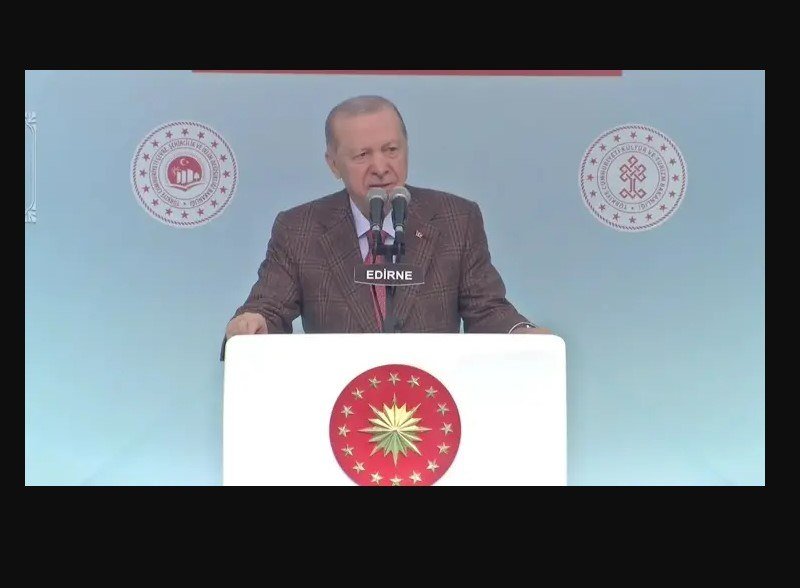
In the small hours of 11 June 2026, Iran fired a coordinated volley of ballistic missiles and one-way attack drones at US-occupied military bases in three Arab states: Bahrain, Kuwait and Jordan. Telegram channels aligned with the Iranian axis reported the launches from the early morning, framing the operation as a direct response to an American attack. By 07:10 UTC, the messaging had hardened into a single, deliberate claim — that Tehran had chosen to widen the geography of retaliation rather than absorb another blow on its own soil.
What is no longer in dispute is that Iranian projectiles crossed into the airspace of three American host-nation partners simultaneously, and that the targets were US military facilities inside them. The strike, if the early framing holds, is the most ambitious Iranian projection of force against the Gulf basing architecture since the 2019 attack on Saudi Aramco facilities at Abqaiq and Khurais. It also lands inside a much narrower crisis that the world has been watching for weeks — the cycle of escalation between Washington and Tehran — and effectively pulls three Arab governments directly into the line of fire alongside the United States. That is the new fact on the ground, and it is the fact that the next 72 hours of diplomacy will have to absorb.
What Tehran is signalling
The choice of targets is the message. Iran did not, on the evidence available by mid-morning UTC, hit Israeli positions, did not strike US assets in the Iraqi Kurdistan region where the IRGC has long operated, and did not target the Gulf shipping lanes it has harassed at intervals since 2019. It hit US bases in Arab host countries. That is a deliberate diplomatic signal dressed up as a military one: Tehran is telling the Arab monarchies of the Gulf, and the Hashemite Kingdom in particular, that the bill for hosting American power is now due in a currency they cannot print. The political bill, not the military one — Iranian missiles are not going to evict the US Central Command forward headquarters from al-Udeid any time soon. But the framing that Arab territory is being used as a launch pad for strikes against Iran, and is now being struck in return, is a frame Tehran intends to plant and water.
The accompanying claim — that Iranian systems penetrated Gulf air defences despite the Pentagon's heavily advertised layered shield — is, even in its early, partial form, doing real work. Confidence in the architecture matters more than the architecture itself. If even a subset of Iranian ballistic missiles and one-way attack drones reach targets on or near US bases, the cost-benefit calculation of every Gulf capital gets quietly rewritten.
The architecture being tested
What is being stress-tested is not, strictly, the Patriot and THAAD batteries that ring US positions in the Gulf. Those have intercepted thousands of projectiles over the past three years; their performance is well documented. What is being stress-tested is the political and intelligence architecture underneath them. A US forward presence in the Gulf only functions as a deterrent if (a) the host government believes the US will use it, and (b) the host government believes the US presence will not turn its own cities into Iranian targets. The first of those beliefs was always the easier sell. The second is now the one under live interrogation.
There is a second-order point here that the Western wire cycle has been slow to surface. The Arab states currently absorbing Iranian strikes are not uniform in their alignment. Bahrain hosts the US Fifth Fleet and the British Naval Support Facility. Kuwait hosts Camp Arifjan, the main logistics node for US ground force projection in the region. Jordan is geographically the outlier — the US presence there is smaller, but politically the kingdom has been one of Washington's most reliable Arab partners, including on issues far from the Gulf. Iran's apparent decision to attack all three in a single morning suggests a strategic reading in Tehran: that the United States' Gulf architecture is only as strong as its weakest Arab link, and that pressure applied across the spread will, over time, force at least one host to begin asking quietly whether the bill has become too high.
The counter-narrative, and why it still matters
The framing coming out of Iranian and Iran-aligned channels is, predictably, the cleanest version of the story: a sovereign response, defensive in character, proportional to an American attack, delivered with conventional means against military targets. That framing is not without internal logic. It is also worth being precise about what it leaves out. Iran struck inside the territory of three sovereign states that are not parties to the dispute between Washington and Tehran. The Arab governments of Bahrain, Kuwait and Jordan did not ask to be hit. The framing of "defensive retaliation against US positions" is, from the standpoint of Manama, Kuwait City and Amman, an act of war against them regardless of the intended target on the ground. This is the point at which a great deal of Western wire coverage of the cycle tends to compress the story, because it is uncomfortable for a frame that treats Iran's actions as essentially defensive. The structural fact is that Iran's retaliation has now been inflicted on Arabs, in Arab countries, on Arab soil. That is a fact the Gulf Cooperation Council cannot absorb quietly.
The 72 hours ahead
The next three days will tell us whether this is a one-shot escalation or the opening of a sustained campaign. The relevant indicators: any US follow-on strike on Iranian territory; whether Jordan, in particular, opens a public diplomatic channel with Tehran; whether GCC foreign ministers issue a joint statement; whether oil futures move on the assumption that the Strait of Hormuz is the next escalatory step. None of those is yet visible, and the sources available by mid-morning UTC on 11 June do not yet let this publication make confident claims about any of them. The honest position is that the picture is still assembling, and that the early framing on both sides — Iranian victory messaging on the one hand, Pentagon reassurance on the other — should be treated as a framing, not a finding.
What can be said with more confidence is that the architecture of US regional defence has, in a single morning, been forced to answer a question its planners have been quietly deferring for years: what does it look like when the cost of hosting US forces in the Gulf starts being paid in Iranian missiles that land in Arab cities, and not just in the budget line of a defence cooperation agreement? The answer to that question, whatever it turns out to be, will not come from Washington or Tehran. It will come from Riyadh, from Manama, from Kuwait City, and above all from Amman — capitals that have just discovered they are parties to a war they did not sign up for.
Monexus framed this as an architecture test, not a tactical strike — the lead is the geography of Iranian retaliation across three Arab host states, and the working assumption is that the political bill, not the military one, is what Tehran is now invoicing.
Wire provenance
This editorial synthesis draws on the following public wire/social posts:
- https://t.me/s/osintlive
- https://t.me/s/englishabuali
- https://t.me/s/englishabuali
Follow the event.
These dated source records provide context. They do not retrospectively verify this archive article.
Separate what the nuclear watchdog reported from what it could not determine after the June 2025 strikes.