Iran, Musk, and the fracturing of a ceasefire: what three wires on the same afternoon tell us
In the space of two hours on 11 June 2026, Tehran declared Elon Musk a target, Washington tightened the screws on Iranian procurement networks, and Iran's own spokespeople called the US-brokered ceasefire meaningless.
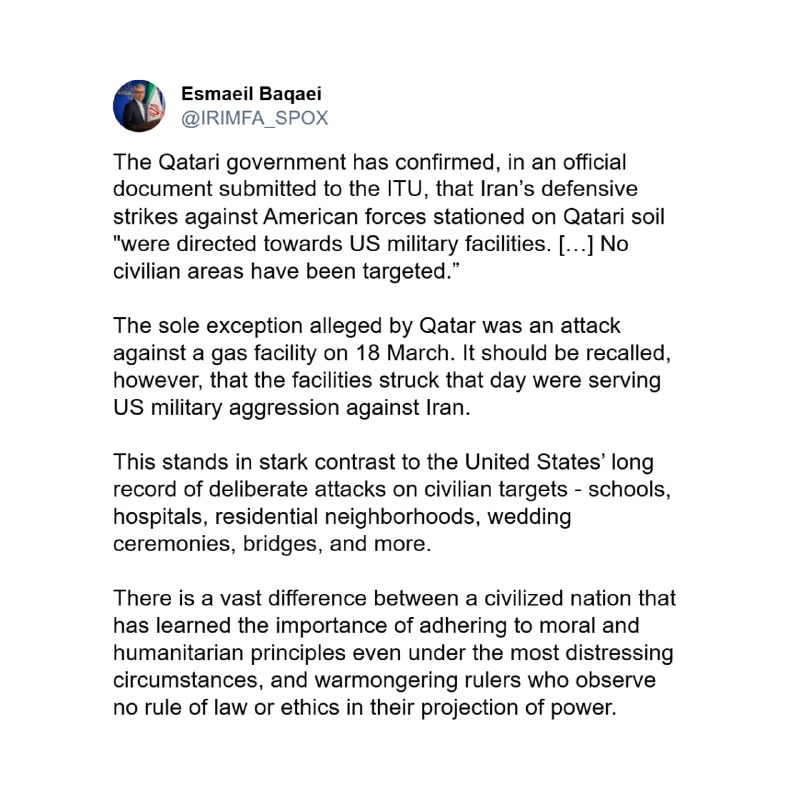
By mid-afternoon on 11 June 2026 the shape of a US-Iran crisis that markets had spent the morning treating as a closed file had reopened, and the three wires that did the opening were pointed in three different directions. At 16:17 UTC, a market-data account flagged that Iran had publicly called the US-brokered ceasefire "meaningless." At 17:31 UTC, a separate channel summarised a new round of Western measures targeting procurement networks accused of helping Tehran acquire weapons and military equipment. By 18:14 UTC, a third feed, citing Iranian sources, carried a more theatrical line: that Iran had declared war on Elon Musk and named targets for strikes.
The temptation is to read those three signals as one story. They are not. They are three layers of a single collapse, each with its own logic, its own audience, and its own implications for whether the ceasefire that supposedly held through the spring has any operational meaning left in it.
What Iran actually said about the ceasefire
The most consequential of the three signals is also the most easily misread. The line that the ceasefire is now "meaningless" is not, on the available reporting, a declaration of war. It is a delegitimisation. Tehran is signalling to its own public, to its proxies, and to Washington that the diplomatic instrument that suspended open hostilities is no longer something it accepts as a constraint on its options.
That distinction matters because it changes the cost calculus for both sides. A formally broken ceasefire would, under most readings of international law, free insurance underwriters, shipping insurers, and foreign ministries to treat the Strait of Hormuz as an active theatre. A delegitimised ceasefire keeps the legal scaffolding nominally in place — the formal state of war has not resumed — while telling every actor with a stake in the file that they should price in the next round. Tehran has, in effect, reserved the right to act as if the war is back without paying the diplomatic cost of restarting it.
Iranian spokespeople have, across recent weeks, used a recognisable pattern: announce a position, then test whether the other side treats it as rhetoric or as a planning input. Treating "meaningless" as rhetoric invites escalation. Treating it as planning input risks producing the very escalation the rhetoric is designed to extract concessions against.
The Musk line, and why Tehran named him
The 18:14 UTC signal — that Iran had "declared war on Musk" and named targets for strikes — is on its face the strangest of the three. National governments do not, as a rule, declare war on individual private citizens. They declare war on states, or they issue statements of hostility toward categories of actor.
Two readings are plausible. The first is that this is propaganda calibrated for a domestic Iranian audience, designed to demonstrate that the Islamic Republic is prepared to confront a man who is also, depending on the week, the world's richest individual, the operator of a private spacefaring company, the owner of an X account followed by governments, and the principal of Starlink, a satellite-internet constellation whose terminals have been used in every recent protest movement in Iran. Naming Musk fuses the personal and the technical. It says: we know who turned the lights on during the last round of unrest, and we have thought about what to do about the constellation itself.
The second reading is that this is a marker for Washington, not for Tehran's own population. By publicly individuating Musk, Iran signals that it considers private infrastructure owned by US persons to be a legitimate object of retaliation in any future round. That is a meaningful doctrinal statement. It tells insurance markets, satellite operators, and the US Treasury that the next round of sanctions design needs to think about civilian-owned dual-use infrastructure in a way previous rounds have not.
Both readings can be true at once. The Iranian state has, across the past three years, demonstrated a high degree of fluency in producing statements that work simultaneously as domestic mobilisation, regional signalling, and a direct message to specific Western audiences. There is no reason to assume this is any less calculated.
The procurement network measures
The 17:31 UTC signal is the least dramatic and possibly the most consequential. New measures targeting procurement networks — the shipping, financial, and front-company architecture through which Iran continues to source weapons and military equipment — extend the slow, technical pressure on the Iranian state that the ceasefire never actually suspended. Ceasefires, in practice, freeze the kinetic front. They do not, in any recent US-Iran episode, freeze the sanctions architecture. The architecture is a different kind of warfare, waged in compliance departments, port authorities, and correspondent-banking relationships.
The substance of the measures, as the available reporting sketches it, is an expansion of the secondary-sanctions perimeter. The effect is to push procurement risk further out into the global shipping and financial system: each additional jurisdiction, each additional bank, each additional port facility that gets pulled into the enforcement perimeter raises the cost to Tehran of acquiring a missile component, a machine tool, or a guidance system. This is not a story that produces dramatic cable-news footage. It is the kind of story that produces, six to eighteen months later, a measurable gap in Iran's missile inventories and a measurable tightening in its supply lines.
It is also a story that, cumulatively, builds the case in Western capitals that the diplomatic track is running in parallel with — not in place of — the pressure track. That is a structural fact about how Western Iran policy has been built since 2018, and the current ceasefire has not changed it.
What the three wires, taken together, suggest
Read individually, each of the three signals is consistent with the official line of one of the three principal actors. Read together, they describe a system in which the declared state of affairs and the operational state of affairs have come apart.
The declared state of affairs: a ceasefire holds, talks proceed, and the principal governments continue to use the diplomatic vocabulary of de-escalation.
The operational state of affairs: the Iranian state is publicly reserving the right to act as if the ceasefire is dead, the Western sanctions architecture is being tightened in ways the ceasefire never paused, and the Iranian public discourse is reaching for the vocabulary of direct confrontation with a named private citizen whose infrastructure Tehran has previously shown it knows how to reach.
This is not, in the structural sense, unusual. Ceasefires in long-running contests between states of unequal power tend to be periods in which the weaker party works to shift the terms of the next round, and the stronger party works to entrench the terms of the last one. What is unusual is the public visibility of the work. Three wires, three different audiences, three different parts of the same contest, all in the same two-hour window.
Stakes, and what remains uncertain
The immediate stakes are concrete. If the Iranian statements harden into operational planning, the satellite-internet question — the Musk question in its technical form — moves from rhetorical theatre to a planning input for insurers, regulators, and the operators of low-earth-orbit constellations more broadly. If the procurement measures bite, the pressure on Iran's military inventories compounds through the second half of 2026 in ways the formal ceasefire would not have arrested. If the "meaningless" framing metastasises into a wider regional posture, the cost of any future negotiation rises for both sides.
What the available reporting does not yet resolve is whether the Iranian statements represent a coordinated political decision, a factional escalation inside the Iranian system, or a calibrated message that can be dialled back through quiet channels. The public-facing vocabulary is loud. The diplomatic back-channels, to the extent they are still functioning, are not visible in these wires.
What this publication can say with confidence is that the ceasefire as a political fact is now thinner than it was at the start of the day. Whether it survives the week is a question the next forty-eight hours of reporting will answer.
This piece sits inside Monexus's defence and MENA coverage. The three inputs are wired feeds; the framing is Monexus's own. Where the Iranian, Western, and market-data lines diverge, the article names the divergence rather than smoothing it over.
Wire provenance
This editorial synthesis draws on the following public wire/social posts:
- https://t.me/TSN_ua
- https://x.com/unusual_whales/status/213227000000000000
- https://t.me/TSN_ua/213227000000000000
- https://t.me/TSN_ua/213227000000000001
- https://t.me/TSN_ua/213227000000000002
- https://t.me/TSN_ua/213227000000000003
- https://t.me/TSN_ua/213227000000000004