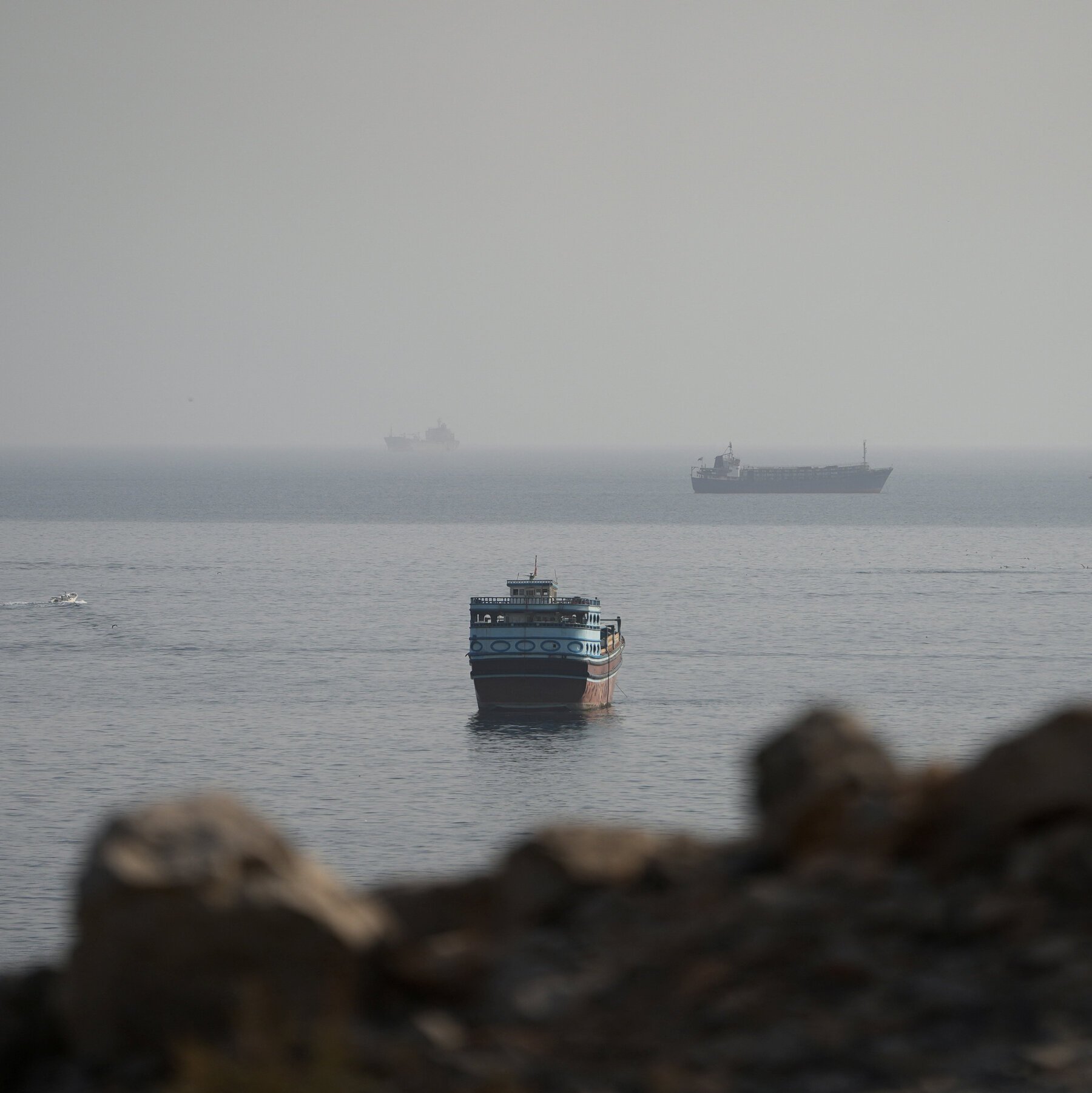
Iran's missile strike on a Jordan airbase marks a regional escalation that the wire frames too narrowly

At roughly 03:00 UTC on 11 June 2026, the Islamic Revolutionary Guard Corps announced it had fired twelve ballistic missiles at the Muwaffaq Salti airbase — known to Western militaries as Al-Azraq — in central Jordan, naming F-35, F-16 and F-15 hangars and the base's command facilities as the targets. Within an hour, open-source channels were circulating footage purporting to show two confirmed impacts on the base. The strike, framed by Tehran as retaliation for US airstrikes on Iran, lands on a facility that has hosted US and coalition airpower for nearly a decade and sits inside a kingdom that has, until now, been treated as a quiet staging ground rather than a frontline. The story is not the missiles. The story is the geography of escalation that the wire cycle has, so far, been reluctant to draw.
The dominant framing in English-language coverage is a familiar one: an Iranian act, a regional warning, a crisis to be contained. That framing is not wrong, but it is too small. A strike on a third-country airbase — Jordan is neither Israel nor Iraq — to protest operations against Iran on Iranian soil is a deliberate widening of the battlefield. Reading it as a missile story rather than a map story misses what Tehran is actually communicating.
A base built for someone else
Muwaffaq Salti is not a Jordanian facility in any meaningful operational sense. Since the US-led campaign against ISIS, it has hosted American and allied airframes, and has functioned as a hub for surveillance, refuelling and strike missions across Iraq and Syria. Jordanian crews keep the base running; coalition aircraft have done much of the flying. The IRGC's targeting choice — explicitly naming US fighter hangars in its statement — was therefore not ambiguous. It was a message written in coordinates.
This matters because Amman has spent the better part of two decades carefully positioning itself as the indispensable quiet partner: a kingdom that hosts US Central Command assets, that signed peace with Israel, that absorbed the regional shockwaves of 2023-24, but that avoided being cast as a belligerent. A ballistic-missile strike on Jordanian soil changes that posture by force, not by Jordan's choice. The kingdom's room for diplomatic manoeuvre just narrowed.
Reading the IRGC's own statement
The IRGC's published statement — relayed by Middle East Spectator and AMK Mapping within minutes of release — is unusually specific for a Tehran military communiqué. It names the airbase by name, the missile count, the airframes housed, and the rationale: retaliation for US strikes on Iran. That level of detail is not a typo or an over-share. It is an attempt to set the narrative before Washington and Amman can.
There is a counter-read worth taking seriously. Sceptics will note that Iran has, on past occasions, claimed strikes that turned out to be smaller than billed, and that footage of "two confirmed impacts" does not necessarily corroborate a twelve-missile salvo against hardened aircraft shelters. The available open-source material is consistent with significant damage; it is not yet consistent with a full kill-chain against the aircraft fleet named. Honest reporting has to hold both: Tehran's claim is detailed and on-the-record, and the physical evidence so far is partial.
The pattern underneath the headline
Step back from this one night and a shape emerges. Iran's retaliation architecture has been moving outward — from strikes inside Iranian territory, to bases in Iraq and Syria used by US forces, to, on this evidence, a third country hosting those forces. Each step has been justified in Tehran's framing as defensive, a response to the prior Western move. That framing is not credible in international-law terms, but it is consistent, and consistency is itself a strategic asset: it gives Iran's partners, and its own domestic audience, a clean line from event to event.
For Washington, the structural problem is that every additional ring on the map costs more to defend than the last. Iraq was hard. Syria was harder. Jordan is harder still, because the political cost of an Iranian missile landing on Jordanian soil is borne by a partner state that the United States cannot, in practice, abandon. The escalation ladder Iran is climbing is not symmetrical: each rung tightens US choices more than it tightens Iranian ones.
What remains uncertain — and what the next 48 hours will test
The open questions are not rhetorical. How many missiles actually reached the base, and what did they hit? What is Jordan's official response, and does Amman invoke Article 51-style self-defence language or pull back into quiet de-escalation? Does the United States treat the strike as an attack on a treaty ally — triggering treaty obligations — or as an Iranian signal it can absorb? Does Israel, which has been weighing deeper action against Iranian assets, read this as permission or as warning? The thread sources do not yet resolve any of these, and honest reporting says so.
The wire cycle, as of 11 June 2026 03:37 UTC, is still in the "what happened" phase. The "what it means" phase will be harder to write, because the honest answer is that the geography of the Middle East conflict just shifted by a country's width, and the institutions that have spent years treating Jordan as a quiet flank now have to decide whether that flank still holds.
Desk note: Monexus frames this not as an isolated Iranian missile event but as a widening of the regional battlespace onto a US-partner third country. The structural read — that each ring of escalation costs the incumbent order more than the challenger — is the one the wire cycle has so far underplayed.
Wire provenance
This editorial synthesis draws on the following public wire/social posts:
- https://t.me/Middle_East_Spectator
- https://t.me/AMK_Mapping