Iran's northwest lights up: what the Tabriz-Zanjan-Urmia launches tell us, and don't
Multiple Iranian cities in the northwest reportedly saw coordinated missile launches in the early hours of 11 June 2026. The footage is real, the political reading is contested, and the silence from official channels is the loudest signal of all.
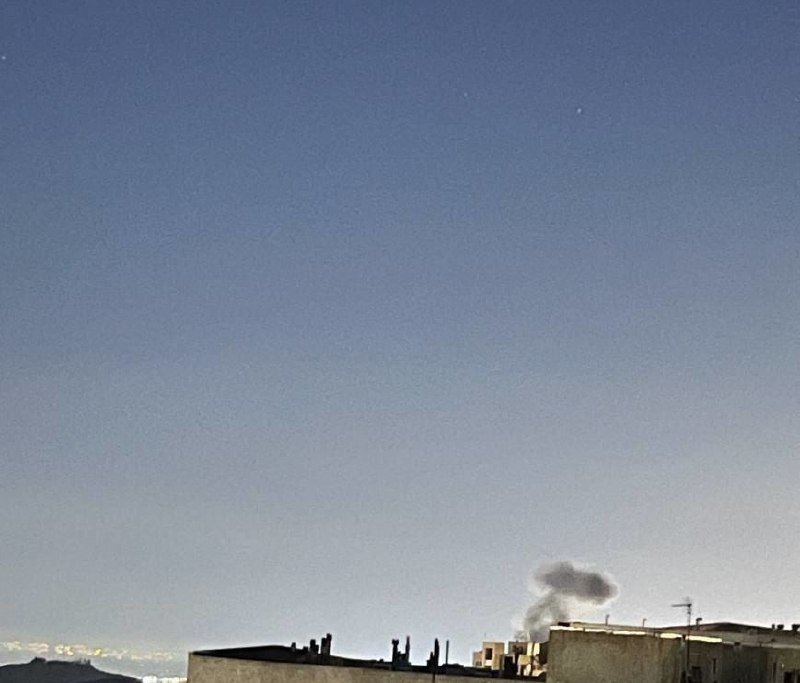
Between roughly 01:49 and 02:11 UTC on 11 June 2026, the open-source channel GeoPol Watch posted a rolling sequence of clips and stills showing what it identified as missile launches from at least three sites in northwest Iran — Tabriz, Zanjan and Urmia — followed by additional footage from West Azerbaijan Province. The early posts were short, repetitive and flagged as breaking; the later ones added visual material but no official attribution, no casualty claim, and no specific target. That is the entire verified record for now. Everything else is reading the runes.
The question worth asking is not what Iran launched. It is why a Telegram channel with a million-plus followers is the de facto public source of record for activity inside the Islamic Republic, and what the absence of confirmation from Tehran, Washington, Tel Aviv or any major wire service tells us about the information environment this kind of event now lives in. The footage is in circulation. The political meaning is not.
What the footage actually shows
The clips are consistent with mobile-phone recordings taken from residential blocks at distance, showing bright trails climbing at steep angles from ground level into a pre-dawn sky. Several frames include launch-site illumination consistent with canister or transporter-erector-launcher activity rather than air-defence intercepts. Crucially, the channels posting the material label the activity as outgoing launches from Iranian territory, not incoming interception or impact footage. None of the posts reviewed carry geolocation tags, EXIF data, or independent on-the-ground confirmation from a named outlet. The northwest Iran theatre — Zanjan, East and West Azerbaijan — has historically hosted IRGC Air Force and IRGC Ground Force missile and rocket infrastructure, which is consistent with the geography shown, but consistent-with is not the same as confirmed.
The volume of posts in a 22-minute window (five items between 01:49 and 02:11 UTC, by GeoPol Watch's own count) is itself a signal. Either something genuinely noteworthy is being filmed, or a single event is being re-cut and re-posted across the same channel to manufacture the appearance of a barrage. Open-source verification has, over the last four years, repeatedly shown that the line between those two readings is thinner than the poster would like.
What is missing, and what the silence costs
The striking feature of the file is what is not there. There is no Iranian state-media confirmation. There is no IRGC statement. There is no Israeli, US Central Command, or US State Department read-out. Reuters, the Associated Press, the BBC and Al Jazeera English have, as of the time of writing, no breaking story in their public feeds naming Tabriz, Zanjan or Urmia as launch sites for the early UTC hours of 11 June. That is unusual. Major US-Iran flashpoints in the last 36 months have produced rapid, if hedged, wire copy within minutes of the first footage surfacing; the 11 June posts have produced none of that. Two readings are plausible. The first: this is a training cycle, an IRGC-internal exercise, or a test activity that neither side wishes to escalate, and the silence is a deliberate de-escalation. The second: this is real combat activity, and the major wires are sitting on confirmation pending intelligence-corridor verification. Neither reading can be ruled out from open sources alone.
The information architecture behind the image
This is the part the foreign-policy press does not write about often enough. A geopolitical event inside a closed society is now publicly mediated by a Telegram channel whose owner is anonymous, whose verification chain is opaque, and whose audience spans Western analysts, regional intelligence watchers, retail traders on energy desks, and ordinary Iranians watching their own country from outside. The clip is the news. The institution that produced it is not. That inversion — citizen-grade footage outpacing the wire, and the wire in turn declining to lead with it — is the structural story underneath the story. When the official information environment throttles, the unofficial one fills the vacuum, and the vacuum does not come with an editorial standards department. The default in 2026 is that a single channel can set the global frame for a possible Iran-US military exchange before any government has said a word.
What this means for the next 48 hours
The honest answer is: not much, until corroboration lands. Energy markets will read the headlines and add a risk premium they may have to give back. Regional airlines will reroute over Iranian airspace pending notice. Israeli and US force-posture decisions, if any are being made, will be made on intelligence that has not been shared publicly. The risk of an inadvertent escalation — Iran's air-defence batteries reacting to a test, a US drone on a routine ISR pass being misread as precursor activity — is non-trivial when the only public frame is a Telegram channel's rolling post thread. The real test is not the launch; it is whether Tehran, Washington and the wires choose to break the silence in the next 24 to 48 hours, or whether the silence itself becomes the story. If the silence holds, this will be remembered as a footnote. If the silence breaks, the footnotes will be rewritten as the opening pages of something else.
This publication will update the sources list and lead as official confirmation, denial, or independent geolocation becomes available. For now, the verified record is the footage, the channel, and the absence of any named institutional voice.
Wire provenance
This editorial synthesis draws on the following public wire/social posts:
- https://t.me/s/GeoPWatch
- https://t.me/s/GeoPWatch/1
- https://t.me/s/GeoPWatch/2
- https://t.me/s/GeoPWatch/3
- https://t.me/s/GeoPWatch/4