Twenty-two governments are telling Iran to stop. Tehran is not listening.
A joint statement from 22 host governments has done nothing to interrupt Iran's retaliation against American strikes, exposing how thin multilateral leverage has become a month into the new war.
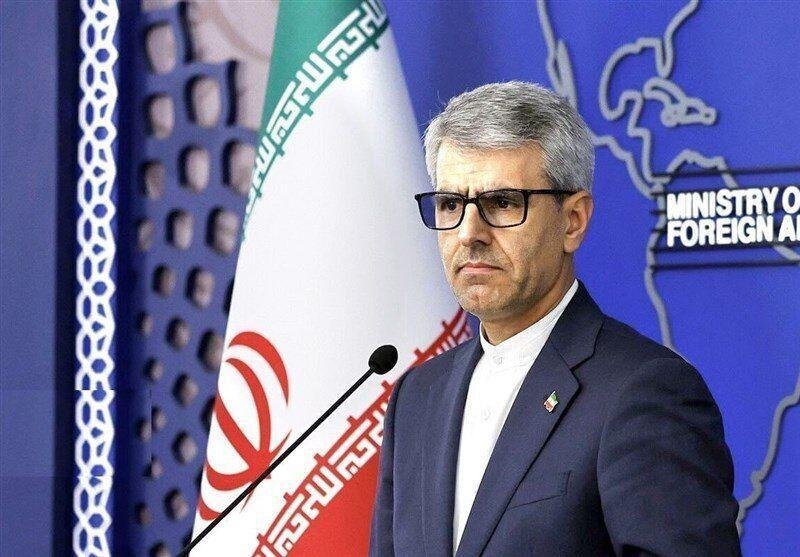
By 04:53 UTC on 11 June 2026, the arithmetic of the new Middle Eastern war had become almost obscene in its asymmetry of effort. Twenty-two governments, hosting American forces on their soil, had signed a joint statement asking Tehran to stop striking at those bases. Iran, according to Al Jazeera's breaking-news wire at 05:52 UTC, had replied by launching fresh retaliation against US positions in the region, the 104th day of what the Iranian frame still calls the imposed war. The statement was, in plain terms, a diplomatic shrug. It asked for a ceasefire that Tehran had no intention of honouring, and it asked in language that carried no announced cost for refusal.
The pattern now is familiar: a Western-led coalition states its preferences, the regional power it is fighting acts as if those preferences do not bind it, and the news cycle moves on. The interesting question is no longer whether the statement was sincere — it plainly was — but whether, in a conflict now in its fourth month, the architecture of multilateral restraint still has any operational meaning at all.
What the 22-country statement actually says
Reporting carried by Tasnim Plus via Telegram at 04:53 UTC on 11 June describes the joint declaration as a direct appeal to Iran to halt attacks on American forces stationed in the signatory states. The text, as paraphrased in the Tasnim dispatch, frames the request in the language of sovereignty and host-nation consent: governments that have agreed to host US military infrastructure are now asking that this infrastructure not be turned into a theatre of an exchange they did not authorise. The signatories were not named in the Telegram item, but the framing implies a coalition of Arab and possibly European host states whose territory is being struck at, or over, by Iranian missiles and drones.
This matters because it represents, however mildly, a fissure inside the wider Western coalition. Host governments are not endorsing US strategy in the war; they are signalling that they will not absorb the cost of someone else's escalation indefinitely. The statement is a soft constraint — a request, not a threat — but it is the first coordinated multilateral signal in the conflict that the regional price of Washington's air campaign is being openly contested by the governments actually living under it.
Iran's counter-frame: sovereignty, the IAEA, and a year of violated industry
Tehran's reply, again via Tasnim at 04:53 UTC, runs on a parallel track. The same Telegram dispatch quotes Iranian criticism of the International Atomic Energy Agency, accusing it of having stood aside, rather than condemning, what Iran describes as a year of violations against its nuclear industry. This is the load-bearing plank of Iran's regional argument: that the current escalation is not aggression initiated by Tehran but a continuation of an unfinished campaign — strikes, sabotage, sanctions, assassinations — that began well before the present round of fighting.
Whether or not one accepts that framing, it is internally coherent and widely repeated across Iranian state-aligned channels. The point, for Tehran's diplomatic corps, is to relocate the war's origin point. If the war is read as a response to US strikes inside Iran — and the 11 June Al Jazeera wire explicitly links Iran's retaliation to "American strikes inside Iran" — then Iran's actions become, in the regime's own telling, the defensive moves of a sovereign under attack. Host-government appeals to stop, on this reading, lose their moral weight: the hosts chose their alignment, and the consequences are flowing from that choice.
The structural picture: coalitions of convenience, not principle
Strip the rhetoric away and the underlying geometry is straightforward. The 22-country statement is a coalition of convenience, assembled because each signatory has a physical asset on its soil that Iran is now treating as a target. It is not a coalition built on a shared view of what the war is for, or what its end-state should be. The US, for its part, is operating from a posture that treats Iranian retaliation as confirmation of the original case for striking, rather than as a variable to be managed diplomatically. And Iran is operating from a posture that treats every regional escalation as a step toward a negotiated settlement on its own terms.
What this means in practice is that none of the three principal actors has a strong interest in the 22-country statement succeeding. The US does not want its regional partners to constrain its air campaign. Iran does not want to be told when it may and may not defend, as it claims, its own infrastructure. The host states want the strikes to stop but have not, on the available evidence, threatened to evict US forces or to deny overflight rights. The statement is, in effect, a petition — and petitions do not stop ballistic missiles.
Stakes, and what the next 48 hours will tell
If the pattern of 11 June holds, two outcomes are plausible in the short term. Either the US intensifies its campaign inside Iran — accepting that host-state discomfort is the cost of degrading Iranian launch capacity — or it seeks a de-escalation channel through a third party, plausibly Qatar, Oman, or Switzerland, none of which appears in the public reporting so far. Iran's retaliation, by design or by momentum, will continue to put pressure on host governments to lean publicly on Washington.
The unresolved piece is the IAEA. Tehran's complaint that the agency has not condemned strikes on its nuclear infrastructure is, in one reading, a precondition-setting exercise: Iran is signalling that any eventual ceasefire will require the agency to formally acknowledge damage already done. That is a much harder diplomatic ask than the 22 governments' polite request, and it is the one that will determine whether this war ends through negotiation or through exhaustion.
What remains genuinely uncertain is whether the 22-country coalition will harden into a constraint, or dissipate as a news item. The signals so far suggest the former is unlikely without a direct strike on a high-value civilian target inside a signatory state. Until that happens, the statement is a marker of displeasure, not a lever of policy.
This piece is a staff-writer read of the 11 June reporting from Al Jazeera and Tasnim Plus via Telegram. Monexus frames the dispute as a contest between stated multilateral preference and Iran's willingness to act as if that preference is irrelevant; the wire cycle has, so far, treated the 22-country statement as procedural rather than consequential.
Wire provenance
This editorial synthesis draws on the following public wire/social posts:
- https://t.me/tasnimplus
Follow the event.
These dated source records provide context. They do not retrospectively verify this archive article.
Separate what the nuclear watchdog reported from what it could not determine after the June 2025 strikes.