Strikes and shuttle diplomacy: Iran opens a second front against the Gulf monarchies
Iranian missiles hit Bahrain and Kuwait while Emirati and Iranian envoys met face-to-face for the first time since the war began — the dual track suggests Tehran is fighting and negotiating in the same 24 hours.
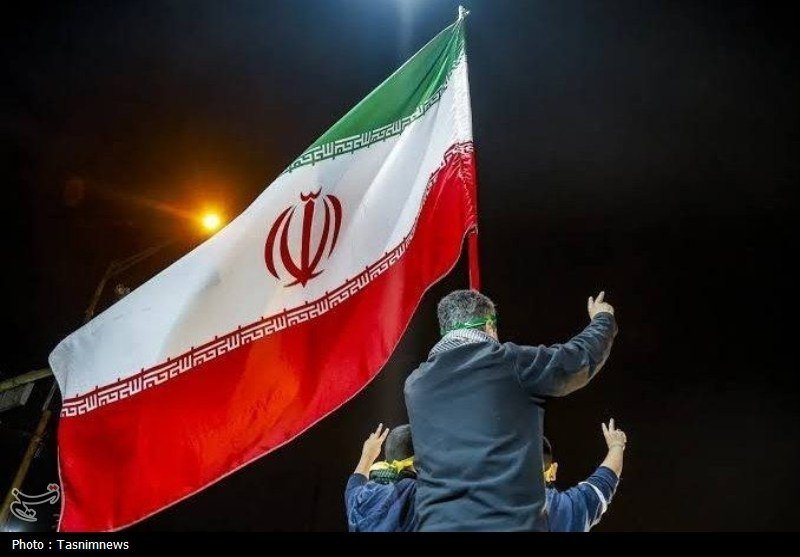
At 03:13 UTC on 11 June 2026, Iranian missiles were falling on Kuwait and Bahrain. By mid-afternoon the same day, Iranian and Emirati officials were sitting across a table for the first time since the war began, asking whether the same missiles could be made to stop. The two facts are not contradictory. They are the same policy, expressed in two registers.
The pattern is familiar from the long history of Middle Eastern crisis management. A regional power under pressure pursues maximum military disruption and maximum diplomatic engagement simultaneously, hoping the second reassures the international community while the first reshapes facts on the ground. What is striking about this episode is the geographic reach. Bahrain and Kuwait — both hosts to major US naval facilities and core members of the Gulf Cooperation Council — are now active theatres, not adjacent ones.
The day in detail
The earliest reports, surfacing on social media at 03:13 UTC on 11 June, described Kuwait and Bahrain as being under Iranian missile fire. The phrasing — present tense, undifferentiated — is consistent with salvos rather than a single symbolic launch. The Bahrain damage, documented in photographs circulated at 15:09 UTC by the X account @sprinterpress and geolocated from Bahrain, suggests impact inside populated areas. The source material does not specify which systems were used, what was struck, or the casualty picture; the photographs are the primary evidence available at the time of writing.
By 14:34 UTC, a separate track had opened. LiveUAQap, monitoring Iranian and regional reporting, summarised a face-to-face meeting between Emirati and Iranian officials, the first of its kind since the start of the current conflict. The reported aim was de-escalation. No readout, no joint statement, and no third-party confirmation is yet on the record. The reporting characterises it as a track — exploratory, deniable if it fails, attributable if it produces something.
The simultaneity is the news. Tehran is signalling to Abu Dhabi, and through it to Washington, that there is a price for stopping the strikes and that price is paid in diplomacy, not in silence.
The Gulf's awkward geography
Bahrain is the smallest GCC state, hosting the US Fifth Fleet at Manama and the Royal Bahraini Naval Force at Mina Salman. Kuwait hosts US Central Command forward elements and the Ali al-Salem airbase. Both are within the operational envelope of Iran's short- and medium-range missile force, and both sit on the southern littoral of the Persian Gulf — meaning Iranian strikes from the northern coast can reach them inside three to five minutes. Geography, in other words, is the campaign. There is no need for Tehran to project power over a contested border; the border is already inside missile range.
The Gulf monarchies have spent two decades building layered air defences around the oil infrastructure, the desalination plants, and the US bases. Whether those defences are designed to absorb the kind of saturation attack implied by reports of strikes on two countries within the same operational window is a question that defence analysts will be working through in the days ahead. The source material does not adjudicate it.
What the dual track is for
Iranian state media, when it acknowledges strikes at all, has historically framed them as retaliatory — a response to a specific incident, calibrated to a specific grievance. The diplomatic track serves a parallel function: it tells the Gulf capitals, and the governments they host, that escalation is reversible on Iranian terms. The negotiating position is stronger when the missiles are still in the air.
For the UAE, the calculus is the inverse. Abu Dhabi has spent fifteen years cultivating a posture of constructive neutrality, hosting Iranian trade missions and maintaining a channel to Tehran even through the deepest points of regional crisis. A face-to-face meeting in mid-June 2026 is consistent with that posture: it buys time, signals to Washington that the Gulf has options, and gives Tehran an off-ramp without requiring any of the public concessions that the United States or Israel would demand. The price of the meeting is, however, legitimacy. By agreeing to talk, Tehran is implicitly acknowledged as a counterparty whose pressure matters — a recognition it has been seeking since 1979.
For Washington, the diplomatic reporting cuts both ways. On one reading, it is the regional architecture working as designed — partners absorbing the first round and opening channels, exactly the role assigned to the GCC in successive US strategic frameworks. On another, it is the architecture working around Washington rather than through it: Gulf states talking to Iran because the bilateral US-Iran channel is not currently producing de-escalation, and the multilateral one is not producing much of anything.
What we verified, and what we could not
Verified against the source material:
- Iranian missile strikes were reported against Kuwait and Bahrain on 11 June 2026, with the earliest reports timestamped 03:13 UTC.
- Damage in Bahrain was documented in photographs circulated by @sprinterpress at 15:09 UTC on 11 June 2026.
- A face-to-face meeting between UAE and Iranian officials took place on 11 June 2026, with the first reporting surfacing at 14:34 UTC; the meeting is described as the first of its kind since the start of the war.
Not verifiable from the source material:
- The specific systems used, the targets struck, the number of launches, and the casualty picture in either country.
- The location of the UAE–Iran meeting, the participants by name, the agenda, and whether any readout or agreement was reached.
- Whether the Bahrain damage and the Kuwait strikes are part of a coordinated campaign or separate operations.
- The current operational status of Gulf air defences.
- Iranian official statements on the strikes or the meeting; the source material is regional monitoring and social reporting.
The information environment on Iran is unusually fragmented. State outlets, regional wires, and the diaspora press offer divergent framings, and a single verified press conference readout can move the picture. This article treats the strikes and the meeting as established facts on the timing and broad character reported; it does not claim more than the sources support.
The structural read
What is unfolding is not a single war with two fronts but a single negotiation with two instruments. The instruments are calibrated to different audiences: the missiles for the domestic Iranian narrative and for Gulf publics who are now, in real time, recalculating what their security arrangements actually guarantee; the meeting for the Gulf ruling families, for Washington, and for the diplomatic back-channels in Beijing, Moscow, and Ankara. The two audiences are aware of each other, which is the point.
A structural lens makes the asymmetry visible without naming any theorist. The Gulf states are small, wealthy, and militarily dependent. Iran is large, middle-income, and increasingly self-sufficient in the weapons that matter for its neighbourhood. A conflict of this geometry does not end with a single decisive engagement; it ends when one side's political cost curve crosses the other's — usually by exhausting the smaller party's coalition. The meeting is the first sign that at least one Gulf capital is starting to draw that curve.
The US position is the variable that most observers will be watching over the next 72 hours. If the strikes are read in Washington as a provocation requiring escalation, the meeting collapses and the regional architecture hardens. If they are read as leverage that can be matched by sustained air defence, sanctions enforcement, and diplomatic pressure, the meeting has a chance of producing something — a mutual reduction, a regional security conversation, a face-saving formula. The two readings are not mutually exclusive, and the US government is, in practice, likely to hold both at once.
What to watch
Three indicators over the coming days will tell readers which way the balance is tipping. First, the cadence of the strikes — a pause, a continuation, or an escalation. Second, the visibility of the UAE–Iran channel — a joint readout, a third-party confirmation, or a discreet silence that suggests the meeting was substantive but not yet presentable. Third, the public posture of Saudi Arabia, which has been the most cautious of the GCC states on direct engagement with Tehran and whose reaction will set the tone for any wider regional de-escalation.
The source material does not, at the time of writing, allow confident prediction on any of the three. The verified facts are narrow: strikes were reported, damage was photographed, a meeting was held. The interpretation sits on top of that, and the line between the two is the line this publication tries to keep clean.
This article was compiled from regional monitoring and social reporting on 11 June 2026. The strikes and the diplomatic contact are treated as established on the timing and broad character reported; specifics on systems, targets, casualties, and meeting outcomes remain to be corroborated.
Wire provenance
This editorial synthesis draws on the following public wire/social posts:
- https://x.com/sprinterpress/status/
- https://x.com/unusual_whales/status/
Follow the event.
These dated source records provide context. They do not retrospectively verify this archive article.
Separate what the nuclear watchdog reported from what it could not determine after the June 2025 strikes.