Iranian Missiles and Drones Strike US Bases in Kuwait and Bahrain in Widening Gulf Escalation
Air raid sirens sounded in Kuwait City and across Bahrain early on 11 June 2026 as Iranian missiles and Shahed-136 drones targeted US military installations, the most direct Iranian strike on Gulf hosts of American power since the broader regional flare-up began.
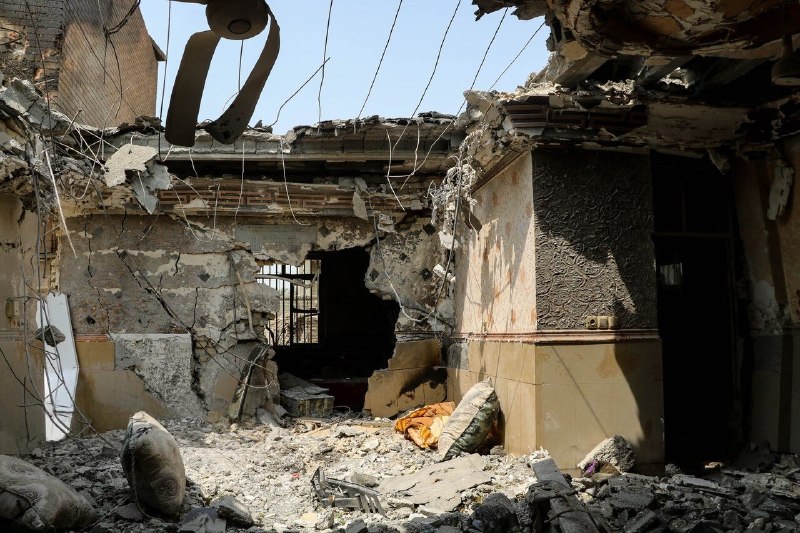
Air raid sirens rang out across Kuwait City and parts of Bahrain in the small hours of 11 June 2026 as Iranian missiles and loitering drones hit US military installations in both Gulf monarchies, the first simultaneous Iranian strike on two American host states since the latest regional escalation began. Press TV, the Iranian state broadcaster, said heavy explosions were audible at the US Navy's Fifth Fleet base in Bahrain, and that Kuwait had come under a combined missile-and-drone barrage. The Iranian account, carried on the channel's official Telegram channel from around 02:30 UTC, was echoed by the English-language Middle East Spectator feed and by a post from the Unusual Whales account on X three quarters of an hour later.
The strikes matter less for their immediate tactical effect than for the political geography they redraw. By hitting targets in Kuwait and Bahrain — both members of the Gulf Cooperation Council and both long-standing hosts of US Central Command assets — Tehran is forcing a choice on two Arab monarchies that have spent two decades trying to keep their distance from the US–Iran confrontation. The episode also lands in a media environment where the Iranian state can broadcast, in real time and in English, its own version of the war: the Telegram channel of Press TV posted footage of Shahed-136 drones in Kuwaiti airspace at 03:33 UTC, framing the strikes as a direct response to "enemy targets." That framing is contested by Western wire reporting, but the existence of the Iranian frame, broadcast unfiltered to a global audience, is itself a structural fact of this conflict.
What was actually struck
According to the Iranian state account, the package comprised ballistic missiles and Shahed-136 one-way attack drones aimed at US bases inside Kuwait and Bahrain. Press TV's English-language Telegram channel described "air raid sirens and heavy explosions" in both countries, and named the US Fifth Fleet base in Bahrain — the headquarters of Naval Forces Central Command and the operational hub for the US Navy's presence in the Persian Gulf — as a target. The channel also reported sirens and blasts in Kuwait, without initially identifying a specific installation.
The Middle East Spectator channel amplified the claim with aerial footage it said showed Shahed-136 drones in Kuwaiti airspace. Unusual Whales, an X account that tracks military and market-moving events, posted at 03:13 UTC that "Kuwait and Bahrain are under Iranian missile" attack, a phrasing that suggested the author was reading off the Iranian state feed in real time rather than confirming impact independently. No casualty figures from the Kuwaiti, Bahraini, or US sides were contained in the source items reviewed; the Iranian channels emphasised launches and overflight, not battle damage assessment.
The Shahed-136 is a delta-winged loitering munition originally developed for asymmetric strikes against fixed infrastructure. Cheap, slow, and loud, it is the drone of choice for Iranian-backed forces and for the Russian military in Ukraine. The presence of Shahed-136 footage over Kuwait indicates a deliberate signalling choice: the drones are not the most precise weapon in the Iranian inventory, but they are the most photographed.
The Iranian narrative — and what is missing from it
Press TV presented the strikes as retaliation for "enemy targets," a phrase consistent with the broader Iranian framing of the regional confrontation as defensive. The state broadcaster's choice to publish launch and overflight footage, rather than after-action imagery, suggests Tehran wants the strikes read as a statement of reach: a demonstration that Iranian missiles and drones can transit the airspace of two US-protected Gulf monarchies and reach American assets on the ground.
The framing has obvious self-interest. Iran has both the motive and the means to script its own battlefield narrative, and Press TV is an arm of the Iranian state, not an independent newsroom. The Middle East Spectator post, while more neutral in tone, was also amplifying Iranian-sourced material. What is conspicuously absent from the source set is independent confirmation from the US Department of Defense, from the Kuwaiti or Bahraini governments, or from Western wire services operating in the Gulf. Reuters, Associated Press, and AFP — the outlets that would normally be cited in a confirmed strike package — do not appear in the thread context. The silence of those wires is itself a piece of evidence: either the strikes are still developing and unconfirmed by Western correspondents in the region, or the scope is narrower than the Iranian framing suggests.
The honest reading is that, as of 11 June 2026 in the early UTC morning, Iran has claimed a broad two-country strike and provided launch and overflight footage, but the source set does not contain independent verification of impact, of casualties, or of the specific bases hit. A reader relying solely on the Iranian state feed could come away convinced of a strategic turning point; a reader waiting for Pentagon or GCC confirmation should hold the conclusion in suspension.
The Gulf hosting question
Kuwait and Bahrain are not bystanders in the US–Iran confrontation. They host American forward-deployed forces that the United States and Iran have spent years arguing over, and they have spent years trying to stay on the right side of both Washington and Tehran. Bahrain hosts the Fifth Fleet and the headquarters of US Naval Forces Central Command, the operational nerve centre for the US Navy in the Gulf. Kuwait hosts a smaller but persistent US land presence, including facilities used during operations in Iraq and Syria.
For both monarchies, the strike forces a question that has been deferred for two decades: how much political room is there between hosting American bases and being drawn into a shooting war with Iran? The official answer, in public, has been "considerable." In private Gulf diplomatic circles, the answer is shorter. Press TV's choice to broadcast footage of drones over Kuwait City, in particular, makes the political cost of the hosting arrangement visible to a domestic Kuwaiti audience that the Kuwaiti government does not directly address in the source material reviewed. That visibility is the point of the Iranian framing.
There is a counter-narrative worth taking seriously: the Iranian channel has an interest in making the strikes look bigger and more strategic than they are, and the absence of independent impact verification suggests the operational picture may be less dramatic than the launch footage implies. But even on the most sceptical reading, Iranian drones transited Kuwaiti and Bahraini airspace, and the Iranian state chose to publicise that fact in English. The political damage to the host-state arrangement is real regardless of the damage to the bases themselves.
What this looks like in plain terms
The structural pattern is straightforward, even if the tactical picture is not. Iran is a regional power that has watched the United States, Israel, and the Gulf monarchies close ranks against it for two decades, and that has built up a missile and drone inventory specifically to impose costs on that coalition without having to match it fighter-for-fighter. The Shahed-136 over Kuwait is the public face of that investment: cheap, deniable in the sense that overflight footage is not impact footage, and politically pointed at the host governments as much as at the American tenants on their soil.
The Western wire line on Iran — the framing that dominates US, British, and Israeli coverage — treats the Iranian state as the principal escalator in the region and treats Iranian strikes as the event to be condemned. The Iranian counter-frame, broadcast here in real time, treats Iranian strikes as responses to "enemy targets" and presents the country's leadership as the defender of a regional order under external pressure. The source set reviewed for this article does not adjudicate between those framings. It does, however, document that both framings are now operating simultaneously, in English, to global audiences — a structural change from the period when the Western wire line was the only one that travelled.
The forward view is narrow. If the strikes caused US and GCC casualties, expect a coordinated American and Gulf response within hours. If the strikes landed on infrastructure but caused no casualties, expect a political response — sanctions, diplomatic demarches, public condemnations — and a quieter military one. In either case, the political bill is presented to Kuwait and Bahrain, not to Washington. That is the part of the package the Iranian state wanted the world to see, and that is the part the Telegram footage is built to deliver.
A desk note on sourcing: this piece draws on three Telegram channels — Press TV, Middle East Spectator, and a thread surfacing Unusual Whales — and on the X account Unusual Whales, all of which are amplifying Iranian state-sourced material. Independent Western wire confirmation of impact, casualties, and specific base names was not present in the source set at the time of writing. The article reports the Iranian framing in plain editorial voice without endorsing it, and flags the absence of independent corroboration in the body.
Wire provenance
This editorial synthesis draws on the following public wire/social posts:
- https://t.me/presstv
- https://t.me/presstv
- https://t.me/Middle_East_Spectator