Iran's Three-Country Retaliation and the Frame That Refuses to Settle
Iranian strikes on US-host bases in three Arab states have produced a fast, fragmented information environment — and a reminder that the first draft of any regional escalation is usually the most self-serving.
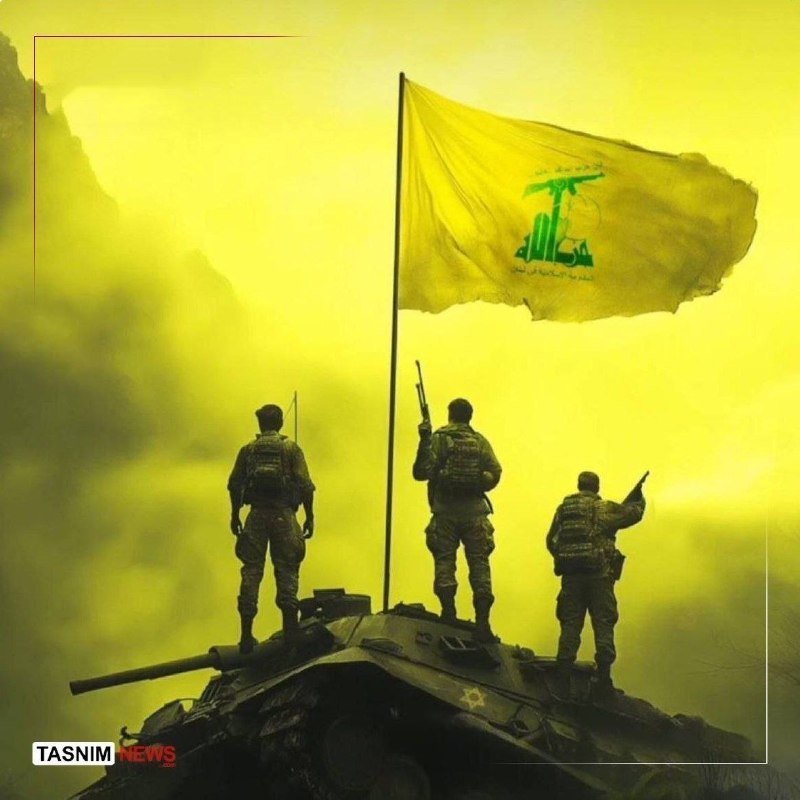
At roughly 05:30 UTC on 11 June 2026, channels aligned with the Axis of Resistance began carrying a single coordinated claim: that Iran had struck military bases hosting US forces in three Arab states — Bahrain, Kuwait and Jordan — using ballistic missiles and one-way attack drones, in retaliation for an earlier American attack. The story, as circulated by the English-language abualiexpress feed and the parallel englishabuali account, presented itself as a fait accompli, a clean response to a clean provocation. The reality, as ever in the first six hours of a regional escalation, is messier than the communiqué.
What is genuinely newsworthy is not the strike package itself. Iran's willingness to widen the geography of retaliation — turning US posture across the Gulf and into Jordan into a single target set — has been a documented contingency in regional crisis planning for years. The news is the information environment around it: three different claims, all apparently sourced to the same underlying event, being amplified across aligned channels before any Western wire, any Gulf ministry, or any Pentagon readout has had time to settle on a corroborated picture. The frame is being built in real time, and the frame will matter more than the facts, because the frame is what policymakers, oil traders and ordinary readers in three Arab capitals will wake up to.
The shape of the claim
The earliest version of the story, timestamped 05:30 UTC on the abualiexpress channel, describes a combined-arms strike: ballistic missiles and unmanned aerial vehicles (UAVs) directed at US-host bases in Bahrain, Kuwait and Jordan. A follow-up post at 05:46 UTC from the englishabuali account repeats the geography, specifies the weapons class, and explicitly frames the action as retaliation for a prior US strike. By 05:48 UTC, the same englishabuali channel has reformulated the package into a cleaner sentence — three countries, ballistic missiles, no mention of UAVs — in the kind of edit-by-repetition that is characteristic of message discipline in Iranian-aligned media operations.
For a reader relying on those channels alone, the impression is of a single, decisive, symmetrical exchange: a US attack, an Iranian answer, three Arab host states absorbing the consequence of Washington's forward posture. The framing positions the Arab monarchies not as Iranian targets but as geographic terrain — passive space through which an Iran-US contest happens to run. That is, conveniently, exactly the framing Tehran would prefer.
The other half of the record
The same six-hour window contains almost nothing from the three host governments, nothing from US Central Command, and no casualty figures from any side. The Bahraini, Kuwaiti and Jordanian ministries of defence have not, as of the timestamps available to this publication, confirmed hits on their territory. Nor have Iranian state outlets — IRNA, Press TV, Tasnim — been cited in the thread as the original carriers of the claim; the early amplification appears to have been routed through the abualiexpress network and its English-language sibling, which is worth saying plainly because the choice of channel is itself a framing decision.
This is the part that requires honesty: the sources available to Monexus in this window are the claiming channels. They are not independent corroboration. The pattern — Iranian-aligned outlets breaking a major operational claim ahead of any adversary, host-state or wire confirmation — is not new. It is, in fact, the standard operating procedure of the information layer of an Iranian retaliation cycle: shape the first draft, force the rest of the press to respond to a frame rather than a fact-set.
Why the geography matters
Striking three host states at once is a different kind of decision than striking, say, a single US position in the Gulf. It drags three Arab governments — each with its own domestic politics, each with complicated relationships with Tehran, each hosting US forces under bilateral defence agreements that pre-date the current crisis — into the open as a single target category. It also pre-positions the next round of diplomacy: if Bahraini, Kuwaiti and Jordanian territory has now been hit in the name of responding to a US strike, the question of who owes whom, and for what, has to be renegotiated publicly.
The structural lesson is not subtle. The US forward posture in the Gulf and the Levant has long rested on a quiet bargain: host governments tolerate US bases, the US provides a security guarantee, the arrangement is described by everyone as stable. A strike package that treats three host territories as fungible target space punctures that bargain in a single night. The host states now have an interest in the story being told as either an Iranian miscalculation (which makes Tehran reckless) or a US entrapment (which makes Washington reckless), depending on which framing serves their domestic audience. Both framings are available. Both will be tried.
What remains unresolved
What the available sources do not say is at least as important as what they do. They do not give a casualty count. They do not name a specific base, installation, or unit in any of the three countries. They do not provide video, imagery, or wreckage identification. They do not say what the "American attack" of which this is supposedly the response was, when it happened, or what it struck. The thread context this publication is working from is, in other words, a claim of retaliation wrapped around a claim of an original strike — two assertions, both unverified by primary documentation, both moving at high speed through aligned channels.
That is not a reason to dismiss the reporting. Iranian retaliations of this kind have a habit of turning out to be substantively real even when the first hours are dominated by one side's narrative. It is a reason, however, to refuse the frame that the claiming channels are offering: the clean symmetry, the passive Arab terrain, the leaderless retaliation against a leaderless provocation. The next twenty-four hours of reporting — Pentagon readouts, Gulf-state statements, satellite imagery, oil-market reaction, and any second-source confirmation of impact locations — will determine whether the frame survives its first contact with the record. The reasonable bet is that the first draft does not.
Wire provenance
This editorial synthesis draws on the following public wire/social posts:
- https://t.me/abualiexpress
- https://t.me/englishabuali
- https://t.me/englishabuali
Follow the event.
These dated source records provide context. They do not retrospectively verify this archive article.
Separate what the nuclear watchdog reported from what it could not determine after the June 2025 strikes.