Tehran and Washington Collide Over the Meaning of 'Ceasefire' as Trump Demands Iran's Oil
On 11 June 2026, Washington and Tehran gave opposite readings of the same ceasefire, while the US president announced plans to take 'total control' of Iranian oil exports via Kharg Island — a claim Iran framed as a threat of endless quagmire.
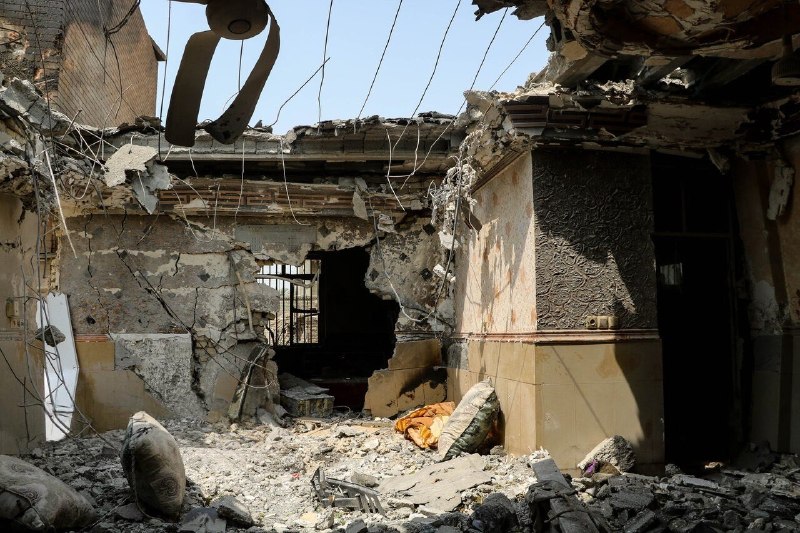
At 16:23 UTC on 11 June 2026, Iran's military-aligned IR Iran Military channel posted a one-line taunt aimed at any foreign aircraft approaching Iranian airspace: "Iran's skies are not a safe place for intrusive birds." The message landed less than an hour after an Iranian negotiator had warned, via the Insider Paper wire, that any "impulsive" US decision would drag the region into an "endless quagmire," and within minutes of an X post, carried by the @unusual_whales account, reporting that Iran had already declared the US-brokered ceasefire "meaningless." By 12:34 UTC the same day, US President Donald Trump had announced that the United States would take "total control" of Iran's oil and gas markets, including the Kharg Island export terminal in the Persian Gulf. Four signals, four hours, two irreconcilable readings of the same agreement.
What this publication is watching, on the evidence available at 16:36 UTC on 11 June 2026, is not a single event but a communications collapse. The underlying facts — that a ceasefire was announced, that both sides now claim it is broken or meaningless, and that the US president has publicly claimed authority over the largest single piece of Iran's hydrocarbon export infrastructure — are each sourced. The interpretation, however, is contested in real time, with Iranian state-adjacent channels, US-aligned market commentary, and aggregator accounts offering sharply divergent frames within minutes of one another. The structure underneath the noise is older: a sanctions architecture, a counter-architecture of discounted crude flows, and a strategic chokepoint at Hormuz that any party to the dispute can hold hostage to a single sentence.
The four signals
The first signal is the Iranian negotiator's warning, surfaced by Insider Paper at roughly 16:36 UTC on 11 June 2026. The phrasing — "endless quagmire" and "impulsive" decisions — is the diplomatic register Tehran has consistently used when it wants to signal that escalation remains on the table without formally withdrawing from a process. The warning is aimed at Washington, but it is also aimed at domestic audiences: it tells Iran's negotiating team that the cost of any new concession will be framed, in advance, as having been extracted under duress. The Insider Paper relay is short and does not name the negotiator, which is itself a clue: Iranian negotiating teams typically disclose senior members' identities only when they are speaking on the record to state-aligned outlets such as IRNA, Tasnim or Press TV.
The second signal is the IR Iran Military channel post at 16:23 UTC: "Iran's skies are not a safe place for intrusive birds." The channel is state-adjacent rather than official; its posts are best read as political signalling from within Iran's security establishment, not as authoritative military orders. The post is short, figurative, and does not name a specific aircraft, country, or incident. Taken alongside the negotiator's warning, however, the message hardens the line: the political track and the military track are both being marked.
The third signal is the @unusual_whales X post reporting that Iran has called the US ceasefire "meaningless." The account is a markets-and-flows aggregator, not a primary source on Iranian policy. The post does not link to an Iranian state-media statement, an MFA briefing, or a named official. For the purposes of this article, the claim is treated as reported but unverified: it is consistent with the negotiating team's posture, but the source item does not establish which institution or person used the word "meaningless" in which forum.
The fourth signal is the US presidential announcement, surfaced by @polymarket at 12:34 UTC on 11 June 2026, that the United States will take "total control" of Iran's oil and gas markets, including Kharg Island. The phrasing is unambiguous and politically maximalist. The post does not identify the legal mechanism — sanctions enforcement, secondary sanctions on buyers, naval interdiction, or a formal custodianship arrangement — by which "total control" would be exercised. Without that mechanism, the statement sits between announcement and threat, and Iranian state-aligned commentary is treating it as the latter.
The counter-readings
Reading the four signals together produces two internally coherent stories. The first, the one a US-aligned audience is most likely to encounter on the day, is that Tehran is reneging on a working arrangement and that the US is responding with an energy-market measure designed to collapse the regime's primary revenue stream. Under this reading, the Iranian negotiator's warning is an opening bid in a new round of escalation, the military-channel post is calibrated intimidation, and the "meaningless" characterisation is the rhetorical bridge from negotiating posture to outright rejection. The US announcement is the leverage that follows.
The second reading, the one Iranian state-adjacent channels are pushing, is that the US has moved the goalposts in a way that makes the original ceasefire unworkable. Under this framing, a "total control" claim over another sovereign state's hydrocarbon exports is itself a breach of the de-escalation logic the ceasefire was supposed to embody, and Iran's "meaningless" verdict is a defensive label, not a provocation. The negotiator's "impulsive" language is directed at precisely this gap between announced posture and operational reality.
The two readings cannot be reconciled from the open-source items available on the day. The wire relay from Insider Paper establishes that an Iranian negotiator used the "quagmire" language; the @unusual_whales post attributes a "meaningless" verdict to Iran; the US presidential announcement is captured verbatim by the @polymarket post. The chain of authority behind each, the exact text of the Iranian statement, and the institutional source of the "meaningless" wording are not in the available record at the time of writing. The Iranian government's own MFA briefings, and any Iranian state-media readout of the day, would be the next places to look; they are not part of the source set this article is built on.
The structural frame
The dispute is not only about the meaning of one word. It is about the meaning of "control" over a chokepoint. Kharg Island handles the great majority of Iran's seaborne crude exports; the Strait of Hormuz, at its narrowest point, carries roughly a fifth of the world's seaborne oil. The two assets are not the same, and the distinction matters. A US claim of "total control" over Iran's oil and gas markets is enforceable, in practice, by denying buyers access to dollar settlement, to insurance, and to the shipping and refining infrastructure that handles Iranian crude. That is the architecture the United States has built up over more than a decade of sanctions enforcement. A US claim of "total control" over Kharg Island is a different and larger proposition: it implies either naval interdiction, a kinetic operation, or a custodial arrangement with a non-Iranian operator — none of which has a public US legal or operational framework as of 11 June 2026.
The Iranian counter-frame is structural as well as rhetorical. The "intrusive birds" language is a reminder that the Strait's geography cuts both ways: any force that moves to physically control Kharg must transit waters Iran has repeatedly threatened to close. The negotiator's "endless quagmire" warning is the same point translated for diplomatic audiences. The Iranian position, in other words, is that escalation is not a cost-free option for Washington — that the chokepoint on which Iran's exports depend is also the chokepoint on which Gulf energy flows to Asian buyers, and that any US move to seize or freeze Iranian crude in place produces a market shock that the United States does not get to ring-fence.
This is the pattern underneath the day's headlines: a sanctions regime designed to operate through financial plumbing, being asked to do the work of a military occupation. The instruments are not the same. The first works because dollar settlement, European insurance markets, and Asian refining capacity have been organised, over time, to refuse Iranian crude. The second requires either boots on Kharg or a continuous naval presence in the Strait, neither of which has been publicly authorised or scoped.
What the four-hour gap hides
A useful piece of reporting on 11 June 2026 would tell the reader what the Iranian MFA actually said, in what forum, at what local time, and in response to which specific US action. The source set available to this article does not include that readout. It does not include a Reuters, AP, BBC, Guardian, Al Jazeera, Bloomberg, FT or Axios wire story on the announcement; it does not include an Iranian MFA briefing, a Tasnim dispatch, or an IRNA English-language report. The two US-facing signals (the @polymarket post carrying the Trump statement; the @unusual_whales post carrying the "meaningless" characterisation) are aggregator accounts whose original sources are not disclosed in the items. The two Iranian-facing signals (the Insider Paper relay of the negotiator's warning; the IR Iran Military post) are state-adjacent and partial.
That matters because the gap between a political announcement and an operational order is where most Iran-related escalations either resolve or detonate. The reader should treat the day's wire traffic as a set of moves, not as a final position. The Iranian negotiator's warning leaves room for a working arrangement; the "intrusive birds" post leaves room for de-escalation if the rhetorical temperature drops; the "meaningless" characterisation, if it is accurately attributed, is harder to walk back than a negotiating-team warning. The US "total control" announcement is the largest single variable, because it is the only one of the four that the White House itself has chosen to put on the record in those terms.
Stakes
The oil-market stakes are immediate. A credible US move to block Iranian crude exports at the wellhead, the buyer, the shipper, or the terminal would remove roughly 1.5 million to 2 million barrels per day of Iranian supply from the legal market and push it into the discounted, dark-market channel that already exists. The marginal buyer of that crude is overwhelmingly Chinese, with Indian and Turkish refiners handling smaller flows; the discount has been the regime's primary fiscal cushion under sanctions. Closing Kharg or freezing the flows around it would, in the short term, raise the price of the marginal barrel and tighten physical supply to Asia. Over a longer horizon, it would deepen Iran's dependence on the parallel channel, on Chinese refiners willing to take the cargo, and on political cover from Beijing and Moscow.
The security stakes are larger. Any kinetic move on Kharg, or any visible attempt to physically interdict Iranian crude, is an act that Iran's military doctrine treats as a casus belli. The IR Iran Military "intrusive birds" language is signalling that the doctrine still holds. The "endless quagmire" warning is signalling that Iran's negotiating team has been instructed to make the cost visible to the US public. The two messages are not in tension; they are the political and military halves of the same deterrent posture. A US administration that has chosen to use the language of "total control" has, by that choice, told Tehran that the sanctions track is no longer the only track, and the next move belongs to the side with the shorter decision cycle.
The third stake, the one the headlines are not naming, is the credibility of the ceasefire as a category. If the word "ceasefire" can be declared "meaningless" by one side on the day a US president announces energy-market measures against the other, then the term has lost operational meaning. Future diplomatic interventions — over the Strait, over Iran's nuclear file, over the sanctions architecture — will be priced by markets and by Iran's regional partners (Iraq, Syria, Lebanon via Hezbollah, the Houthis in Yemen) on the assumption that US-Iranian truces are advisory rather than binding. That is a long-term cost, and it is paid by the credibility of US diplomacy as a category, not by any single agreement.
What remains uncertain
The single largest gap in the public record on 11 June 2026 is the institutional source of the "meaningless" wording. @unusual_whales attributes it to Iran without specifying which body, which official, or which statement. Without that anchor, the rest of the day's analysis rests on a moving platform. The second gap is the legal and operational meaning of "total control." The @polymarket post carries the phrase but not the mechanism. The third gap is the US-side reaction to the Iranian "quagmire" warning: the four-hour window in the source set shows US messaging in the form of the presidential announcement, but no US pushback against the negotiator's framing. A complete picture, in other words, requires the wire readouts that the source set does not yet include.
Desk note: Monexus treats the four signals above as a single news event whose parts need to be reported together. The wire relay from Insider Paper is a primary source on the Iranian negotiator's wording; the @polymarket post is the primary source on the US presidential announcement; the IR Iran Military post and the @unusual_whales X post are used as context with explicit caveats about their institutional weight. Where the available record is silent on a specific fact — the legal mechanism behind "total control," the Iranian institutional source of the "meaningless" characterisation, the US response to the "quagmire" warning — this article has named that silence rather than filled it.
Wire provenance
This editorial synthesis draws on the following public wire/social posts:
- https://t.me/insiderpaper
- https://t.me/IRIran_Military