A 33% Probability and a 'Meaningless' Ceasefire: The Iran–US Chessboard Tilts Toward the Sirik Coast
Unconfirmed blasts near the Strait of Hormuz, a Polymarket deal-odds collapse, and an Iranian statement that the ceasefire is 'meaningless' — the diplomacy of restraint is being tested in real time.
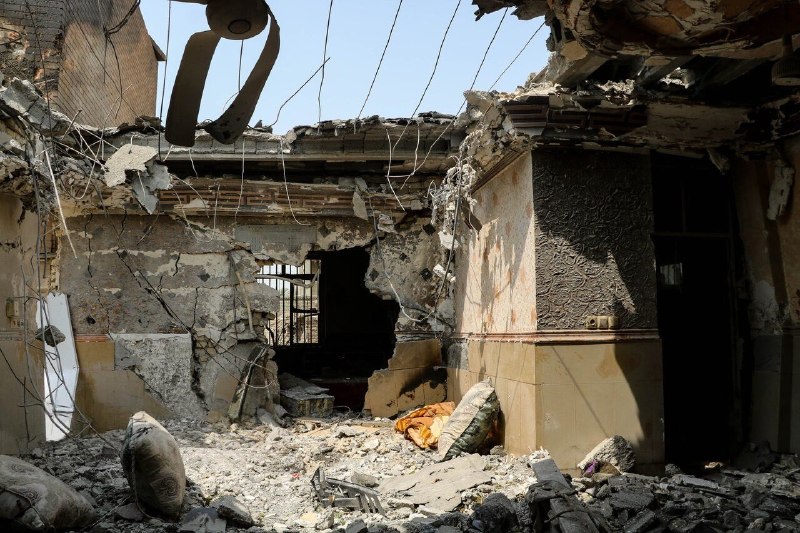
On the evening of 11 June 2026, as the Polymarket contract on a US–Iran nuclear deal by 30 June sat at 33% and the chief Iranian negotiator publicly declared that the existing American ceasefire was "meaningless," unconfirmed reports of an explosion near Sirik on Iran's southern coast filtered across the open-source channels that monitor the Strait of Hormuz. The three signals arrived within roughly five hours of each other — a market repricing, a diplomatic dismissal, and a kinetic event that, if confirmed, would land on one of the most strategically loaded shorelines on earth. Read together, they sketch a situation in which the public posture of restraint is no longer matched by the public posture of the principals.
The arithmetic of the past 48 hours is not subtle. Iran's top joint military command warned on 11 June that the United States "will receive a severe response if it attacks again," the Reuters wire reported at 20:25 UTC. By 16:17 UTC the same day, Tehran's framing of the ceasefire itself had shifted from conditional respect to declared irrelevance, per the X account @unusual_whales. Six hours later, GeoPWatch, a Telegram channel that tracks incidents across the Persian Gulf, posted an unconfirmed report of an explosion near Sirik — a small port city in Hormozgan Province sitting on the north shore of the strait, directly opposite the Omani exclave of Musandam and within easy reach of the shipping lanes through which roughly a fifth of the world's traded petroleum passes each day. None of the three signals, taken alone, constitutes proof of a new phase. The combination of all three on the same day is what sharpens the question.
The market and the message
Prediction markets have a habit of compressing weeks of diplomatic cable traffic into a single probability. The Polymarket contract on a US–Iran nuclear deal by 30 June priced the odds at 33% on 11 June — a level that implies a Washington–Tehran agreement is, in the market's view, more likely to be missed than met, but far from off the table. The contract is the only public, continuously updated gauge of the deal's survival, and its reading on this day sits at a midpoint that neither the optimists in the Gulf diplomacy circuit nor the hardliners in the Iranian security press can claim as validation for their respective positions. The midpoint is, in effect, the position that the situation is unresolved — and that both sides have staked public statements that have made the next 19 days unusually fragile.
The Iranian statement on the ceasefire is the more direct signal. When a state apparatus describes a ceasefire as "meaningless," it is not merely commenting on the military status quo; it is converting a tactical arrangement into a public record of grievance. Ceasefires are valuable precisely because they are ambiguous enough that both sides can claim compliance. Once one side publicly strips the ambiguity away, the other side's calculus on restraint changes. Reuters' attribution to "Iran's top joint military command" — phrasing that on a Reuters wire carries the institutional weight of the General Staff-equivalent body that would direct any retaliation — elevates the statement above commentary and into the category of threat. The Polymarket contract, the Reuters-attributed warning, and the ceasefire verdict are not three independent stories. They are three frames of the same picture, captured at 16:17, 20:25 and 21:00 UTC.
Sirik, Hormozgan, and the strategic geography of a kilometre
Sirik is not a household name. It does not need to be. The town sits roughly 130 kilometres west of Bandar Abbas, the capital of Hormozgan Province and the headquarters of the Iranian Navy's Southern Fleet, and approximately 60 kilometres east of the Strait of Hormuz at its narrowest point. An incident at Sirik, even an unconfirmed one, registers in three separate strategic logbooks. The first is the Iranian naval logbook: any blast on the southern coast during a period of declared tension will be parsed for evidence of an Israeli or American strike against facilities that the West has long suspected of housing missile, drone or fast-attack-craft infrastructure. The second is the oil-market logbook: Hormozgan's coastline is a short boat ride from the shipping lanes that carry crude from the Gulf exporters to Asian refineries, and any whiff of action in the area moves Brent and Dubai benchmarks within minutes. The third is the Israeli security logbook, which has its own active campaign against Iranian nuclear and missile infrastructure and which has, in past reporting, been willing to act on the assumption that distance from Tel Aviv is not a meaningful deterrent.
The Telegram source for the explosion report is GeoPWatch — an open-source channel that aggregates geolocated imagery, flight-tracking data and witness accounts but does not, on its own, constitute confirmation. Monexus treats the Sirik report as what it currently is: an unverified signal that has entered the information environment and will, over the next 24 to 48 hours, either be corroborated by satellite imagery, by Iranian state media confirmation, or by the absence of any visible crater or damage in subsequent commercial satellite passes. The reporting standard here is straight: a single Telegram post, however well-sourced its upstream feeds, is the opening of an investigation, not its conclusion.
The structural frame, in plain language
What is happening between Washington and Tehran in June 2026 is the familiar, exhausting oscillation of two governments that have spent a decade and a half failing to convert tactical restraint into strategic settlement. The deal question has cycled through a draft framework, a sabotage campaign, an exchange of strikes, and now, per the Reuters wire, a public Iranian threat of a "severe response" to any further attack. The ceasefire language has decayed from a working description of the military status quo to a description Tehran now rejects outright. The prediction market, which has no ideological obligation to either side, is pricing the probability of resolution by month's end at roughly one in three.
In plain terms, the structural pattern is this: when the visible instruments of de-escalation — ceasefire language, a draft deal, a market that still prices resolution — remain in place but the principals themselves begin to publicly disclaim the value of those instruments, the system is in a phase where miscalculation becomes the dominant risk. The instruments are the last buffer; the disclaimers are the signal that the buffer is being deliberately weakened. The Western wire frame, expressed by the Reuters attribution, treats the Iranian statement as a deterrent threat, which is the standard reading of a state with limited escalation options trying to make its few options credible. The Iranian framing, expressed by the X account of academic and frequent state-media commentator @s_m_marandi at 19:58 UTC — "Iran has the upper hand" — inverts the read: it casts Tehran as the party that is satisfied with the trajectory, and frames any further American action as a step down from a position Tehran already considers favourable. Both readings are coherent. They diverge on which side would suffer more from a continued collapse of the ceasefire language. The market's 33% reading is, in effect, a price on that disagreement.
What the sources do and do not establish
Monexus sets out here what the available material does and does not establish. It establishes: that Iran's top joint military command, on 11 June, used the phrase "severe response" in a statement disseminated by Reuters, addressing a hypothetical US attack. It establishes: that an Iranian source speaking on the X platform has, on the same day, described the US ceasefire as "meaningless," and that the prediction market has priced the probability of a US–Iran nuclear deal by 30 June at 33%. It establishes: that GeoPWatch, a Telegram channel, has reported an unconfirmed explosion near Sirik, a town on Iran's southern coast on the Strait of Hormuz. The sources do not establish: that any state actor has conducted a strike on Sirik. They do not establish: that any ship in the Strait of Hormuz has been damaged, that any Iranian military installation has been hit, or that any casualty has occurred. They do not establish: that the US–Iran nuclear deal talks have been formally suspended, only that the market assigns a 33% probability to their conclusion by month-end.
The honest reading is that the diplomatic record of 11 June 2026 is consistent with a situation in which the public surface of restraint is eroding faster than the private machinery of negotiation is producing results. That is not, by itself, a forecast of war. It is a forecast of a tighter, more dangerous 19 days.
Stakes, on both sides, over the next 19 days
The stakes through 30 June are concrete on each side. For Washington, the Polymarket contract is, in effect, a market-priced referendum on the credibility of the current diplomatic channel; a deal that does not arrive punctures that credibility and hands the initiative to those in the US system who argue that the negotiating track has been exhausted. For Tehran, the period is the final opportunity to lock in sanctions relief under a configuration in which the Iranian negotiating team can plausibly claim the terms as a strategic asset rather than a strategic concession. For the oil market, the stakes are immediate: any confirmed incident at Sirik or in the adjacent strait will move prices on a scale that overshadows the political symbolism of any deal that might still be signed. For the Israeli security establishment, the calendar is a window in which the diplomatic track either produces an outcome that constrains the Iranian nuclear programme, or fails to — and the 19-day window is also the window in which the question of unilateral action becomes operationally more attractive, not less. The most plausible read of the Iranian "severe response" language is that Tehran has reached the same conclusion about the calendar.
The 33% figure is the only number on the page that admits all of this without taking a side. It is the most honest line in the public record of 11 June 2026. The market is not claiming a deal is likely. It is claiming the situation has not yet resolved, and that the principals have spent the day reducing the probability that it will.
Desk note: Monexus ran the wire's framing of the Iranian statement (a "severe response" warning) and Tehran's own framing (the ceasefire is "meaningless"; "Iran has the upper hand") as equal-weighted inputs, and the Polymarket contract as the tie-breaker. The unconfirmed Sirik report is treated as a developing signal, not a finding.
Wire provenance
This editorial synthesis draws on the following public wire/social posts:
- https://t.me/GeoPWatch
Follow the event.
These dated source records provide context. They do not retrospectively verify this archive article.
Separate what the nuclear watchdog reported from what it could not determine after the June 2025 strikes.